


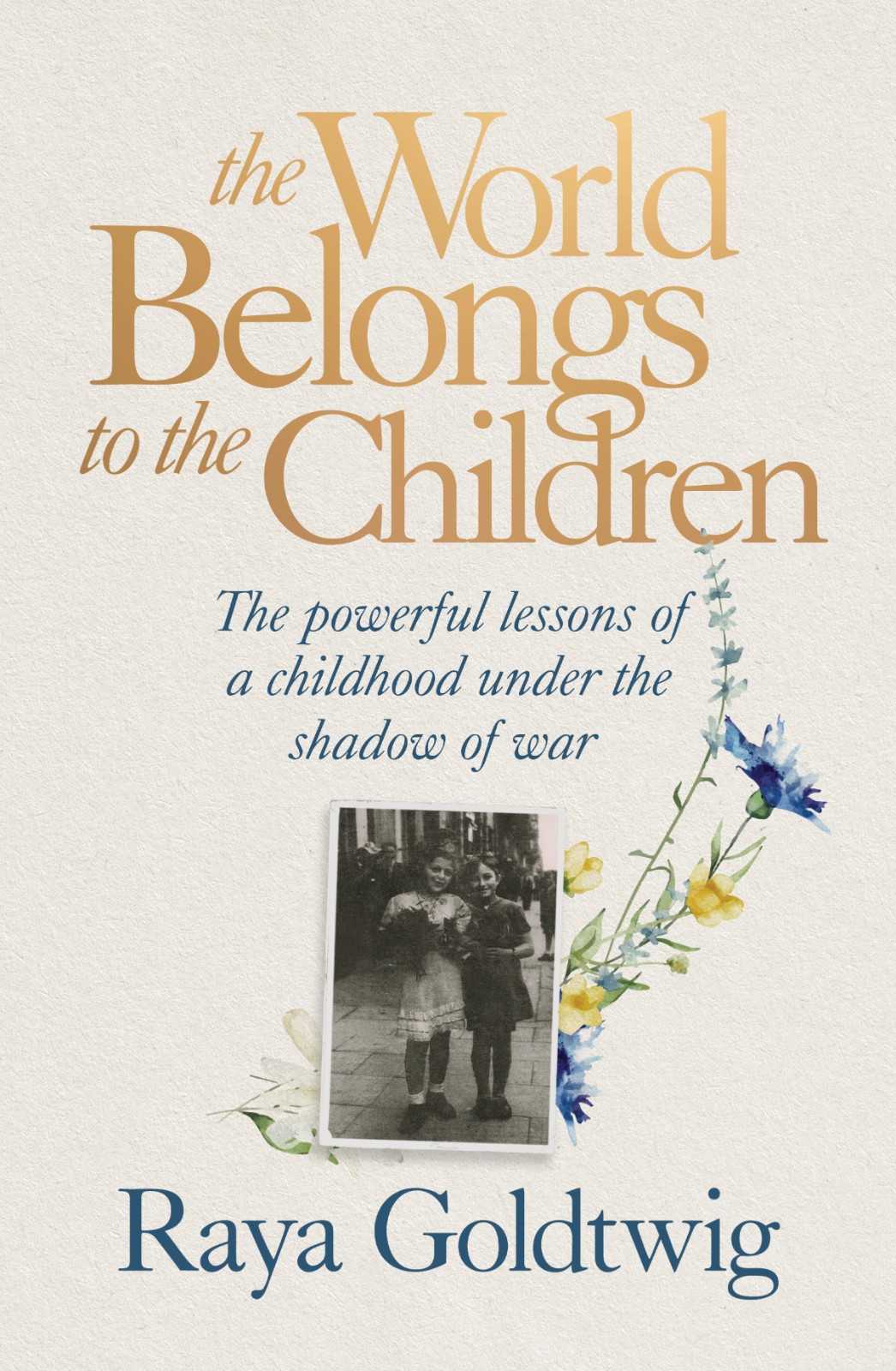
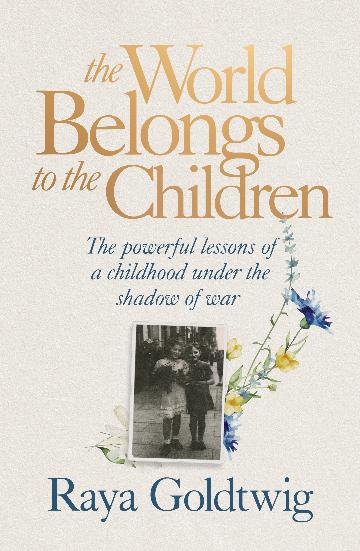
The World Belongs to Children by RAYA GOLDTWIG is her compelling and lyrical memoir of her childhood in WWII Europe and Russia, learning the importance of connection despite the growing darkness of the world.
Read on for an extract.
ABOUT THE BOOK
 We are all formed by our childhoods. These are the years that define us, and that teach us the most important lessons about the world we live in. These are the years we must cherish and protect.
In August 1939 Raya Goldtwig’s secure and happy childhood as the three-year-old daughter of a prosperous Jewish shop owner in Warsaw came to a sudden end. Together with her father, mother and brother, she fled across the border to Soviet territory, enduring terror and uncertainty but also building a new home and a new community. When Nazi Germany invaded, though, Raya and her family again had to flee.
Against such a terrible backdrop, Raya’s story of love, community and wonder is a testament to the human spirit and the power of hope in the face of tragedy. Looking through a young girl’s eye, she clearly shows why childhood is precious, and why we must ensure all children are safe from the evil of war.
**********
EXTRACT
Just behind me, an old man with an artificial leg was seething with anger. I looked up at his indignant face and became frightened.
‘Scum! Their fathers are fighting the enemy at the Front, dying for their country, for their people, and here their dear sons fight their own people – old women and invalids! Is this what your fathers are fighting for?’ he growled.
A big, ugly black seventeen now covered my red five.
‘Keep standing in front of me, little crumb, I will shield you from these louts. Don’t be afraid, eh?’ he assured me. He bent slightly over me and took my frozen hands in his, rubbing them gently and making them warmer. He wasn’t so frightening after all, I thought.
‘Can you dance, little one?’ he enquired. I nodded.
‘Then show me. I will play and you dance. It will keep you warm. Agreed?’
I nodded, wondering what he was going to play on. Maybe he was kidding. But no! Out of his breast pocket he produced a mouth organ, grinning at me from ear to ear. Soon a lovely, familiar tune filled the cold air and gladdened every heart. I left the ever-growing queue and, from inside my huge coat and oversized boots, threw myself into a popular Russian folk dance. It was great to skip and wave my arms about to his playing, in movements I knew so well. As I kicked, my feet met the hem of my coat, which was standing around me like a barrel. Every time I looked at him, he winked, encouraging me.
People clapped and cheered. Three other children left their relatives in the queue and joined me in the dance. Gone was the cold, the hunger forgotten and, for a while, people’s burdens and sadness were stayed. When we children became hot and tired, Matryoshka took our place, and we returned to the queue.
Although not a ballerina by any measure, she moved with grace and lightness, dancing so sweetly. Others took turns jumping in, relieving the overheated and panting dancers so that the dance could continue in an unbroken chain. Beaming and warm, I ran to the musician and hugged his healthy leg.
‘Uncle, uncle, what do they call you?’
‘Uncle Kolya, my little beauty. That’s what they call me. And what’s your name?’ ‘Raya,’ I answered, feeling warm and secure. I was happy. He grinned at me every time I looked up at him.
‘Uncle Kolya, when my daddy returns from the Front, you will play for him, and my daddy will sing. My daddy sings beautifully. You’ll see!’
‘Of course, my little treasure, as soon as he returns, I will certainly play for him. We will all play and sing.’ He became thoughtful and quiet, and I thought that I must have said something to take the grin off his face. Was he doubting my father’s return?
Just then, a boy came up to me and put a morsel of poppyseed cake into my hand. I put it promptly in my mouth, I was so hungry! Hey, what was the big fuss about standing in a queue? I mused. I will do this again if need be.
‘Raya, the bread has arrived, and I think the shop assistant is about to open the doors. Hold on to Auntie’s jacket strongly, and I’ll be watching over you from behind. See that you don’t fall, eh,’ Uncle Kolya instructed.
‘Good, uncle,’ I assured him, grabbing the hem of Matryoshka’s jacket.
Meanwhile, the teenagers at the front of the queue had taken their places and tightened their formation. Other teenagers standing among the people behind me were getting up to mischief and preparing for action. They each put their palms on the shoulder blades of the person in front of them. As soon as the door opened, they gave a tremendous push, so that the narrow shop was instantly filled to the brim with bodies squashed against each other. This was so swiftly and forcibly done that people could do nothing to withstand it.
I was lifted off the ground, and so tightly squashed into Matryoshka’s clothes that I became unbearably hot and unable to take another breath. But a shrill scream escaped my lungs! Something that had never happened before, or since. The shove had pushed out any air I had left in my lungs.
Instantly someone’s hands gripped me firmly and pulled me out above the crowd. I looked down – they belonged to my good Uncle Kolya. Tears were running down his face. But he smiled at me.
‘Hooligans! What are we, cattle pushed to the slaughter? I am a veteran of the Revolution, with one leg, and I order the salesperson to give the first bread to this child, who almost paid with her life for her loaf of bread because of these thoughtless brats!’ The crowd was silent.
A warm whole loaf came floating into my hands and I was carried to the exit on outstretched arms above the people’s heads. No one spoke. Calm and dignity were restored.
A gust of crisp fresh air blew across my face, and I hungrily filled my lungs with it. I felt light in my head and could not think, but remembered to hide my bread against my chest under the coat, with my arms folded over it tightly, something I learned from my brother, so that no one would take it from me.
Everyone was hungry in those times.
ABOUT THE AUTHOR
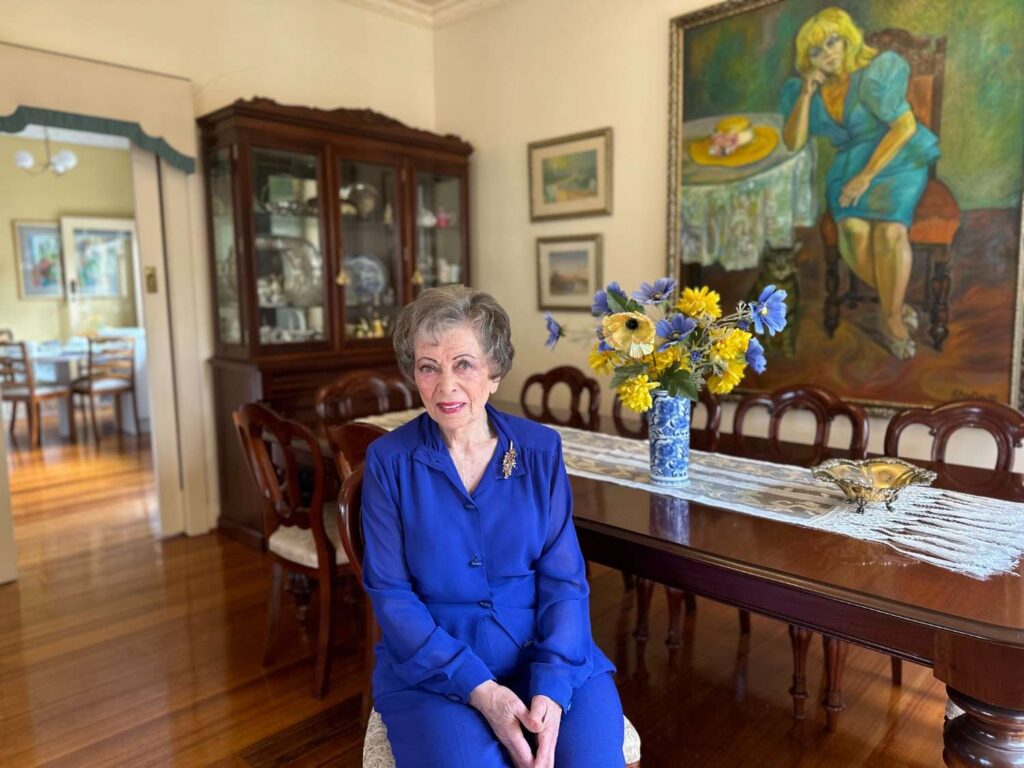
Raya Goldtwig was born in Warsaw and spent her early childhood moving through Russia and wartime Europe, later living in a refugee camp in Germany. She arrived in Melbourne in 1950, speaking six languages. She studied linguistics at Monash University, and her translations of poems by Osip Mandelstam and a creative nonfiction story have appeared in Australian literary journals. She lives in Melbourne and will turn ninety in 2026.
Read more about The World Belongs to Children here.
Visit Simon and Schuster’s website here.
0 Comments