


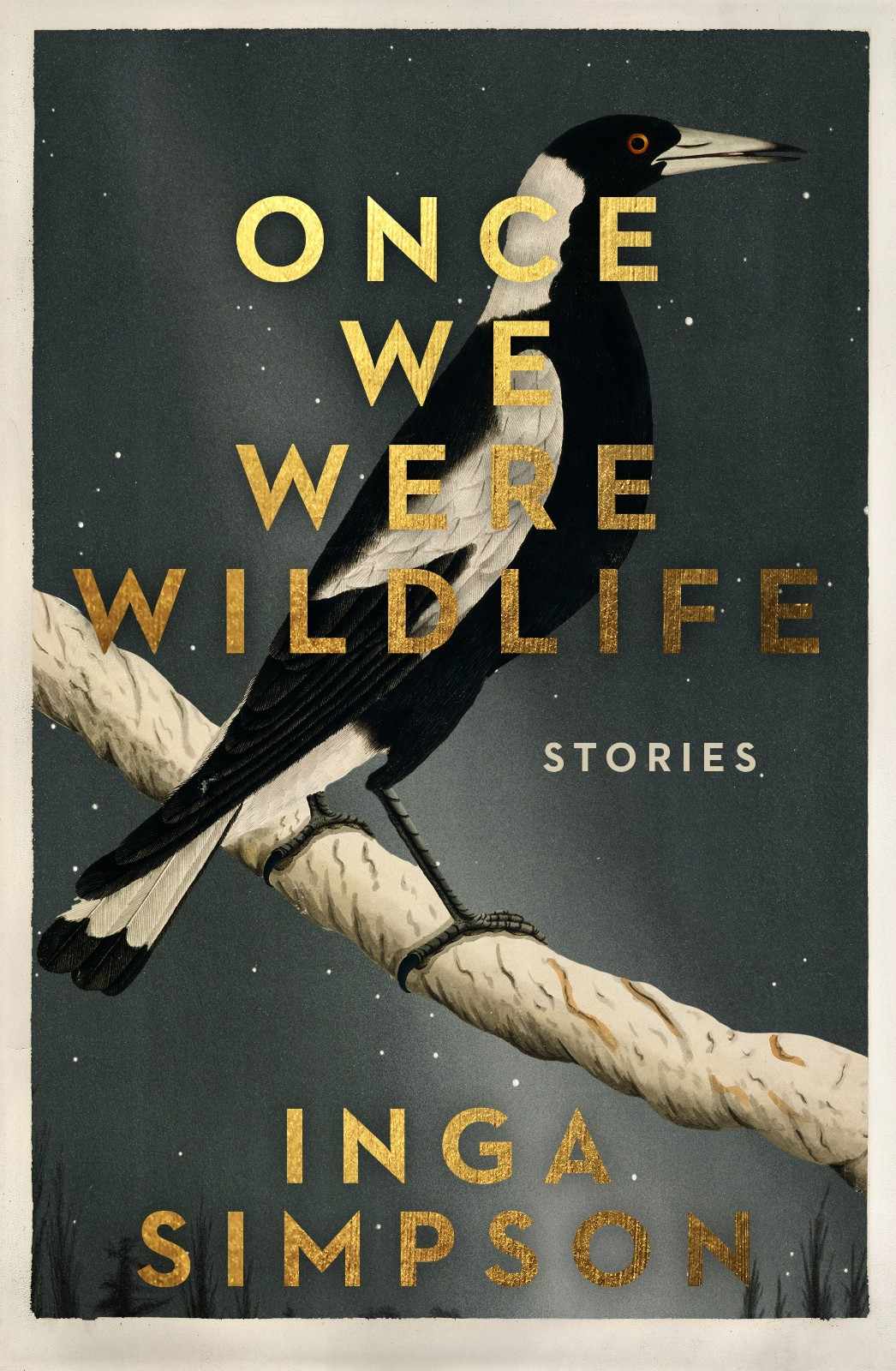
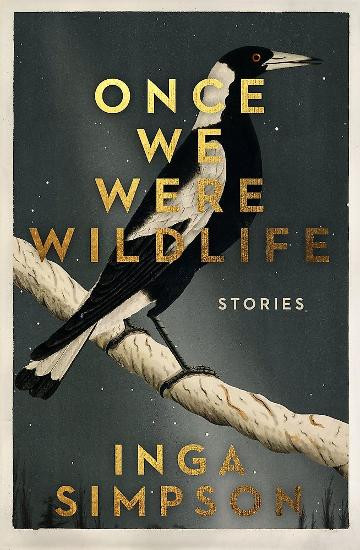
Once We Were Wildlife by best-selling author INGA SIMPSON is a tender, luminous collection of interconnected tales that explore love, longing and our connection to the wilderness.
Read on for an extract from her short story ‘Blue Crane.’
ABOUT THE BOOK
 In this compulsive compilation of eleven stories and one poem – set against scorched landscapes, wild oceans, and rocky terrain – Simpson follows people on the edge of desire, heartbreak and change.
In ‘Poached’, an ex-soldier finds himself between a poacher and a Bengal tiger. In ‘The Wash’, a woman’s reckless ocean swim reveals the instinct to survive and the end of a passionate love.
From the aching intensity of romantic love to the quiet devastations of motherhood and ageing, Simpson’s literary prowess keeps us riveted by the power of nature to shape human relationships and worlds. Melancholic and joyful, masterful and inspiring, this is contemporary fiction at its finest by Australia’s foremost writer of the natural world, Inga Simpson.
**********
EXTRACT
Those first few weeks Sally walked the beach, it went unread. She saw only a sweep of yellow sand edged with dark rock. Although her eyes were directed downwards, ahead of her feet, occasionally lifting to the horizon, her gaze was still inwards, picking over the detritus of her old life. The shift south had not brought her the happiness she had imagined. Anonymity, a fresh start, was a relief – but also rather lonely. The other residents waved or said good morning as they passed. But Sally, with her Queensland numberplates and sun-ravaged skin, was not one of them. She saw the locals stopping to chat to one another, laughing and smiling, and visiting each other’s houses in the evenings, carrying wine or cloth-covered boards. It was a world she remained outside.
It was the crab tracks she noticed first. The dotted patterns curving over the sand. So many, and in so many directions. Crabs scuttling in and out of holes that she had been tromping over without seeing. Whole lives going on during the night.
Some mornings the beach had been washed smooth by the retreating tide, a blank canvas for the webbed triangles left behind by seagulls and the larger human marks: five toes and a heel, boots, sneakers and thongs. Feet turning inwards and outwards, the drag of a heel. The longer gait of a runner, up on his toes.
Sally started leaving her sturdy walking shoes at home, so as to make her own mark. The feel of the cool sand between her toes and the water splashing up her ankles brought a smile to her face, a giggle bubbling up in her throat.
It was too cold for swimming, or so she found it at first.
**********
Day by day, the details sketched themselves in. The spotted gums crowding up to the cliffs, as if to peer over the edge. The sea caves, natural arches and blowholes recalled childhood adventures. Memories still vivid in the pastel landscape of her life.
When the house she had shared with her husband for forty years was finally sold, the bay was the only place she wanted to go. The agent had told her that she was ‘very lucky’ to buy into the settlement. Properties were passed down through families or sold privately to like-minded souls. Sally had no idea what their souls were like, but their houses were modest, on large, tree-covered blocks, and they guarded the nature reserves with a fierce passion. The paths, she knew, were hand-clipped by a group of residents every long weekend. The bay and headlands were now a marine sanctuary. Any council plans – for toilets or picnic tables, say – were thwarted by persuasive letters from the ready panel of retired professors, scientists and lawyers. The acres of forest between the settlement and the old highway, the agent told her, would never be developed.
Sally remembered the families who bought up those blocks, or their previous generations. She had stayed in the Stevens’ rambling shack up at the point during summer holidays. Lisa Stevens had been her best holiday friend all through high school. And they were tight with the Thawleys, Rogersons and Gordons. Sally had been in and out of most of the original houses, stolen beers from the eskies and bathtubs of many a party. But that had all been during the previous century. No one knew her now.
Mid-marriage, she had brought Leon to the bay for a fortnight away, hoping to relive those carefree days and show off her local knowledge, the tracks through shady forests to hidden rocky coves. They had travelled all over the world – wherever his uniform took them – and she had worried he found the place too low-key, quaint at best. But for years afterwards he had said that it was ‘the best holiday we ever had’. Sometimes Sally still found herself thinking and saying ‘we’, though that life was long gone.
One morning, she noticed the matching red beaks and feet of a pair of sooty oystercatchers against the rocks.
They moved away with comical furtive steps as she approached, and then flew off, calling pleep pleep. They were back the next day, patrolling the waterline. Their trident prints were larger than those of the gulls, more pronounced, like their personalities.
Sally started walking earlier, before humans and dogs muddied the trail. She liked to see all the other stories playing out, other lives. The day she first saw the heron, the sky was without cloud, the ocean without swell or even a ruffle of breeze, as if setting the stage for his entrance. Her eye caught the movement, her body turned to see his white face on a slender grey body. He waded the rockpools with his long yellow legs, dipping his beak down to fish.
**********
The house she bought had been empty for a decade, its owners confined to a nursing home but hanging on to the hope that they might some day return. Their children had cleaned it up and repainted the interior for the auction, but it still carried the sadness of long inoccupation. Sally preferred being outside, clearing the terraced garden of weeds, cutting back the overgrown shrubs. From the timber outdoor table she’d had delivered, she could look over the beach while she ate lunch.
Leon had never appreciated the beauty of birds, seeing only their scaly feet and sharp beaks. He had denied fear or phobia, but Sally wasn’t so sure. He had refused to go to the farmers’ market on Saturdays after the resident black swan followed him – pursued, Leon said – from the car park. From then on, Sally had to lug their produce back to the car alone.
One morning, Sally startled the heron on the beach. She hadn’t noticed him against the white and grey wash until she was almost on top of him. Her head and shoulders jerking back was enough to send him across the sand and into the air, dark flight feathers exposed, calling ooooark. She followed the heron’s footprints, larger than the oystercatcher’s and more broad, spaced further apart as he lengthened his stride. Sally stopped next to the deep scratches in the sand, the exact point where he had pushed off, left the earth and taken flight. The sand beyond them was smooth, unmarked. Her skin tingled, her fine grey hair lifted from her scalp.
For the first time, she understood what it would be to fly.
**********
Sally dragged the box of her mother’s things out of the garage and dusted off her old guidebooks and binoculars. She spent the morning with them, and a pot of tea, at the table. Her mother had crisscrossed the country to check off species. Her original pocket bird book was a mess of ticks, dates and places, occasional comments and exclamations.
The early trips had been family holidays, but many of the placenames were foreign to Sally, explaining her mother’s frequent absences.
Her mother had always called white-faced herons ‘blue cranes’, which Sally had visualised as a mythical bird, dropping newborn children down chimneys on the other side of the world. Her mother had seen white-faced herons up and down the coast, it seemed, and inland over half the country.
The book deemed white-faced herons as common, but her heron was the only one in the bay. And once she managed to focus her mother’s old binoculars, she could watch him from anywhere in the house.
The days she did not see the heron always fell a little flat. She began walking in the evening as well as mornings, to double her chances. Her body grew thinner with the exercise, as if to mirror his. She found she could do without the mid-morning muffin she had been accustomed to in the city and, with no organic butcher around the corner, she gave up eating meat. Chicken, which she had never been passionate about, went first. Then the fortnightly steak the doctor had recommended for her iron levels. The community bus took her to the weekly market, offering pretty displays of local vegetables, fruit, bread, dairy, eggs and seafood – and not a swan in sight. The family-owned seafood stall, just a blue awning strung off a refrigerated truck, was so bountiful, the staff so friendly, she tried every fish on offer – gurnard, kingfish, black snapper, Montague whiting, yellowfin tuna – and their other products: oysters, mussels, pipis and even marinated octopus.
Over the weeks and months, she gained the heron’s trust, able to walk a little closer before he moved into deeper water or further out on the jagged rock shelf.
At first, the sharp rocks cut her tender skin, but she found that if she relaxed her feet, and her mind, there was no pain, and over time, her soles toughened into those of a beachcomber. In those moments of close proximity with the heron, something was exchanged. A charge arising from the solidity of the land and the salty water moving around them. A flash of silvery fish and slow-rising bubbles soothing Sally’s creaking body.
Read our review of Mr Wigg here.
ABOUT THE AUTHOR
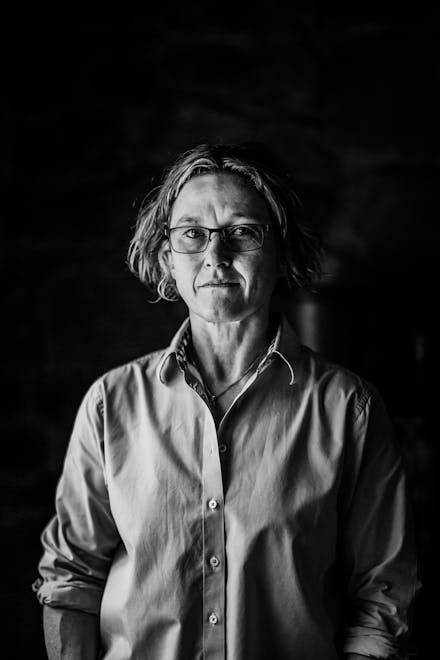 Inga Simpson began her career as a professional writer for government before gaining a PhD in creative writing. In 2011, she took part in the Queensland Writers Centre Manuscript Development Program and, as a result, Hachette Australia published her first novel, Mr Wigg, in 2013. Nest, Inga’s second novel, was published in 2014 and was longlisted for the Miles Franklin Literary Award and the Stella Prize and shortlisted for the ALS Gold Medal. Inga’s third novel, the acclaimed Where the Trees Were, was published in 2016.

0 Comments