



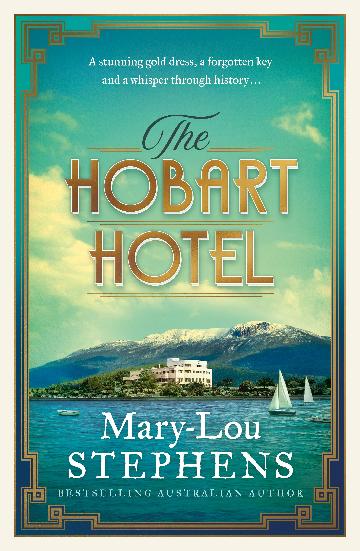
The Hobart Hotel is a compelling new Tasmanian historical fiction from best-selling author MARY-LOU STEPHENS. We caught up with Mary-Lou to ask about the real-life story of the Wrest Point Riviera, and how it inspired her novel.
Read on for a Q&A.
MEET MARY-LOU STEPHENS
What sparked the idea for The Hobart Hotel?
I always thought a story set during the opening of Australia’s first legal casino at Wrest Point in Hobart in 1973 would make a great novel. The idea was noodling around in my mind when I found out two pieces of information: one, the original hotel, the Wrest Point Riveria, opened in 1939 to great acclaim and two, the first naval battle of WW2 happened in the very same week off the coast of Uruguay where my husband and I were staying at the time. The idea for a dual timeline set in both Tasmania and Uruguay was born.
 What is your writing process when you set out to start a new novel?
The very first thing that must happen is an idea so strong, so fascinating and so heartfelt that it will sustain me through the two years it takes to research, write and edit a novel. Next comes the research and lots of it, all the while thinking and daydreaming about the characters and the storyline. I used to regard myself as a slow writer, until I realised I need a lot of time to think and muse. It’s all part of the process. I write notes but I don’t commit anything to the actual manuscript until I’ve had time to dream the novel into life.
Can you tell us more about Sabine and Jenny, and how you approached creating their distinct character voices. Also, who is your favourite to write?
Sabine is a creature of her own creation and of the times. Her personality was formed in fire and grit but her persona is one of cool glamour. She is a woman of much experience. Sabine must, for her own protection, keep her true self hidden. For that reason I wrote her in third person, for that slight remove. But her actions are bold, often audacious. Her self confidence is boundless. She’s a jewel thief and a spy, counts movie stars and famous writers among her acquaintances and was an absolute joy to write.
Jenny is only twenty when we first meet her. She’s grown up in Hobart which at the time was very much behind the times. She’s had a tougher life than most but in many ways she’s still naïve. The opening of the Wrest Point Casino in 1973 is the most thrilling but also the most terrifying thing to happen in her young life. Going against her mother’s wishes to become a glamorous Ladybird (the name given to the female croupiers at the time) is a huge step out of her limited comfort zone. It opens her up to a whole new world and way of thinking. I wrote her in the first person to create an intimacy with her fears and excitement as she navigates this brand new life.
Sabine seems like such a glamorous femme-fatale, with her charm, wit, and collection of stolen jewellery. What were your inspirations for this character? Is she based off a real figure from history?
In The Hobart Hotel the mysterious Mr Grey mentions that Sabine looks much like Greta Garbo and later there is a reference to Greta Garbo in the film Mata Hari. That cool mystery with the strength of steel beneath that Greta Garbo emanated was a big inspiration for the character of Sabine. The legend of Mata Hari herself (the truth of her infamy is debatable) was a small inspiration – the femme-fatale turned spy – but the only “exotic” dance Sabine performs is the tango.
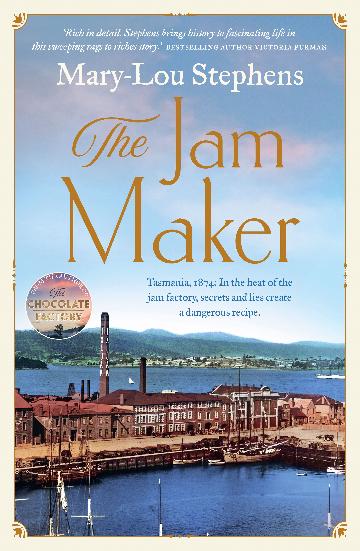 Your previous books, The Last of the Apple Blossoms, The Chocolate Factory and The Jam Maker, are also set in twentieth-century Tasmania. What is it that keeps drawing you back to this period?
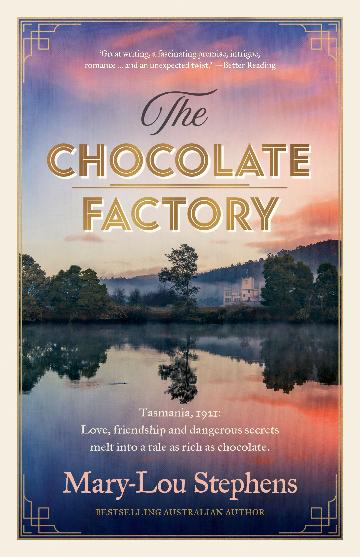
I’m drawn to write about events and times that have meaning to me. I remember the devastating Tasmanian bush fires of 1967 that feature at the start of The Last of the Apple Blossom. As a child my favourite school excursion was a visit to the Cadbury factory in Hobart and I’ve had a life-long love of chocolate. The idea for The Jam Maker came to me when I was standing on the Hobart waterfront with the old IXL factory on one side and the warehouses that used to house Peacock’s jams on the other. The Jam Maker starts in the nineteenth century and follows the career of Henry Jones of IXL fame, through Harriet’s eyes, until his death in 1926.
The opening of Australia’s first legal casino was a huge event in the lives of every Tasmanian causing much controversy and division. My mother was staunchly against it, my father was part of the government legal team that made it happen and my oldest sister became one of the iconic Ladybirds. I remember my sister practicing dealing on the dining room table. I was too young to register the controversy raging in Hobart but my research made me aware of how deep and how bitter it was.
All of these elements create a heartfelt foundation to my novels.
What is your favourite aspect of writing historical fiction, and what was your research process for bringing the late 1930’s and the 1970’s to life in this book?
 I enjoy researching a story immensely. It’s a form of education and a source of fascination. Plus it sparks many story ideas. I do become obsessed it’s true and all the amazing facts I find out tend to dominate my conversations. My husband has become an expert on many things by patiently listening to my excited ramblings.
The actual writing is a whole new world, transforming all the research into a gripping plot with fascinating characters. And I enjoy the editing process during which the story is metamorphosed into a stunning diamond.
Writing a dual timeline with one story set in the 1970s meant not only could I use my usual sources of Libraries Tasmania, texts, articles and news reports but I also had the luxury of interviewing two of the original Ladybirds, Honey Bacon and Elly Bolt, who worked at the casino from the start. Their insights and answers to my endless questions were invaluable. My sister, who became a Ladybird later in 1973, also provided some information.
One book in particular was useful not only for the 1970s timeline but also the opening of the Wrest Point Riviera in 1939, Wrest Point: the Life, the Times and the People of Tasmania’s Hotel by Graeme Tonks and Mark Dibben. It’s a deep dive into the entire history of the Wrest Point site. I was also taken on a tour of the old Riviera building by the hotel manager and was incredibly grateful that the original plan to demolish the Riviera when the casino tower was built didn’t come to pass.
Researching Uruguay during WW2 was a different matter entirely. Almost all the research material is in Spanish and although I was trying my best to learn the language my ability was rudimentary at best. I had some help from an amateur historian in Punta del Este and also managed to track down academic papers that supplied many of the facts. Because we were in Uruguay for five months I was also able to walk in Sabine’s footsteps and visit all the places in which her story plays out including a stay in the iconic Palacio Salvo in Montevideo.
Tell us about your interest in the Wrest Point Riviera and Hotel Casino. Why did you decide to write about this real-life location in The Hobart Hotel, and what was the most fascinating thing you discovered?
 I was thrilled when I found out the original hotel at Wrest Point was called the Riviera. It was designed to emulate all the luxury and comforts of the finest hotels on the Mediterranean. The Riviera was the most glamorous and talked about hotel in Australia when it opened in 1939. The excitement and controversy around the opening of the Wrest Point Casino in 1973 had been in my mind as the basis of a novel for some time but to find out the original hotel was just as exciting led to The Hobart Hotel being my first dual timeline novel.
There are so many fascinating details in The Hobart Hotel; Noël Coward’s stay at the Riviera in 1940, the first naval battle of WW2 off the coast of Urugay, Germany’s plans for South America, Errol Flynn in Uruguay. But one of the most astounding things I discovered was that some of the Italian staff at the Riviera were radioing sensitive information to a boat moored in the Derwent River. Many politicians stayed at the Riviera, including the Prime Minister Robert Menzies. The waiters eavesdropped on their conversations and passed on the details to enemy agents. Spies in Hobart! Whoever would have thought?
What is next for you? Do you have any projects on the horizon?
My next novel has been years in the making. For this project I have undertaken even more research than usual and there’s a reason for that. It involves an event that truly did split Tasmania, dividing families and friends and brought about a change of Federal Government. The basis for this novel initially started with the idea of leatherwood honey, the honey I grew up with. Tasmania is the only place in the world where this honey is produced. The leatherwood tree is found in the wilderness of the west. And so a story takes shape.
ABOUT THE AUTHOR
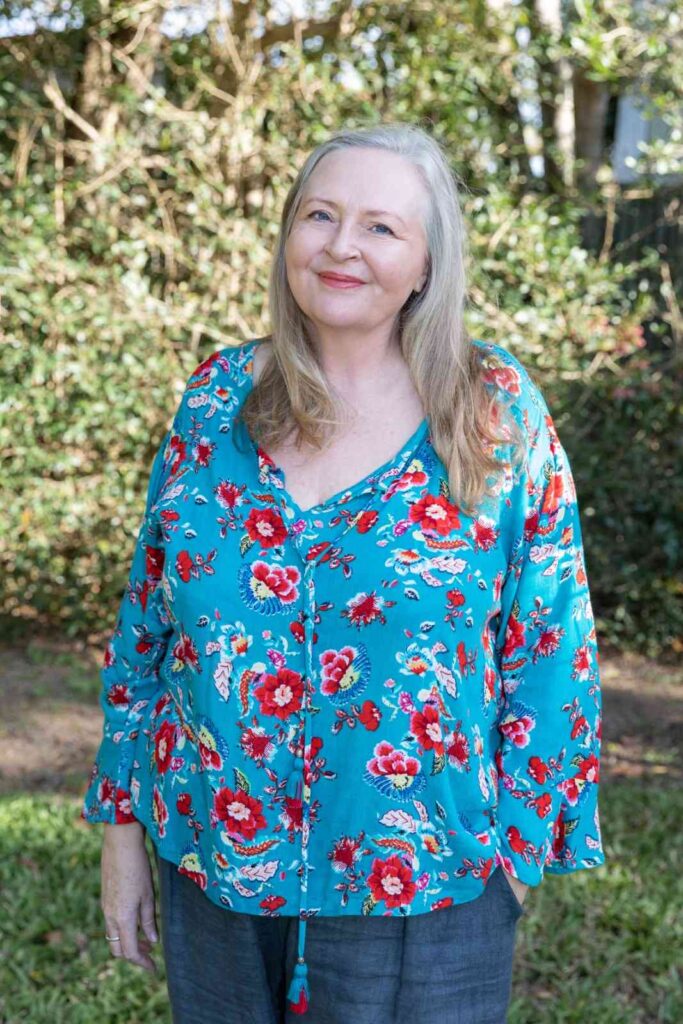 Mary-Lou Stephens was born in Tasmania, studied acting at The Victorian College of the Arts and played in bands in Melbourne, Hobart and Sydney.
Eventually she got a proper job – in radio, where she was a presenter and music director, first with commercial radio and then with the ABC.
She received great reviews for her memoir Sex, Drugs and Meditation (Pan Macmillan, 2013), the true story of how meditation changed her life, saved her job and helped her find a husband.
Her debut novel, The Last of the Apple Blossom (2021) made the Better Reading Top 100 and her second novel The Chocolate Factory (2024) was a best seller. The Jam Maker was also a bestseller by every industry marker. Her latest release is The Hobart Hotel.
Mary-Lou has worked and played all over Australia. Now she’s travelling the world with her husband, slowly, and writing, mostly.
Author photo credit: Tracy Naughton
Visit Mary-Lou Stephens website here.
Follow Mary-Lou Stephens on Instagram
Visit the Harper Collins website here.

0 Comments