


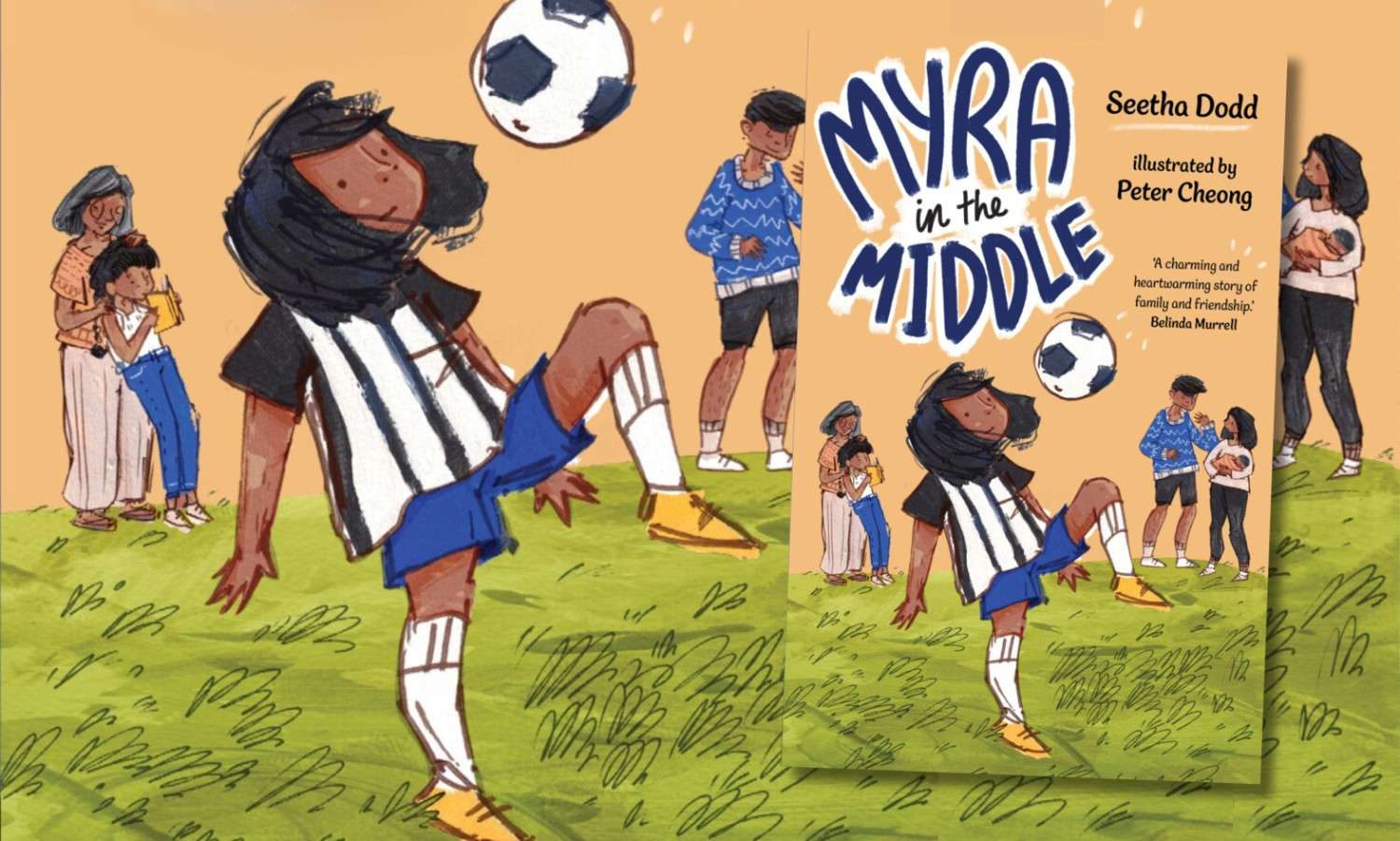
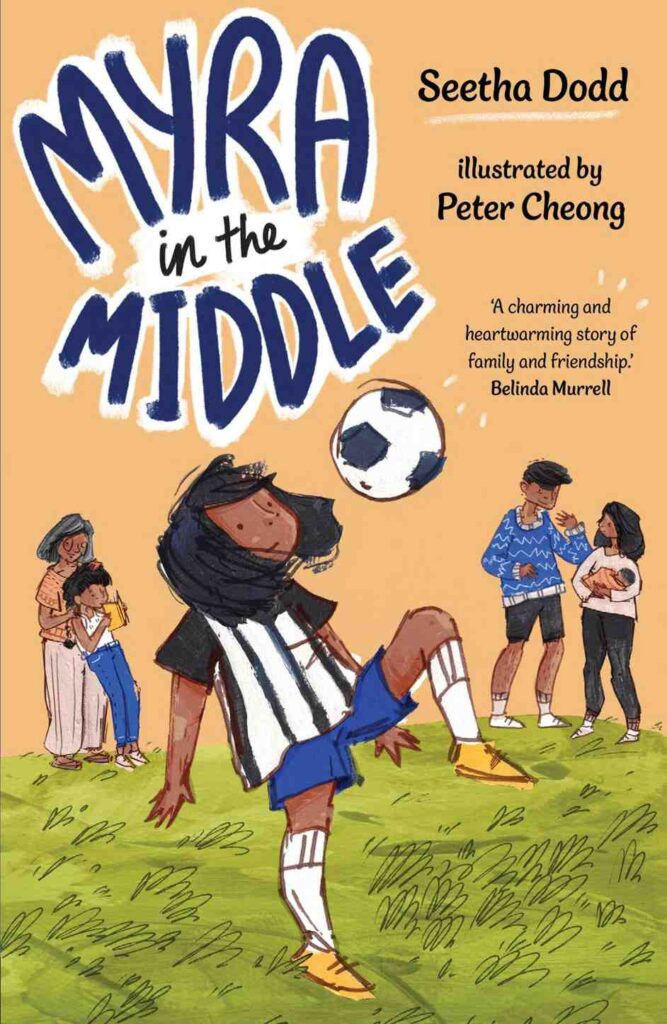
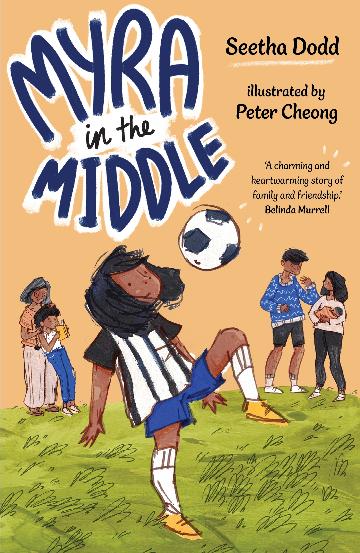
Myra in the Middle by SEETHA DODD is a charming story for young readers. Myra always feels stuck, as the middle child in her family, and as the midfielder on the soccer team, but what will it take for Myra to feel marvellous in the middle?
Read on for a Q&A with the author.
MEET SEETHA DODD
What inspired you to write Myra in the Middle?
It started as an idea for a picture book about a middle child who focuses on all the bad things about being in the middle until her grandmother shows her a different perspective. As I thought more about the character, Myra’s voice started forming in my head and I realised her story needed more room. As a middle child myself, it was fun to remember and channel my own experiences into Myra’s story. I have three children and they all play soccer, so they inspired that aspect of the book. Also, a huge part of my inspiration was wanting to see an Indian Australian protagonist on the junior fiction shelves!
Can you tell us a little more about Myra’s fears of being the middle child?
Myra does not like change, so the addition of a new baby to her family is unsettling. She worries about feeling lost, ignored and insignificant in the ‘in-between’ spaces. Being put in the midfield in her soccer team adds to Myra’s frustrations as she (wrongly!) assumes nothing exciting happens there. The novel explores Myra’s journey to understanding the important role she plays in her family and as a team-mate, and she eventually sees the middle as a privileged position, with the help of her wonderful grandmother.
How did you draw on your own past and cultural heritage to tell Myra’s story?
I had a close bond with my grandmother. Muthashi was an integral part of my childhood (and she really did make the best chicken curry!) so I wanted to honour her memory in this book. By interspersing cultural references from my Indian background into Myra’s story, I hoped to add a layer that readers will either identify with or learn about.
 Change is a daunting part of Myra’s life, especially as she likes “things staying the same.” How do you impart to kids that big changes can be okay?
I don’t like change either! It is usually more comfortable when things stay the same. Big changes can be scary, but sometimes (not always) they are necessary for us to move forward and can help us learn or grow. When we focus on the things in our control and ask for help to understand the things that are not, these big changes become more manageable.
Do you have a favourite scene in the book?
I love the classroom scene when Myra stands up for herself. It signifies her growth, and highlights the importance of self-advocacy, particularly in terms of identity. My seven-year-old self would be immensely proud. To make it even more special, this scene is illustrated in a two-page spread by the inimitable Peter Cheong.
What message do you hope younger readers take away from this story?
I’d love for readers to connect with Myra’s character and cheer her on as she finds her place in the world. I hope readers will enjoy the maths and collective nouns in the book, and learn something about Indian culture. Perhaps readers might recognise themselves in parts of this story, whether that is around family, friendships, soccer, standing up for yourself, or navigating change. Mostly, I hope readers will feel something – inspiration, empathy, joy, or a desire to play soccer or make coconut candy!
Can you tell us about any upcoming projects you’re working on?
I have a picture book coming out in September, and another one in February 2027. I’m shaping a spark of an idea into what I hope will be another junior fiction novel. This year, I have signed up to be an Author Pen Pal and have started the exciting journey of corresponding with a group of Year 3 students.
ABOUT THE AUTHOR
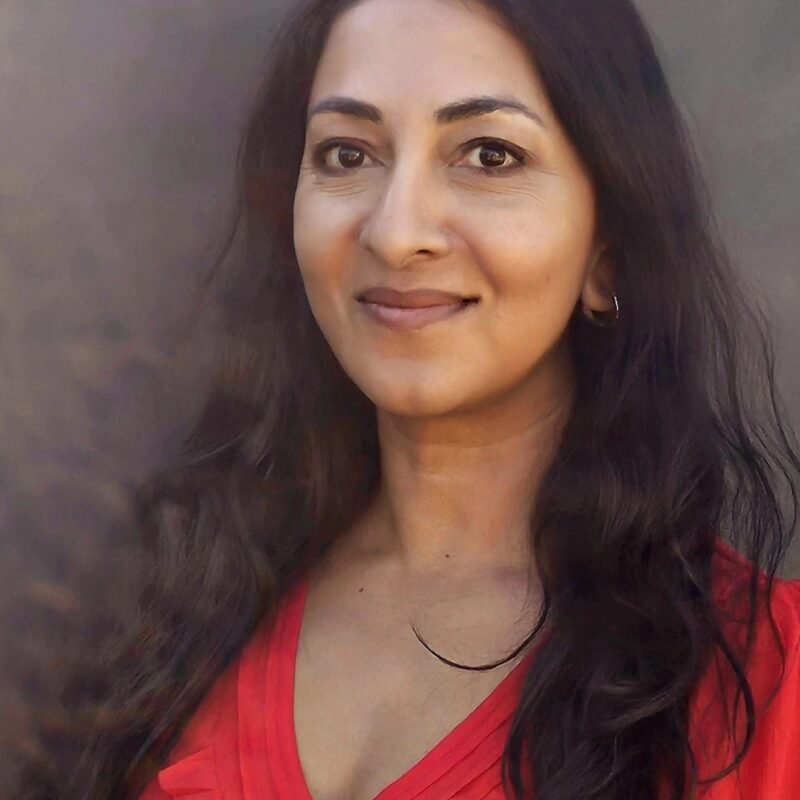 Seetha Dodd is an emerging children’s author who loves wordplay, humorous rhyme and lyrical prose. Her fiction has been published in The School Magazine and in print and audio anthologies by Spineless Wonders and Hunter Writers’ Centre. Drawing on her Malaysian–Indian heritage, and themes of family, identity and belonging, Seetha writes stories that empower children to challenge stereotypes and to celebrate uniqueness in all forms. She lives on Sydney’s Northern Beaches with her husband and three children.
Follow Seetha Dodd on Instagram here
ABOUT THE ILLUSTRATOR
 Books have always been a vital part of Peter Cheong’s life. Growing up reading Roald Dahl and having adventures with Calvin and Hobbes, Peter was heavily influenced by the way Quentin Blake and Bill Watterson brought stories to life. After spending several years in the Australian Army, Peter decided to pursue his dream of a career in books. He is the illustrator of I’m a HeroToo, Nothing Alike and Anh Do’s Pow Pow Pig series, and has written and illustrated his own children’s books, Every Night at Midnight and Where We Can Hear the Giants Sing. Peter lives in Perth (Whadjuk Country), Western Australia, with his very understanding wife and sons, and less understanding cat.
Photo credit: Michael Cheong
0 Comments