




DURKHANAI AYUBI reflects on exile, memory and the sustaining power of food in her book She Who Tastes, Knows.
GOOD READING spoke with her about the recipes, rituals and ingredients that carry homeland, identity and belonging across borders and generations.
MEET DURKHANAI AYUBI
As a refugee from Afghanistan, Durkhanai Ayubi’s family found a home in Australia. She has written about how her most tangible connections to her homeland are through family recipes.
‘Central to the refugee experience is leaving almost everything material behind in search of safety and stability – which was the difficult choice my parents made when they departed the violence of Cold War time Afghanistan, with my sisters and me, all children at the time.
‘When you leave with very little and make your way to a cultural landscape so different to the one in which your ancestral memory has taken place, you are in urgent need of grounding – ways to connect the different parts of your life so that you don’t fragment altogether. In my life, food became that bridge. The ingredients were tangible and real, unlike so much that had evaporated in our lives, and finding or growing them in Australia was part of the restorative process – not just to look back, but to move forward with a stronger sense of self and wholeness.
 ‘My earliest food memories are not only about eating, but also about preparation. Much of Afghan cuisine is designed to be made communally – reflecting generosity, community and invitation. We’d gather with family and friends to make mantu dumplings or bolanis – flatbreads stuffed with seasonal fillings and served straight off the griddle. I remember the food my mum prepared for our birthdays, including a favourite – shaami kebab, crisp outside, soft inside, heaped with hand-cut fries and tangy chutney.’
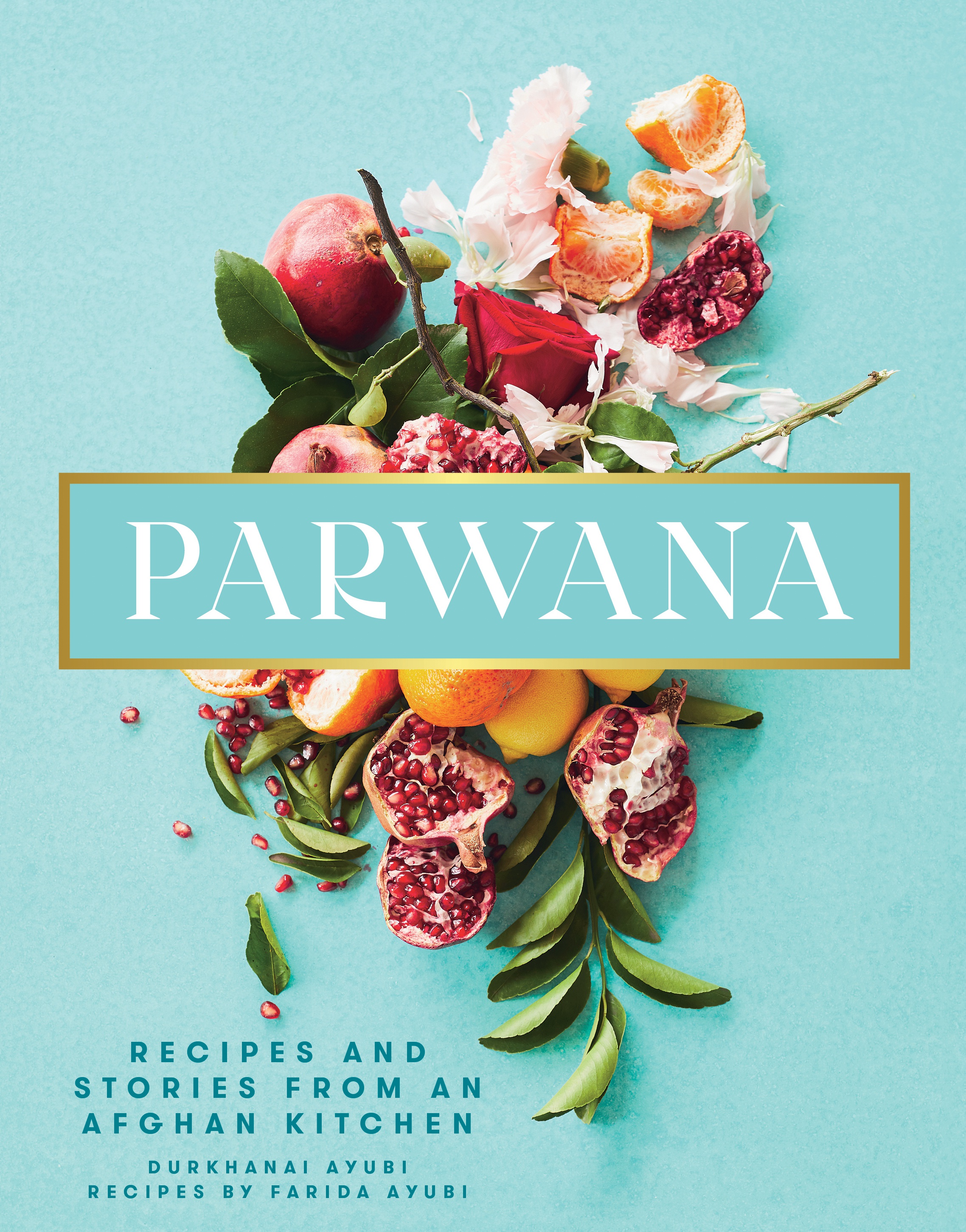
Durkhanai’s first book, Parwana, traces the origins of Afghan cuisine alongside her family’s story of fleeing the country and opening a restaurant in Adelaide. She says food holds layered memory.
‘It isn’t a remembrance that requires a fixed recipe. Most Afghan cooking is passed on through lived practice and oral tradition rather than written instructions, and recipes allow room for adaptability – shaped by preference or seasonality.
‘The Parwana cookbook and She Who Tastes, Knows respond to the discontinuity of Afghan lives and collective memory, with people scattered across the world and a homeland enduring ongoing ruptures through war. The recipes and food stories do not seek to replace our living knowledge, but to complement it.
‘Writing and sharing the cookbook was part of activating the stories I wanted to tell. It was a foundational act – collating my mother’s recipes as dynamic preservation, while thinking chronologically about what was happening in our family’s life alongside significant world events. It helped me appreciate what was missing in my self-conception, while amplifying my pull towards the expanded sense of home and invitation in our foodways.
Each chapter in She Who Tastes, Knows traces an ingredient important to her life.
‘I interrogate how prevailing narratives determine social realities – who is considered worthy, who is marginalised, who is given space to speak and who is silenced. Through this approach, I offer a reframed understanding of my homeland and broader questions of belonging, refugee identity in the Western world, my foremothers’ feminism expressed through food rituals, and my need to return to the impermanence we all are.
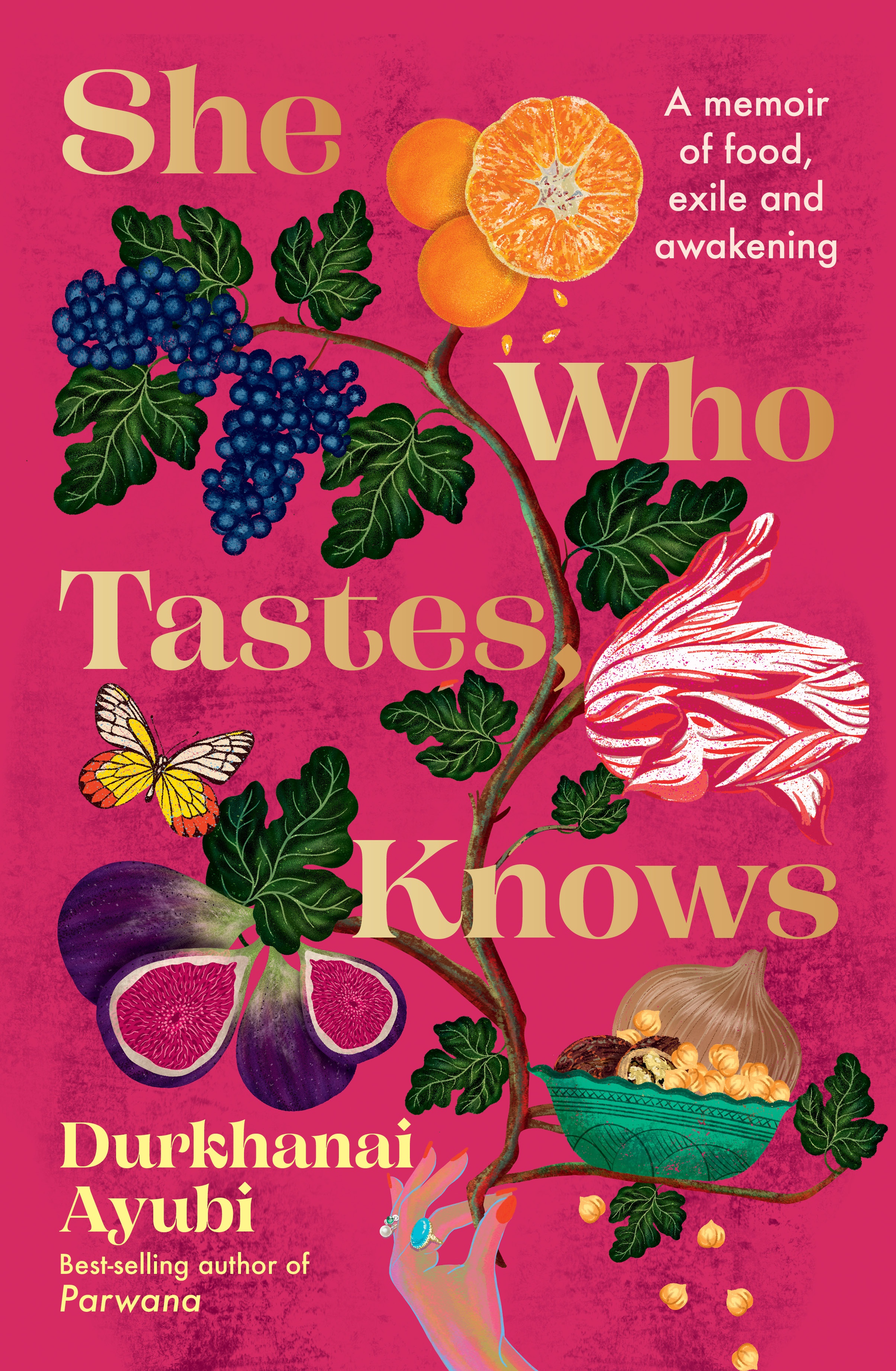 ‘Before beginning the writing process, I had been travelling widely. Those experiences informed me, but for this book, my body wanted stillness. It became a consolidation of what I had witnessed. I drew on my travels to Afghanistan, including a monumental trip to my maternal line’s home and family graveyard.
‘I also drew on cooking. For every chapter I wrote, I made dishes using that ingredient – watching it through seasons, tasting consciously, inhaling its scent, observing people’s body language as they engaged with it, even noticing it in plant form. It was a process of developing closeness – even friendship – with the plants and dishes. I leaned heavily on my ancestors, many lost early to war. I felt their compassion and love, which helped guide me through moments of loneliness or doubt.’
If she could choose one recipe from this book or Parwana for every reader to try, what would it be?
‘For something easier – banjaan borani, a crowd favourite of silky eggplant simmered in tomato-based sauce, crowned with tangy yoghurt and herbs. It speaks to the balanced richness of Afghan flavours.
‘For a more collective process – mantu. These steamed dumplings are stuffed with sautéed onion and carrot, topped with lamb mince or vegetarian split pea sauce, and finished generously with dairy and herbs. Beyond their irresistible appeal, mantu – which exists in variations across the Eurasian continent – allowed me to explore histories of cross-pollination and exchange that shape the region. It overrides the peripherality we’ve long been contained within and writes us back into one another – which is the underlying gift of the meals that make us.’
She Who Tastes, Knows is published by Murdoch Books, rrp $34.99
ABOUT THE AUTHOR
 Durkhanai Ayubi is an Afghan-born writer whose body of work seeks to reclaim the stories of her motherland, explore the experience of displacement, and interrogate the limitations embedded within normalised notions of justice and power. Her book Parwana: Recipes and Stories from an Afghan Kitchen received global acclaim, winning international awards including from the Food Writers Guild and the Art of Eating.
She has been featured in national and global media, spanning TV, print, podcasts and radio, including in The New York Times, Al Jazeera, The Washington Post and beyond. She has worked extensively in the arts, including contributing to the curation of national literary festivals. She is a Lifelong Fellow of the Atlantic Institute, a social justice–focused organisation based at Oxford University. Here, her work takes on global dimensions, with her research creating frameworks for transformative justice with narrative reclamation at its heart.
Her next book, She Who Tastes, Knows, is forthcoming. It asks, through a lens of food and peering into the unseen, what more is possible when stories and histories are returned to a people.
Photo credit – Ramsay Taplin

0 Comments