


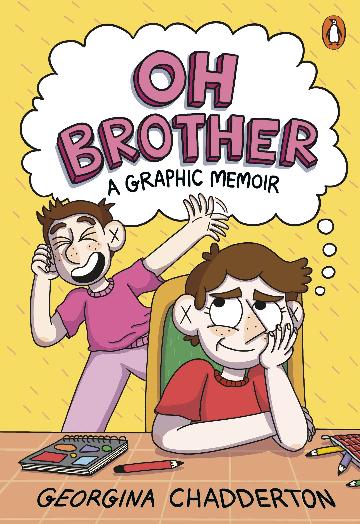
GEORGINA CHADDERTON’s Oh Brother is a thoughtful middle-grade graphic memoir that examines the fun and difficult parts of growing up alongside her autistic brother, Rob.
Read on for a Q&A with the author.
MEET GEORGINA CHADDERTON
What inspired you to tell the story of your relationship with your autistic brother in graphic memoir?
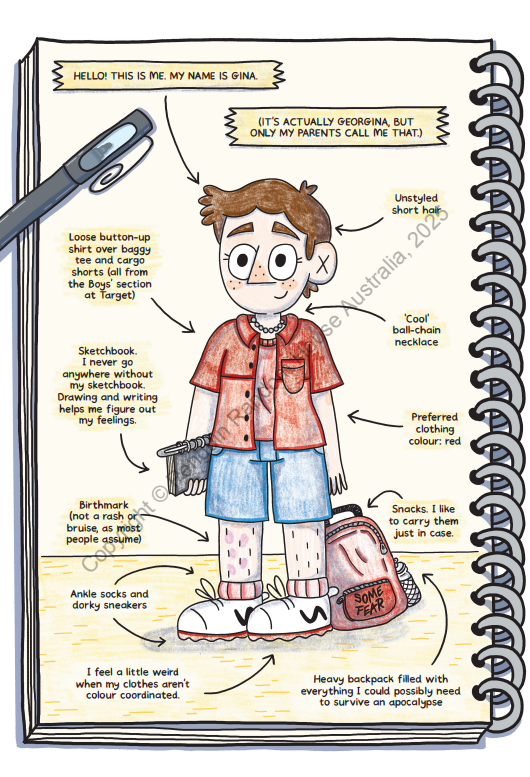
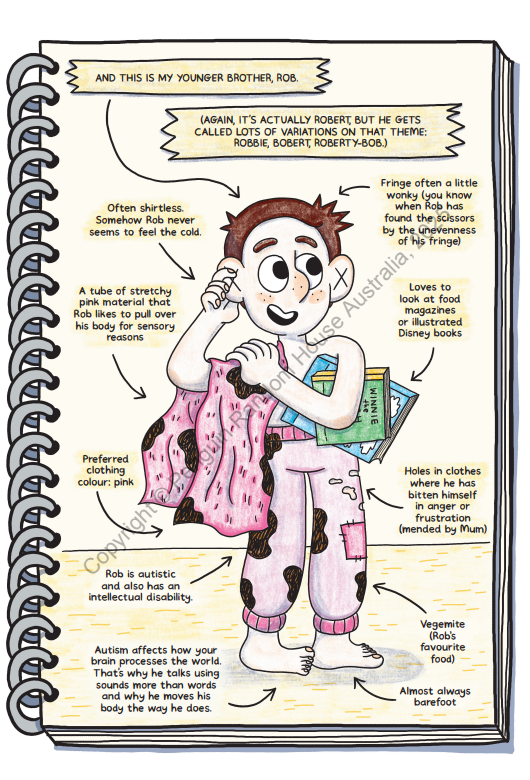
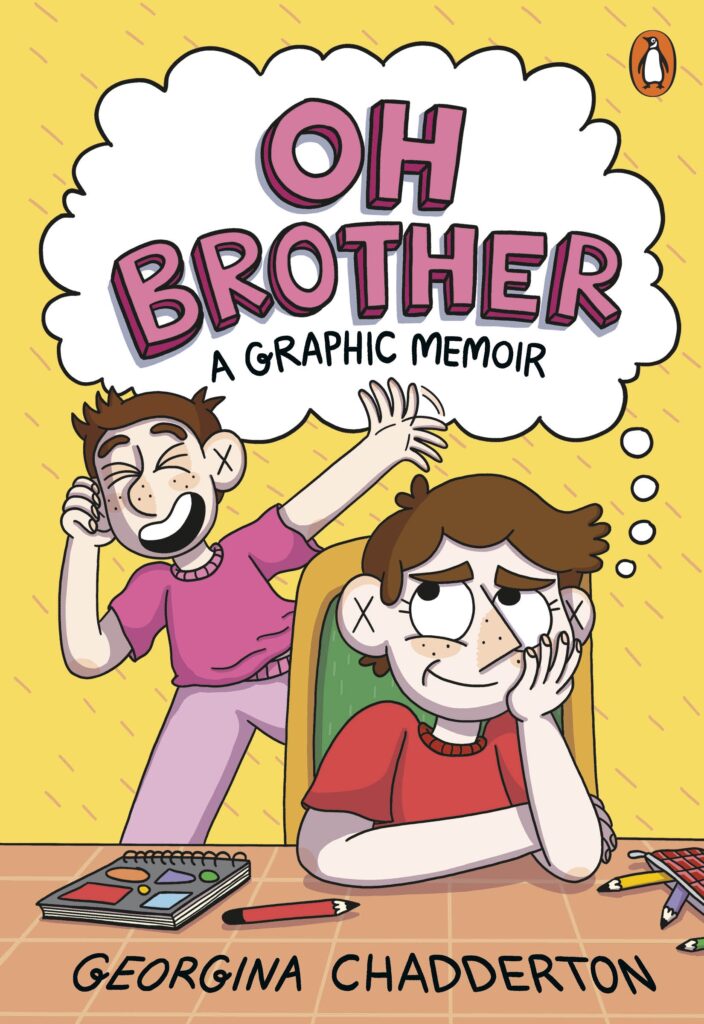 Growing up, I didn’t see myself or my brother reflected in any media. There was little autistic representation in general at that time and even less that I felt represented my experiences as a sibling. I wanted to share my perspective of my relationship with Rob so that other young people currently experiencing similar things could see that they were not alone. I also wanted to help those who haven’t had such experiences learn more about what it can be like, feel like they could ask questions, and gain more empathy for different family dynamics.
As for why I chose comics as the medium: comics are rad! (why yes, I am from the early 90s.) Using words and pictures together has always been the way I feel I’m best at communicating.
What was the most challenging or rewarding part of creating Oh Brother?
There were lots of challenging and rewarding parts to making this book but I think one of the hardest things was learning to not take critical feedback on the book (from editors and other comics makers) personally. In fact, it’s still something I struggle with, particularly when I’m writing personal stories. But even though the editing and feedback sessions were really hard and emotionally draining, I think that the book is much better for it, and that’s very rewarding!
What was the most important message or feeling you wanted to convey to readers in Oh Brother?
The message I wanted to get across in Oh Brother is that everyone’s family dynamic is different; it might not always be easy but that doesn’t mean it’s wrong. There can be lots of different emotions and feelings around having a sibling who has high support needs. Sometimes those emotions can make you feel awful and overwhelmed and you might not always have someone around to talk to about it. I hope this book can be a comfort and support to those with similar experiences.
As co-director of Papercuts Comics Festival and someone who runs comics-making workshops, how have these experiences influenced your work on Oh Brother?
I would say that it mainly goes the other way! Working on the book has influenced both my work as co-director of Papercuts and as a workshop facilitator. Working on such a big, emotional comics project for many years has helped me figure out what works for me as an author/comics maker, which means I can then share that knowledge with workshop participants. I also know how hard and time-consuming any long-form comics project can be, which influences my choices when programming the events for Papercuts or trying to create opportunities for other creators.
On the flip-side, organising a national comics festival has given me insight into many different creators’ processes, and hearing from other creators also validates my publishing experiences. And when working with young people, I can see myself (particularly my perfectionism) in them, which helps me to take a step back and be kinder and more supportive to myself (like I am with my students).
Can you tell us about your creative process for transforming real-life experiences into panels, dialogue and visual storytelling?
 I’m always tweaking my process and finding better ways for me to share my stories, but at the moment my process for writing autobiography or memoir comics is this: I will have a collection of life stories in my brain that I want to share and think would work together in a story. I’m a visual and tactile person, so I remember experiences very viscerally in my mind.
I start with writing out each experience on a post-it note, colour-coded for different story emotions (happy, sad, angry, etc.). These are usually just a heading and maybe a little scribbly drawing, to remind me of the memory. The beauty of post-it notes is that you can move them around easily, so I can figure out what order I think the stories would fit best.
Once I have this sort of dot point version of the book, then I write a dialogue script. I use a text document with each page of the text doc corresponding to a page of the comic. I set it up so I can see two pages at a time (like you would when you’re reading the comic); this is to help me see where the page turns will be (very important in comics storytelling). It’s set up similar to a film script but probably with even less visual description. If I have trouble with a particular scene, I might skip ahead to the next writing stage for that page and try to thumbnail it out and then go back to typing up the dialogue.
Once the dialogue script is done, it’s time for thumbnails. These are similar to storyboards for animation or film. This stage consists of scribbling stick figure drawings that help me figure out the ‘angles’ and ‘shots’ that are going to work for the story. I draw these about a third of the size of the final art and I draw them straight to paper with pen. I like to get really messy and have fun with the thumbnails (although sometimes it can be a challenge for my perfectionist side). I also colour code the main characters so I know who is doing what on the page (this is important for very messy thumbs, where everyone looks kind of the same in stick figure form).
 After thumbnails come the pencils. This is when I move onto my iPad and work digitally for the rest of the comics process. The pencils stage is where I take the thumbnails and start working them up into a more detailed comic. These will start to look pretty much like the final art (only without colour and maybe not as many of the final details). This is where I can really see if the ‘shots’ I chose work for the storytelling and if the pacing feels right. This is also when the lettering of the comic is most important (all the words in the speech bubbles), because if what I’ve written doesn’t actually fit in the panel or bubble, I need to do some editing or add in extra panels/pages. I’m very grateful that my partner, Owen, is also a comics maker and a great letterer. I could not have done this stage without him.
And finally I get to do my favourite bits, the inks and colours! This is when the comic really comes to life. I also do this stage on my iPad, using the Procreate software.
In between each of these stages, the comic also undergoes editing and feedback, including feedback from sensitivity readers as well as other comics makers. After I’ve finished the final stage (inks and colours), there is proofreading, to make sure that I haven’t missed any words and to fix grammar and spelling.
Phew! It’s a lot of steps to get from a memory or experience to the final book, and it’s often really hard to decide what to keep and what doesn’t quite fit in the story (I had to cut a few stories from Oh Brother that I hope I can share in future graphic novel memoirs). It’s always really hard to say goodbye to some of these personal stories that are very close to your heart. And one step that is hard to quantify when writing any story (but I find particularly with writing memoir) is the time spent percolating over ideas. There is often a lot of time when your brain is thinking about the story but that’s it. You’re not writing or drawing anything, so you don’t feel like you’re working on the story… but your brain is ticking away trying to solve a story problem while you’re doing house chores or trying to get to sleep. And that brain work is super important, even if the fact that you can’t see it means it doesn’t feel like you’re achieving anything.
Do you have advice for readers or aspiring cartoonists interested in telling personal stories through comics?
Start small, read lots of comics, and be kind to yourself. When you read a really cool graphic novel and you feel inspired, you often want to start with a big 200 page book. But I would recommend starting small (a couple of panels or a single page comic) and building up. Making comics is often more a marathon than a sprint!
Read as many comics as you can get your hands on, of all genres, and see what you like and what you don’t. Think about why you like certain storytelling styles or don’t like others. This will help you find your voice (if you’re writing and drawing comics, that’s both words AND pictures).
Writing about yourself can make you very vulnerable, especially if the story you’re telling is complicated or deeply emotional. Be patient and kind to yourself. It’s a very brave thing to share stories about yourself.
Your first few comics might not look how you want them to, but don’t be discouraged! Every comic, no matter how small, will teach you something about how you make comics and help you improve next time. Start scrappy, use stick figures if you want… just have a go at getting your story on the page. Practice makes progress.
I can’t wait to read your comics!
Click here to read a Sneak Peak of Oh Brother
ABOUT THE AUTHOR
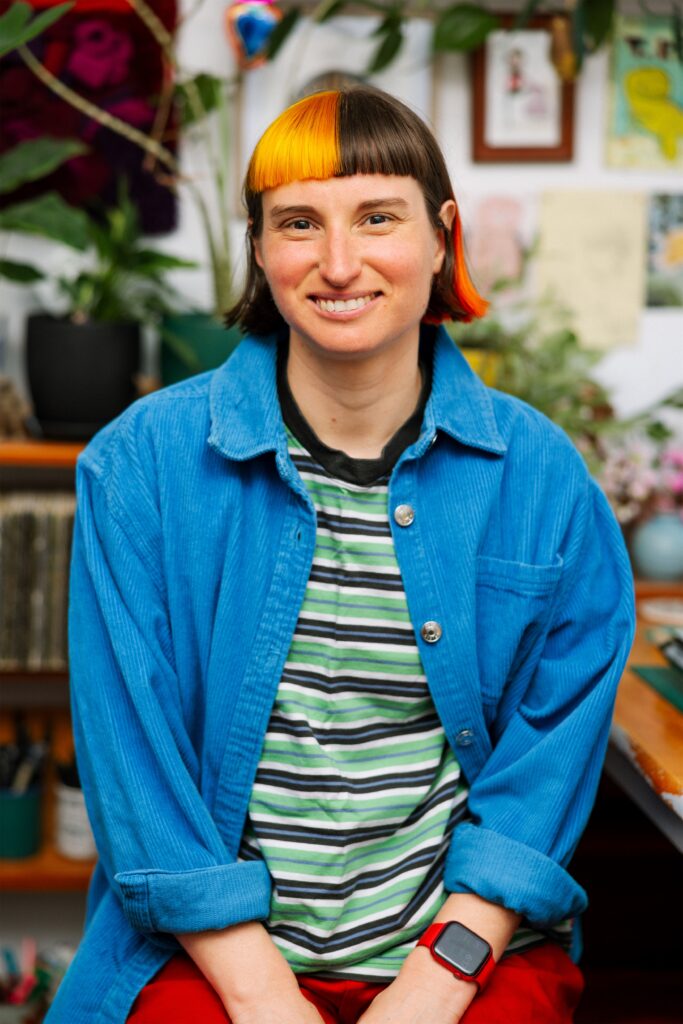 Georgina Chadderton (she/they) is an awkward yet friendly Australian cartoonist with an undying love of eating snacks, drinking green tea, patting dogs and playing roller derby.
Although Georgina has been published all over the globe, Oh Brother is her first full-length graphic novel. When they’re not making comics, Georgina co-directs Papercuts Comics Festival, runs comics-making workshops, and reads comics by their favourite comics makers (basically, it’s all comics, all the time).
Georgina lives on Kaurna Yerta (Adelaide) in South Australia with her partner Owen and their distressingly large collection of books
0 Comments