



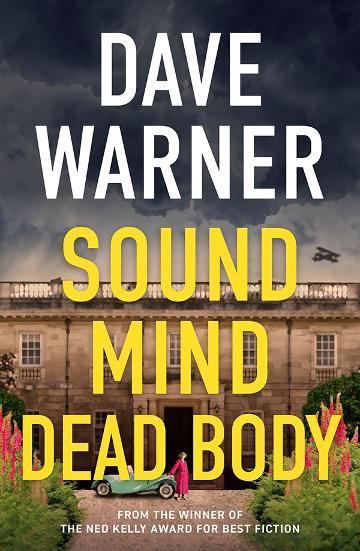
Sound Mind Dead Body by crime writer DAVE WARNER is an atmospheric whodunnit set in the 1920s.
Read on for a Q&A with the author on writing cosy mystery, his new character Fred Willets, and his favourite Agatha Christie novel.
MEET DAVE WARNER
Why did you set out to write a cosy mystery? And also, why do you think these books are so popular as of now?
I’ve loved the limited-suspect/Whodunnit genre since I read my first Agatha Christie in 1980, and in fact the very first crime-writing I ever did was a murder weekend play in 1984, in which I sought to use all the classic Christie tricks. That play gave me the confidence that I could write crime fiction, and in fact Sound Mind Dead Body is a novelisation of that very play. I believe this genre has always been popular but there has been a revival via the likes of Knives Out. But I also think it’s popular because it is one area of fiction that is pretty much delicious fun, free of other political or social agendas, allowing a reader to float along rather than having to do any paddling.
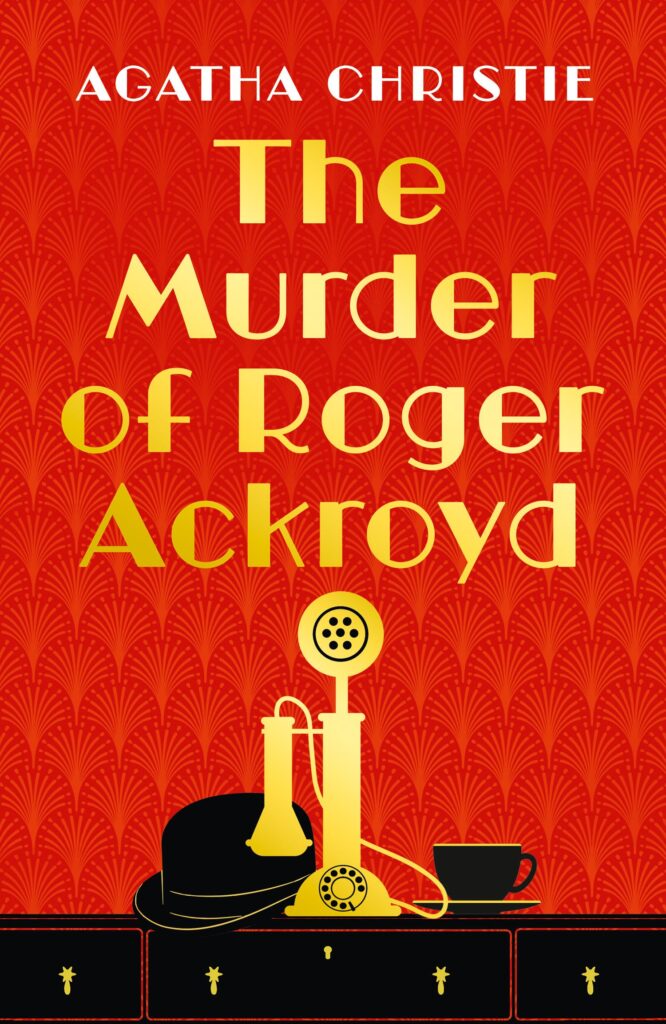 What are some of your biggest inspirations when writing mystery? Also, do you have a favourite Agatha Christie novel?
Crime fiction is like a fabulous continent with each sub-genre constituting a unique country with its own language and customs. Henning Mankell is a favourite for deep character procedural with veracity, Elmore Leonard for dialogue, humour and plot convergence, Thomas Harris for suspense, James Ellroy for action and Agatha Christie for Cluedunnits. The very first Agatha I read was The Murder of Roger Ackroyd and it remains a favourite.
Why did you decide to set Sound Mind Dead Body in 1929? Also, what was your historical research process like?
For me, one of the pleasures of ‘early Agatha’ is being vicariously part of the English upper-class of the era. When I wrote the play for the murder weekend all those years ago, I knew guests loved the opportunity to dress in ‘roaring twenties’ clothes too. It’s a standout era. I’ve always wished that a bunch of previously undiscovered Agatha’s turned up. While there are brilliant contemporary ‘cludedunnits’ I wanted to write something as close to a golden era Agatha as I could.
By coincidence my mother-in-law had given me a little second-hand Time Magazine annual of 1929. The year was perfect: just before the Depression, at the time of Al Capone and the Valentine Day Massacre. That little book helped with my research, but the other element is that I have inherited the correspondence of my uncle Bob Warner (born in Perth) who fought in the Great War, spent leave in England from 1917 and made great connections. His papers were enormously helpful in adding veracity. The other research of course, are those Agatha novels themselves!
How do you approach the mystery side of writing a Whodunnit? Do you have all the details planned from the beginning, or does it take a while to figure out?
Typically, I try to start with the what might be the jaw-dropping idea at the core of the story. For example, in ABC Murders Agatha has three people killed but two are a smokescreen, or in Orient Express everybody is the killer. It is not essential to have this big idea but great if you can manage it. Once I have a core idea, I work on what might be a typical setting for a limited character whodunnit (a will reading at a manor house in this case) and then who my characters will be. And then most importantly, each suspect must have a very good reason to be the killer, and the reader must be given glimpses of this.
Usually, it helps to also have some additional but less serious crimes involving our suspects. This means their furtive behaviour can be offered to the reader as a red-herring. So really, with say six suspects, you have to plot six scenarios that could explain the murder but crucially then eliminate five of these with very subtle clues. When all that is done, I like to test whether the audience will be able to guess (hopefully not) but also make sure I’ve given them enough chance to. The author has to play fair, but a little legerdemain is allowed.
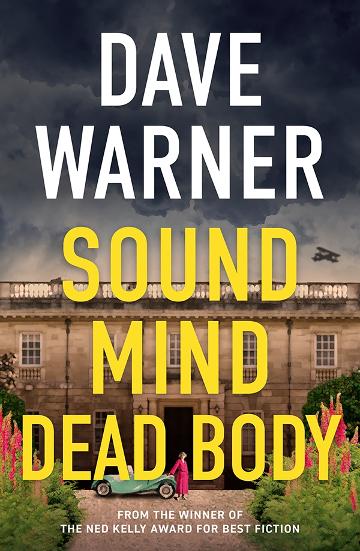 Why did you decide on the title Sound Mind Dead Body?
The murder coincides with the reading of wills and the phrase ‘of sound mind and body’ popped into my head. From there it was a quick jump to ‘Of Sound Mind And Dead Body’ and then for the sake of marketing Sound Mind Dead Body. So thematically the title works, but it’s also punchy.
Do you have a favourite character in this book?
Nothing tricky here, my two ‘detectives’ Fred Willets, an Australian Great War flyer veteran, and Prudence Meadows, a young, clever pharmacist are my favourites. As I mentioned, I have inherited many letters written to my Uncle Bob from the years 1917 through 1930, by an Englishwoman and educator. She was much older than he, and there is nothing romantic in their correspondence, but the intensity of ideas, philosophy and religious beliefs really impacted me. Some letters are written in the midst of what for Bob must have been unimaginable trauma in the trenches of the Western Front, but they are mixed with mundane news, and high ideals from poetry to eternal salvation. So, to have my main detective as an Australian who has lived through that but still wishes to fly around the world in the infancy of aviation, gives me a kick. No less so though than with Prudence. I thoroughly enjoyed trying to get into the head of a clever, young woman of the time who has seen many of potential suitors killed off in the war, but who has abundant energy and smarts, and still would very much like to find love. Of course, I had great fun making her a pharmacist. Agatha Christie herself might not have had a degree in chemistry, but she had much practical experience and knowledge from her time nursing and dispensing in the War.
Where do you hope to take Fred Willetts and Prudence Meadows in the future? Do you have more titles planned out for them?
With Fred’s desire to pilot himself around the world it opens up a vast array of interesting places where I might take them. For their next adventure I have some preliminary ideas for India. And then as they say … the world is their oyster.
ABOUT THE AUTHOR
 Dave Warner is an author, musician and screenwriter. He has written nine novels and six non-fiction books. His first novel, City of Light, won the Western Australian Premier’s Book Award for Fiction, and Before it Breaks won the Ned Kelly Award for best Australian crime fiction. His novel Clear to the Horizon features the lead characters from both these books. His most recent crime novels are Summer of Blood and When it Rains. Dave Warner first came to national prominence with his gold album Mug’s Game, and his band Dave Warner’s from the Suburbs.
In 2017 he released his tenth album, When. He has been named a Western Australian State Living Treasure and has been inducted into the WAMi Rock’n’Roll of Renown.

(5/5)
The term ‘cosy mystery’ is a wee bit patronising, and I certainly wouldn’t have described this book as such (although the author does!).
A great cast of characters, lots of plot twists, and well-written dialogue. Excellent little glimpses of back stories and just enough historical fact to add a feeling of authenticity to the ‘detecting’. I love it when I can’t pick the murderer until the end reveal, though I did work out some of the clues before Willets did (but no spoilers here)!
A book that anyone can enjoy – murder, romance, detection, greed, and family dynamics, all set in the dying days of the 1920s. Highly recommended.
(1/5)
My review follows a did-not-finish put down at the start of Ch4 (p36). The death of it for me was the naming of a town “Shagwell,” which is in reality “Shadwell.” Where the author was attempting to channel Agatha Christie, they instead channelled Austin Powers!
I was alert to some grammatical clangers which started on p14 with “He’d instructed Lucas not to engage the men if he discovered them but to return to town until he himself had returned”… in which “he” is doing some very heavy-lifting and “return” gets overused.
I could document all of the grammatical concerns, up to p36, to you if you wish. I did laugh as Ch2, p18 opened at “usually private beach” and how such a beach “lay only a couple of hundred yards back over her shoulder” (where the reader did not first comprehend the character’s physical position). Also, personifying the sun was a step too far: “The sun beat down out of the blue sky as if it had not a care in the world”.
(5/5)
I really enjoyed reading Dave Warner’s new book ‘Sound Mind Dead Body’ as it had so many twists and turns, which leaves you guessing until the end whether the victims were murdered and by whom, which is reminiscent of the Agatha Christie books.
The book is set in the year 1929 at a Manor House in Devon, England, where members of two families gather to hear the unpopular matriarch Julia Pedhurst read from her late husband’s will.
There is a pilot named Fred Willets who is an Inspector of Police in the Kalgoorlie Gold Squad in Western Australia, and he has arrived at the Manor because he is a beneficiary the late Thomas Penhurst’s will so when deaths start occurring Fred and a pharmacist Prudence Meadows assist in solving the crimes because the local police had difficulty in reaching the house quickly and clues disappear if the investigation does not commence immediately.
Definitely a book that you cannot put down, as one needs to reach the end to find out who committed the crime.
(4/5)
I was given the opportunity to review an ARC copy of ‘Sound Mind Dead Body’ by Dave Warner by Fremantle Press and Good Reading Magazine for an honest review.
It’s a classic whodunit murder mystery, set in the late 1920s, so it is written in a dignified highbrow style reminiscent of Agatha Christie’s winning formula. The characters are set in a classy manor for a will reading when the body count starts to rise. It’s like a live game of Cluedo. Nobody is safe except the killer, and nobody is safe from the scrutiny of Fred Willets’ discerning eye and his assistant, local pharmacist Prudence Meadows. They are an intelligent pair and go through the facts till they uncover who’s responsible. More than a few plot twists throughout.
(4/5)
Family, Friend, Foe… MURDER!
Dave Warner has captured all the elements of a classic Agatha Christie mystery in his latest publication, ‘Sound Mind Dead Body.’
Set in a beautiful and peaceful English countryside, the family anxiously gathers as beneficiaries of a will, hoping to reveal their anticipated fortune. As tongues unleash, secrets unfold, and desperation is born, the reader becomes instantly hooked with a myriad of twists, turns, and unexpected surprises as the plot quickly thickens into a crime scene.
Bewildered and double-guessing as to who dunnit, this book will appeal to lovers of detective fiction, crime mysteries of any age, and will definitely keep you intrigued and entertained as a guaranteed good read.
(3/5)
In this historically set whodunnit, you’ll be guessing until the very end. A story built on a variety of interesting characters that each play a role in the mystery. A well-written, quick, and easy-to-read book that takes you right back to the 1920s.
(4/5)
If you like Agatha Christie-esque novels, then this one is for you. A whodunnit, country estate mystery set in late 1920s England; throw in a ‘colonial’ detective on leave and you have the perfect scenario for some escapist fun.
The Pedhurst/De Reve family is gathering for the reading of a will. The only outsider is Fred Willets, a police inspector from Australia, who has a link to the family as a result of his WW1 service as a fighter pilot.
As the characters gather, we glimpse the personalities of each and the complex dynamics between them. Everyone seems to have a secret!
Inclement weather and the inability of the local authorities to attend the scene of the crime(s) provide the conditions for Willets to begin investigating with the assistance of local pharmacist, Prudence Meadows.
Willets is a likeable protagonist, as is Prudence, whilst the remainder of the cast of characters are typically flawed and all have plausible motives to have committed the crime.
I thoroughly enjoyed this novel. Was it a perfect literary work? No. It is what it sets out to be – a whodunnit, with red herrings, some escapist reading with mystery and a touch of romance. I didn’t pick the culprit until they were revealed. Bonus!
Warner has ended the novel, leaving us with the possibility of another Willets Meadows mystery!
(4/5)
When former pilot turned detective Fred travels from the goldfields of Australia to a manor house in Devon to collect an item from an inheritance, he does not expect to be solving a murder. But that is just what follows in this classic, intricate whodunnit that has you turning the pages at speed and keeps the reader guessing at every step as clever Fred uncovers family secrets, peels back layers of deception, and follows the twisting trail to the killer.
Full of dry humour and with an eclectic cast of characters, this 1920s-style mystery will appeal to lovers of the Miss Phryne Fisher mysteries.
Thoroughly enjoyable.
(5/5)
This is my second book by this author, so I was thrilled to obtain his latest book.
A real whodunnit murder mystery, with a little romance, family secrets and disputes, the rich and their servants, and throw in a dead body or two.
We delve into the lives of each character and their backgrounds as the families come together for the reading of a will (or wills?). But little do they know what is about to unfold – enter the Australian ‘Willets’, who is a stranger to the family, however, knows a thing or two about crime.
It had me captivated from the very beginning, right till the end when all was revealed.
(4/5)
Devon, England, 1929. Fred Willets – a young Australian policeman – attends Sir Thomas Pedhurst’s will reading, hosted by his widow at Harcroft Manor. Also in attendance are several family members hoping to receive an inheritance. When a mysterious death occurs to delay proceedings, the circumstances are immediately suspicious; each family member has a reason to fear that they will be cut out of the will, and therefore a motive for murder.
In its setting and structure, Sound Mind Dead Body pays homage to classic crime, particularly Agatha Christie. Although it is not so derivative as to be boring. Protagonist Fred is a charismatic detective, and he is joined by a cast of entertaining characters who fit nicely into the whodunnit archetypes. There is even a charming (if slightly saccharine) romantic subplot with a plucky local pharmacist.
The prose is simple, but the story is well-plotted. With fast pacing, an intriguing trail of evidence, and surprising twists without being silly, this book is certainly a page-turner. Most importantly, the denouement feels satisfying and well-earned. This was a thoroughly enjoyable read – perfect for anyone who loves a clever mystery and particularly suitable for fans of golden age detective fiction.
(3/5)
Dave Warner writes with such detail and effect that he really takes you along for the murder & mystery to make you feel like you are immersed in solving the crime yourself, or at least helping a bit!
In this murder mystery, we are taken to the home of matriarch Julia Pedhurst for the reading of her late husband’s will. Two families join to see the divide. What follows next is the death of Julia, then a fellow house guest, leaving everyone a suspect. It is up to Inspector Fred Willets and the offsider Prudence to solve the case.
Will there be a successful solve?
(4.5/5)
This book is a must-read for any Agatha Christie fans. I have read her complete collection and enjoyed reading this book very much.
I have not read any previous books by Dave, and he describes this one as a change from “hard-boiled” to a “cosy mystery”.
When I started to read it, I thought, OK, so a scene is being set.
Then, once you get into the “present day” part of the book, things become very familiar and very Christie in format.
The characters are developed, the settings described very well, and there are enough red herrings to suit any consumer of seafood…
If I were to make note of one thing in particular is that several parts of the plot seem to be taken from almost as many Christie novels. As such, you get very comfortable with the family, the matriarch, and the surrounding settings.
In all, it is a “short” novel and pulls the reader into the landscape and time period very nicely.
The characters are believable, and you definitely get a sense of how they all “fit” together and their backgrounds.
If there was one piece of the story, I found a little too “Agatha” was the way the local inspector was portrayed. I know this is “explained” in the novel, but I feel it was a little too convenient.
All in all, a great story and a very intriguing mystery. The great reveal was exactly as one would expect.
I hope to see more of these from Dave Warner in the future.
(5/5)
Dave Warner may usually write gripping Aussie noir, but he is just as adept at writing a cosy murder mystery set in a grand English estate in Devon in 1929.
We meet Fred Willets, ex-fighter pilot, who is attending the reading of the last will of a wealthy relative, all the way from Kalgoorlie, Western Australia. When the deceased’s widow, Julia Pedhurst, dies before the will is read, everyone staying at the house is a suspect.
With Dave’s trademark laconic humour and a cast of great characters, the story that unfolds is full of twists, bad antics, and red herrings in the search for the murderer. Fred teams up with Prudence, a clever young pharmacist from the local village, and they work together to find out who hates Julia enough to kill her.
With sharp wit and clever writing that easily puts you in the time period, this Agatha Christie-esque story has a bit of everything – murder, romance, family jealousy, and of course greed.
A thoroughly entertaining book that had me guessing to the end.
(3/5)
A solid murder mystery set at an English Manor House. I really enjoyed having an Australian detective solving the murder, which is a good twist on the genre. Would recommend for those who enjoyed short-ish cosy mysteries with Australian subplots.
(4.5/5)
Having read a number of Dave Warner’s novels in recent years, I was looking forward to immersing myself in another gritty Australian crime-noir novel. However, his new novel ‘Sound Mind Dead Body’ was an unexpected and delightful diversion, casting back into the early twentieth century and more genteel times in England.
As the author acknowledges in his author’s note, the novel owes a great debt to the crime novels of Agatha Christie. This novel is very much in her style of the privileged and genteel class of English life, but in Dave Warner’s own unique voice.
At the beginning of the novel, you really need to pay attention, as the family structure of Lady Julia Pedhurst and her assorted staff is quite intricate in the setting of Harcroft Manor. But once the characters are established, the story rolls along nicely. Dave Warner introduces a couple of grisly murders early and throughout the book, along with a host of red herrings and false clues to keep us intrigued. The emerging romance of Fred Willets (the Australian character) and the pharmacist Prudence Meadows adds a lighter and sweeter touch to the intrigue. Of course – in true Agatha style – the final scenes reveal the guilty culprit and a dramatic twist that keeps us reviewing the earlier clues thrown up throughout the book.
I thoroughly enjoyed this novel by Dave Warner. As mentioned earlier, it is a diversion from his more usual gritty style. But it is an intriguing story set in more genteel times that harkens back to the classic crime novels of the early 20th century, and one that does not disappoint. I can highly recommend this book to those readers who love a cosy murder mystery with a solid twist in the tail.
(4/5)
Families can be messy, but this one proves deadly.
The story begins with an unconventional family gathering to hear the reading of a will and quickly spirals into tragedy for all involved. I really enjoyed Dave Warner’s writing style, particularly the subtle breadcrumb trail of clues and the way we uncover information alongside Fred. It made the investigation feel immersive and kept me constantly second-guessing myself.
Just when I thought I had worked out the killer and was feeling quietly smug, Warner completely pulled the rug out from under me. So many moments that felt significant turned out to be clever misdirection, which made the final reveal even more satisfying.
The characters are delightfully unpleasant, mostly unlikable, and positively fascinating. Grudges are plentiful, secrets are held close, and whispers between family members in the dead of night ensure no one is ever boring. Thank goodness for calm, intelligent Fred and the unforgettable Prudence.
That final twist was fantastic and genuinely shocked me. I was gasping out loud.
I sincerely hope we haven’t seen the last of Fred.
(4/5)
The year is 1929. Julia has gathered her family for the reading of a will.
Everyone has something to gain, everyone has something to lose, and everyone has something to hide, but who has it in them to murder to get what they want?
Dave Warner pays homage to the Agatha Christie novels set in the late 1920’s, and fans of the genre will certainly find Sound Mind Dead Body a real treat.
Written in the typical whodunnit style with twists and turns that keep the reader guessing, this was very much a ‘cosy mystery’ reminiscent of Miss Marple or Hercule Poirot. For me, the story was a little slow, but I still enjoyed following the clues until the final reveal, which, in typical Agatha Christie style, is set in the drawing room. Warner describes the characters so well that they came alive in my imagination, and I wasn’t surprised that the basis of the novel had been a play he had written and performed.
Relatively short at 217 pages, Sound Mind Dead Body, I recommend it to the fans of the original Agatha Christie novels as well as fans of the modern version, like Knives Out.
(5/5)
A psychological delight!
Dave Warner’s Sound Mind Dead Body offers a sharp examination of the human psyche and the social mechanisms that govern judgment, reputation, and power.
At its core lies a provocative proposition: everyone can be equal, exploitable, and equally exploitable. Status, wealth, professed virtue, and even familial bonds provide no immunity from manipulation, misinterpretation, or self-interest.
Through the Pedhurst and de Reve families, Warner frames ignorance and desire as central drivers of behaviour. Familial interactions reveal tensions between the authentic self, the concealed self, and the performative persona cultivated to maintain respectability and authority, with reputation functioning as a strategic tool to manage perception, secure loyalty, and avoid consequence.
Familial hierarchy and social status further expose ego, entitlement, and reputational anxiety. Wealth and influence heighten the pressure to maintain moral performance, while those seeking favour often display strategic deference despite private resentment.
The result is a pointed critique of moral inconsistency and the fragile foundations of interpersonal trust, depicting a context in which individuals prioritise their own perceptions and comforts over objective truth, excuse their own actions while judging others, and allow miscommunication and conflicting intentions to erode trust and destabilise their relationships.
Undoubtedly compelling.
(4/5)
This was my first Dave Warner book, and though I have been told that it’s a different style to his other works, I am eager to read others.
This is a manor-house whodunnit with brutal murder, secrets, intrigue, and a Christie-esque mystery.
We are thrown into tense family relations when the beneficiaries of a Will come together, and unfortunately, not everyone survives the reading and distribution of assets. Luckily, though, we have a police officer and a pharmacist who can help unravel the issues.
I liked the character-driven story. I particularly enjoyed there being enough insight into backstories to keep the story interesting.
The mystery kept me guessing, and I enjoyed not being able to unravel everything before its time, although I feel like the resolution was quick.
(5/5)
What a fast and cosy, almost Cluedo-style book. Many lovers of Agatha Christie will enjoy this Deco era book. Once in, solving how Aunty was killed was intriguing and easy to read.
(4/5)
Sound Mind Dead Body by Dave Warner is a delightful, clever murder mystery.
The setup is classic Agatha Christie: a will reading at an English manor house, a room full of suspects, and a cleverly constructed puzzle that keeps you guessing until the final is revealed.
What makes this book special is its characters. Australian WWI veteran Fred Willets and sharp young pharmacist Prudence Meadows make an engaging detective duo. The suspects each have genuine motives, and Warner plays with distractions while still managing to surprise.
If I have one critique, some sections feel slightly repetitive, particularly in the middle, where the investigation circles familiar ground. A tighter edit would have pushed this from very good to exceptional. I really enjoyed reading this book.