


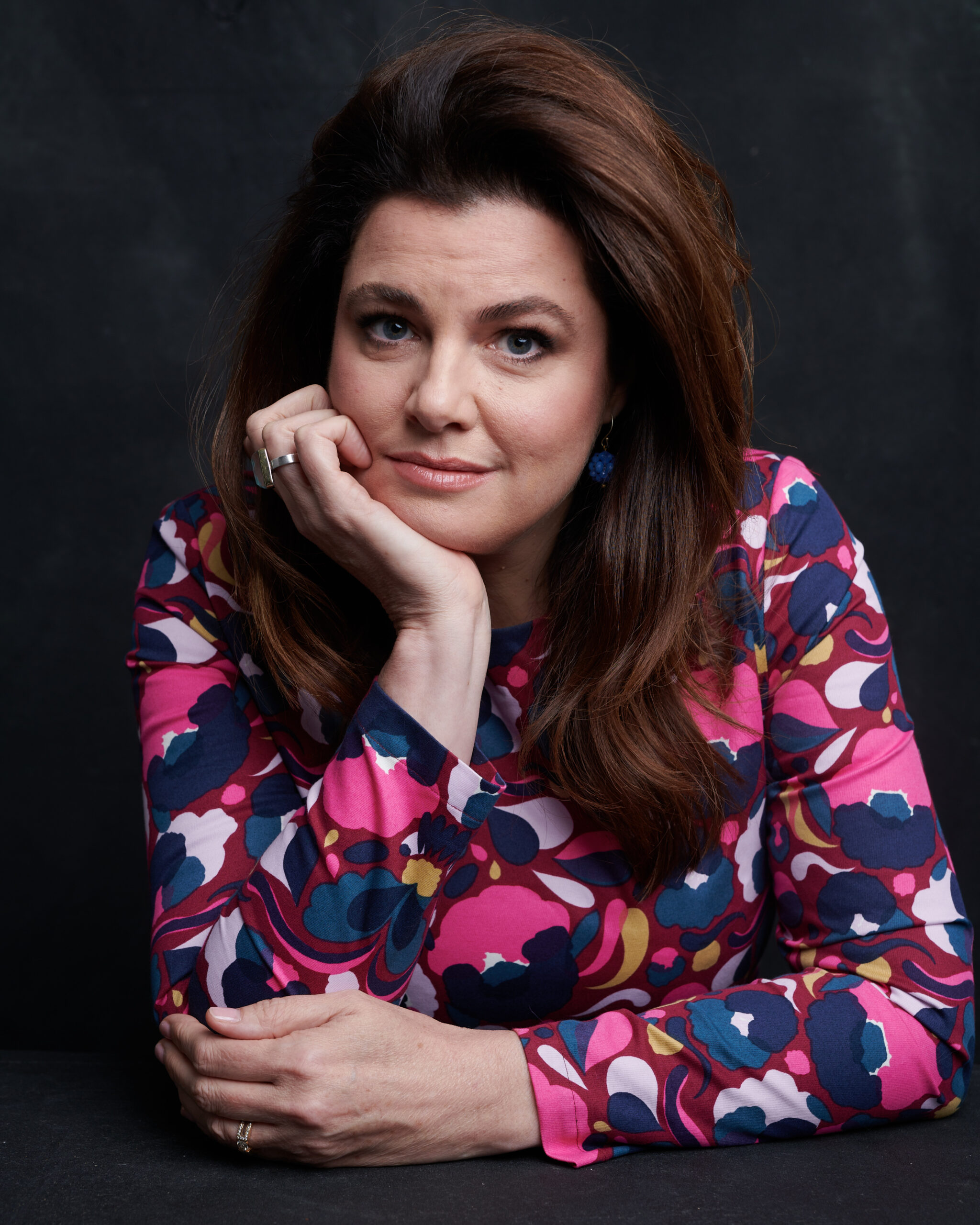
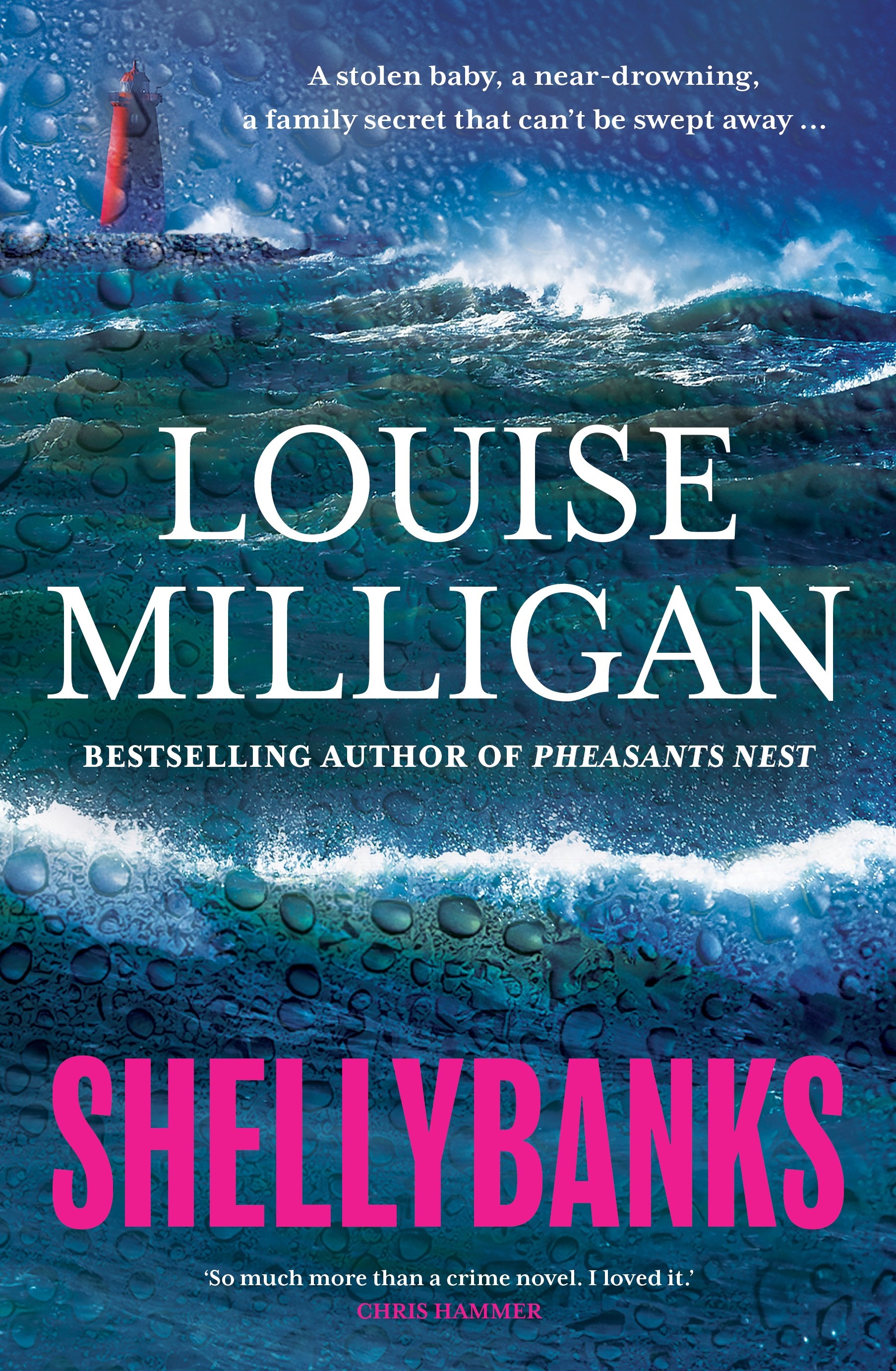
Investigative journalist LOUISE MILLIGAN has spent years uncovering stories that demand justice. Her second novel, Shellybanks is a gripping crime thriller set in her home country of Scotland.
ROWENA MORCOM writes.
It was a moment when working as a young cadet journalist for The Australian as their High Court reporter that Louise Milligan found her passion for investigative journalism.
‘I was assigned to the Peter Reith Telecard affair, which was a scandal at the time. It now seems terribly old-fashioned that there was such a thing as a telecard – a card you used in a phone box. I remember I got a significant break in that story. I had been working the phones for days. I had gone out after work to Cherry Bar in Melbourne. And back then, you were allowed to sit in the windows, with your feet dangling over the edge. I got a call from an important confidential source, and I was so excited that I fell out of the window! I had what we now call ‘story lust’, where you just can’t stop. Doing the big legal cases of the day – murder trials including Kathleen Folbigg, Sef Gonzales, the first coronial inquest into a murder on Norfolk Island – I began to become obsessed with finding out more about why these people did what they did.’
Milligan would go on to work in TV, including for ABC’s Four Corners where she continues her investigative journalism work, covering difficult, confronting stories.
‘Most of the stories I do at Four Corners are about very challenging subjects. The theme is trauma and institutional failure. Clearly the George Pell story was very challenging, as it was taking on an extremely powerful person in the Catholic Church, and someone who also had spent his life cultivating powerful allies. The ‘Canberra Bubble’ series we did for Four Corners was also both legally challenging and incredibly sad, as one of the main people involved in it suicided the day before I began investigating.’
These stories of course have left a profound impact on me as a journalist, and as a human. I think recognising this leads to more empathy and humanity, and actually helps me to understand my subjects and sources more.
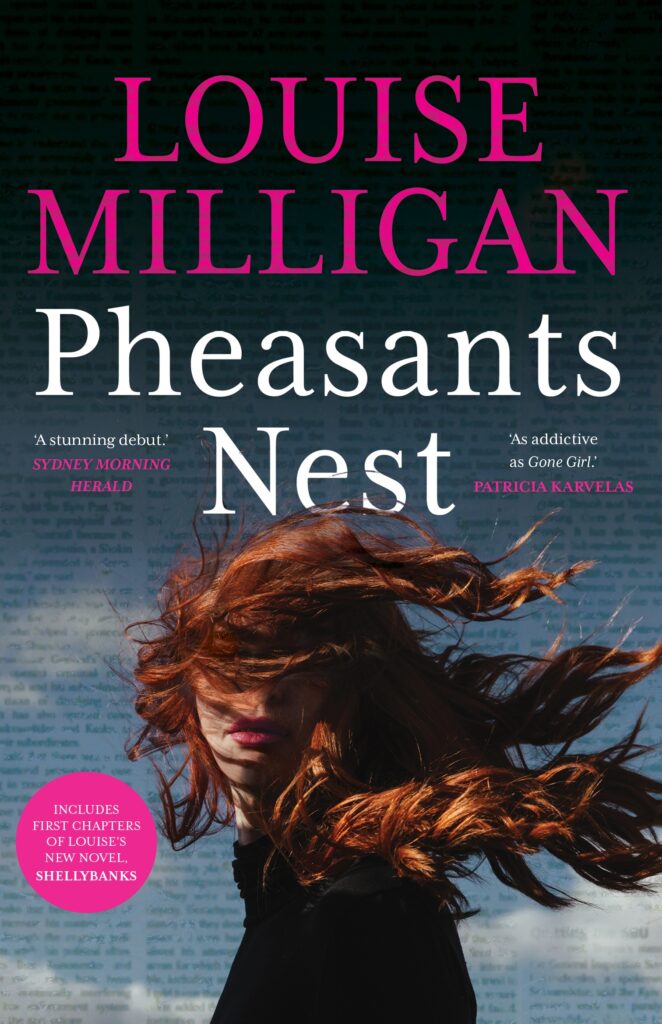 Louise has written award-winning non-fiction books but was eventually drawn to write fiction. Her debut novel, Pheasants Nest, was a crime thriller set in Melbourne. Like Louise, her main character Kate Delaney is a journalist. One night she made a choice she’ll regret forever. Mocking the wrong man on a girls’ night out lands her in every woman’s worst nightmare: bound, gagged, and trapped in the back of a car with a stranger, terrified of what’s coming next. She knows only too well how those stories usually end.
‘I was inspired after I covered the terrible murder of Irish Australian woman, Jill Meagher, and I was the first journalist to interview her lovely husband Tom. That story affected me profoundly. I thought about what it might be like if someone like Jill survived the original sexual assault and was kidnapped. And if she was a journalist, she’d understand how these things play out and it would make her both more knowing but also more afraid. I was also inspired by the work I did over many years with police with PTSD. I wanted to work that into the book and so the main detective, Peter D’Ambrosio, is wracked with PTSD but is trying to manage it. Many of his stories are versions of things that police told me for my investigations for the ABC 7.30 program.’
‘Lastly, very early in my career, I did a story about a coronial inquest, involving a young man who had jumped from the Pheasants Nest bridge, and I therefore discovered that bridge’s dark history – not least the impact on the local police who had to pick up the “jumpers” who regularly suicided. I wanted to bring all these elements together.’
You can’t help but wonder how much Louise has based her character of Kate Delaney on herself, both professionally and personally.
‘She’s similar in the sense that we are both investigative journalists, that she wears her heart on her sleeve, that she’s dogged and determined and that she adores her family and is torn between her lives in Ireland and Australia. But she’s also very different. She’s an only child, whereas I have two brothers. Both of her parents are dead, whereas mine had me young and are still alive. Kate’s searching for things in relationships that she never got at home, whereas I was surrounded by very fierce and stable love in my immediate family. She is, like me, an empathetic person. But she’s probably a bit more mouthy than me, too. She gets herself into trouble in ways that I’m usually too careful to do. She says the things that I think of saying in my head, way too late. She’s funny and loveable. I’d love to be her friend.’
For her new novel, Shellybanks, she has shifted its setting to Louise’s country of birth, Ireland. ‘When I first sent Pheasants Nest to my agent, I remember she gave it to a person in her office, and they said they loved it and it was clearly written with a sequel in mind. It wasn’t at all. But it got my mind percolating away again. And I began to think of what might happen next. I had for many years been thinking about writing a novel called ‘Shellybanks’, that was a metaphor for trauma.’
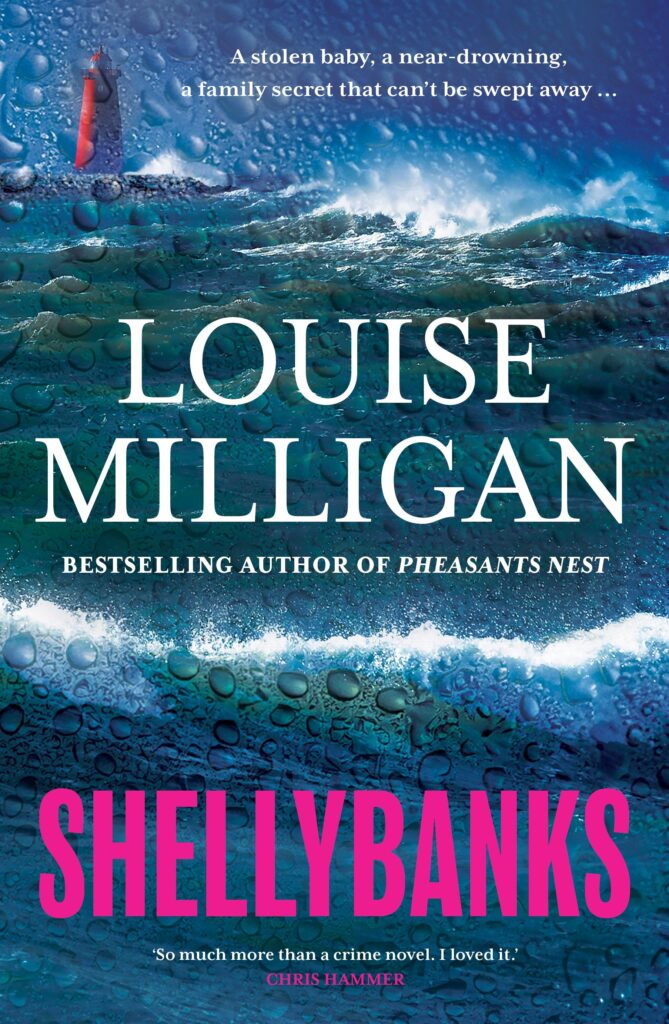 ‘Shellybanks is a tiny beach near Ringsend where I used to go as a child. And I always remembered my Nana telling me that children had drowned there, because the tides would rush in very quickly and catch them unawares. As I grew up, I had a recurring dream about this happening to me at Shellybanks. Running in the grey sand, that was kind of like quicksand, as the water came in, and jellyfish floated by, trying to reach the wall at the beach, but never quite getting there. And being just terrified. I felt like this was a good metaphor for not getting caught in the undertow of a great trauma, because trauma will catch up with you in the end. So, I decided to make Shellybanks a place for a pivotal scene in the book, where Kate Delaney begins to discover the hidden trauma of her beloved aunt, Dolores, who almost drowns at Shellybanks.’
‘I had also met an amazing Irish woman through my Four Corners work who had had a terrible past in a cult-like environment in Ireland in the ’70s, during the same period that my aunties were coming of age in Ringsend. I created this character, Dolores, who had some of her stories, and some of my aunties’ stories, and some stories I completely invented in my head. I wanted to explore the astonishing change in experience in Ireland in just a generation from my mother’s cohort to mine.’
As it is set in a place with great meaning to her, Louise tells me that Shellybanks is a deeply personal book.
‘So personal that every time I read Shellybanks for the edits, at certain points in the book, I would burst into tears. That said, it’s not my story, nor my family’s story, but something that could have easily happened to a family like mine. Like Dolores, my mum and her sisters left school at 14 because their mother needed the money to help bring up 11 children in a tiny two-bedroom terrace house in inner city Dublin. So I can imagine how a cult-like group on the fringes of Catholicism – which appeared to be very prestigious and full of well-connected people, which was offering cookery classes that led to a job – could have easily seemed like an excellent option for a family in a situation like my mother’s. Unfortunately, for Dolores, it leads to slavery and tragedy.’
What happens in Shellybanks is not at all removed from what really happened to Irish women in that period.
‘And it’s shameful that so many families were broken up and divided and so many women did not live out their full promise because of it. Babies were taken away. Babies died. Parents traumatised their adult children to avoid shame. We are talking about genuine slavery, as well as more subtle forms of oppression. It’s a phenomenon that has had very real consequences for every family in Ireland, to one extent or another. And the dominance of the church in dictating women’s lives had a very big part to play in that.’
Louise tells me that the nuns begged her Nana to leave her mother in school as she was bright, but her Nana needed the money to feed her children. ‘She had 11 children because she had no legal or moral access to contraceptives. Everything was dictated by the priest and the church hierarchy more generally. The church’s influence on women’s lives could not have been more absolute.’ Looking back at her two novels Louise reflects that, ‘I often think that Pheasants Nest was the book I was always going to write about my journalism (or fragments of it) and Shellybanks is the book I was always going to write about my family and my heart. And the women who have made me who I am. Women whose love is like sunshine on your skin.’
So, where to from here for this author?
I am writing a third book at the moment. I’m still in the early chapters but it’s going along at a gallop.
‘It’s different characters altogether, but again, inspired by astonishing things that I know to be true. I’m very fortunate to have borne witness to so many fascinating and heart-breaking and infuriating stories. I’m also fortunate to have been trusted by so many people with what had been their secrets. Sometimes I’ve been the first person in the world that they’ve told about what happened to them. They tell me their secrets in the hope that it might make change. It’s not easy work but it’s the best work in the world. Many of those people are no longer with us. I salute their courage every day. I carry them in my heart, and their spirit is in my fiction.’
**********
ABOUT THE AUTHOR
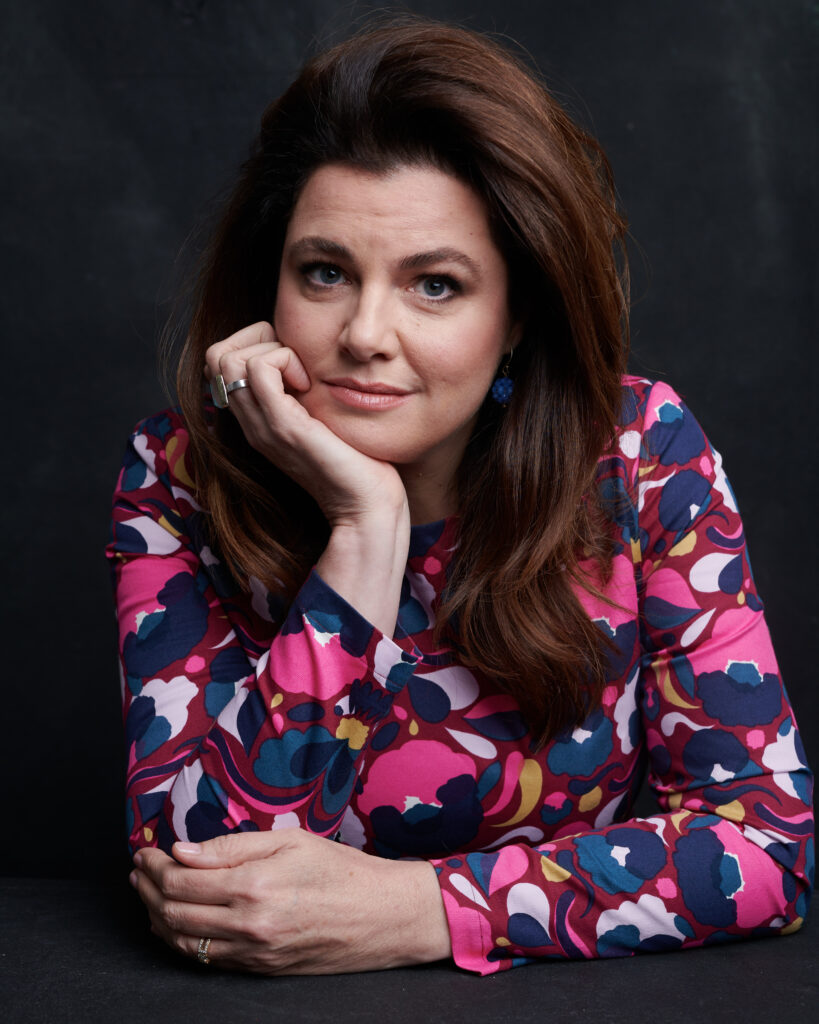
Louise Milligan is an investigative reporter for ABC TV’s Four Corners and the bestselling author of Cardinal, which won the Walkley Book Award and broke massive international news preceding the court case and successive and ultimately successful appeals involving one of the most senior members of the Catholic Church hierarchy.
Among many awards for her work, she’s also the recipient of the 2019 Press Freedom Medal.
0 Comments