


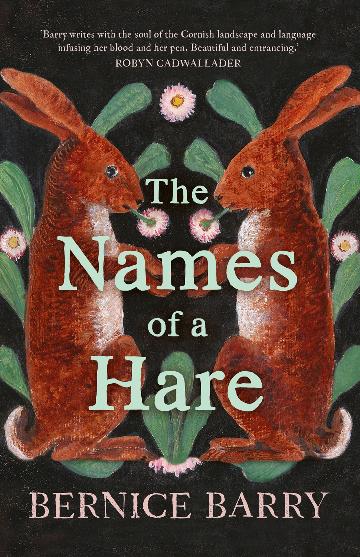
The Names of a Hare from BERNICE BARRY is a new historical fiction of a young girl steeped in secrets, herblore, and folk knowledge, at at time when she is in danger of being tried for witchcraft.
Read on for a Q&A with the author.
ABOUT THE BOOK
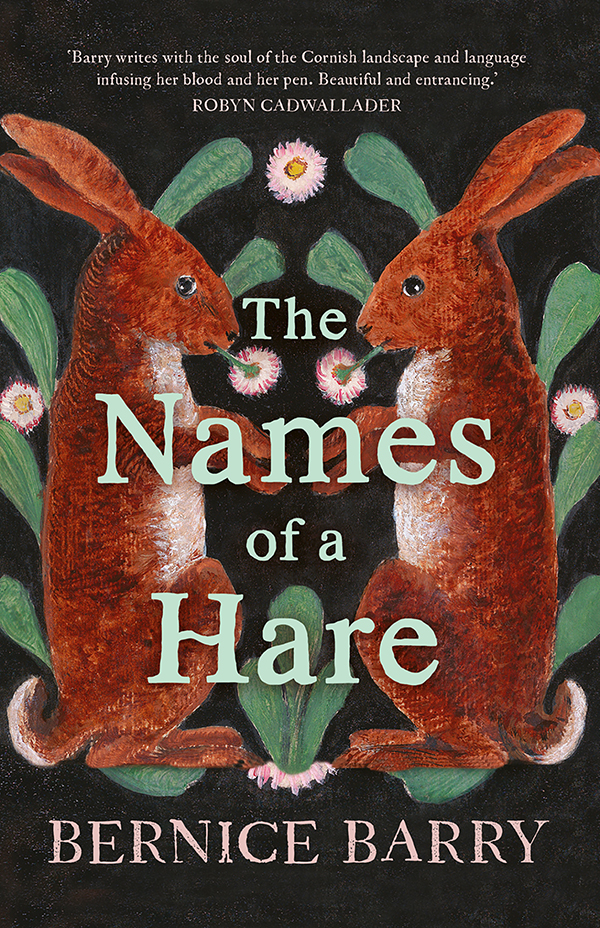 Can a woman gifted with the power of healing survive in a world that burns what it cannot understand?
Cornwall, 1628. A young girl guards a dangerous secret: she can leave her body and fly. Steeped in herbal lore and forbidden spells, the girl becomes a woman, while across the land whispers of witchcraft turn deadly.
When witchfinder Matthew Hopkins sets out to hunt her down, their meeting will change the course of history. In a world that fears what it cannot explain, a story shared is the most potent magic of all.
**********
MEET BERNICE BARRY
How do you approach creative writing as compared to your previous non-fiction works? Does your writing/research process change?
The process is surprisingly similar, maybe because my non-fiction writing also tells the stories of women in history. I’ve always approached non-fiction more as storytelling than presenting facts, so there’s not a huge gap between the way I write about a life that’s real or one that’s imagined. I do a lot of research when I write fiction, hoping to make that life as historically real as possible for a reader. I enjoy both – the discipline of sticking to facts in non-fiction and the freedom of making things up in fiction!
Were there any specific stories or legends of witchcraft that inspired this book?
A book I read as a child (Lorna Doone by RD Blackmore) was the inspiration for The Names of a Hare. A mysterious woman, said to be a witch from Cornwall who knew dark magic, was the basis of my main character. I found that there really was an old woman who lived alone on the cliffs, supposedly with many different aliases, so I decided to write her story, and researched everything I could find about herbal medicine and magic from that time, particularly from Cornwall.
Additionally, why do hares have so many names, and why did you decide to incorporate this into your storytelling?
My main character had to conceal her identity from a young age so she used several false names during her life. Knowing she used witchcraft, and believed she could fly, there was a strong connection with hares who, according to legend, must never be named, and were the animals that witches chose for their shape-shifting and flying. Country people used many alternatives to avoid calling a hare by its real name. I’m superstitious, so you might notice that I never say the name of my main character when I talk or write about her!
The Names of a Hare is almost 400 years removed from our modern day, so what were some of the biggest challenges in accurately bringing 1600’s Cornwall to life?
The easiest element was describing the settings. The wild places in the story (beaches, valleys and moors) have changed little over time. The most difficult was writing authentic dialogue without making the language strange and obscure. I tried to keep a balance between using words of that time and place – sometimes even the archaic spelling or the Cornish word – and updating the way people spoke to create a smooth reading experience.
Herblore and botany are clearly a major part of this story. Did you have any key texts that you used for inspiration?
I’ve used old herbals and botanical publications many times before, for research, but never such old books. Discovering beautiful herbals from the seventeenth century was wonderful. I found them using Internet searches, free to view, and spent many happy hours choosing what to include in my writing. I’ve listed the main texts I used at the end of the book.
Scapegoating and prejudice is just as common now as it was back in the 17th century, but in different forms like through social media. When writing this book, were you aiming to convey your thoughts about contemporary witch-hunts to your readers?
Each time I write something based on true events from history, I find, sadly, there are things that are still the same for women. Centuries pass, laws change, and people are more aware of an individual’s rights to freedom, justice, and equality, and yet society does not always protect women and girls. The same is true of racial and religious prejudice, as common now as it was for Ned Rawles in my book. It would be hard not to make comparisons with what we are still witnessing today.
What were some of the most fascinating facts you learned while crafting The Names of a Hare?
There was so much I didn’t know about the English witch trials. Until I did research for this book, I had no idea that ‘Witchfinder General’ wasn’t an official title for Matthew Hopkins. It was a surprise to learn he was only undertaking his infamous ‘testing’ of witches for three years.
The biggest surprise was discovering that the last three women executed for witchcraft in England were buried in unhallowed ground at a place where I walked most days during my postgraduate year. I had crossed the car park, walking right over their graves, each time I went to a lecture at St Luke’s College in Exeter.
Is there a period of historical fiction, or a famous individual, that is top of your list to write about?
I’ve had a focus on the early nineteenth century for a long time and I thought it was my literary home, but this book has created a thirst to write more about the seventeenth century. Being more distant in time seems to make it even more attractive to me as a source of new research and new ‘old’ stories waiting to be told.
ABOUT THE AUTHOR
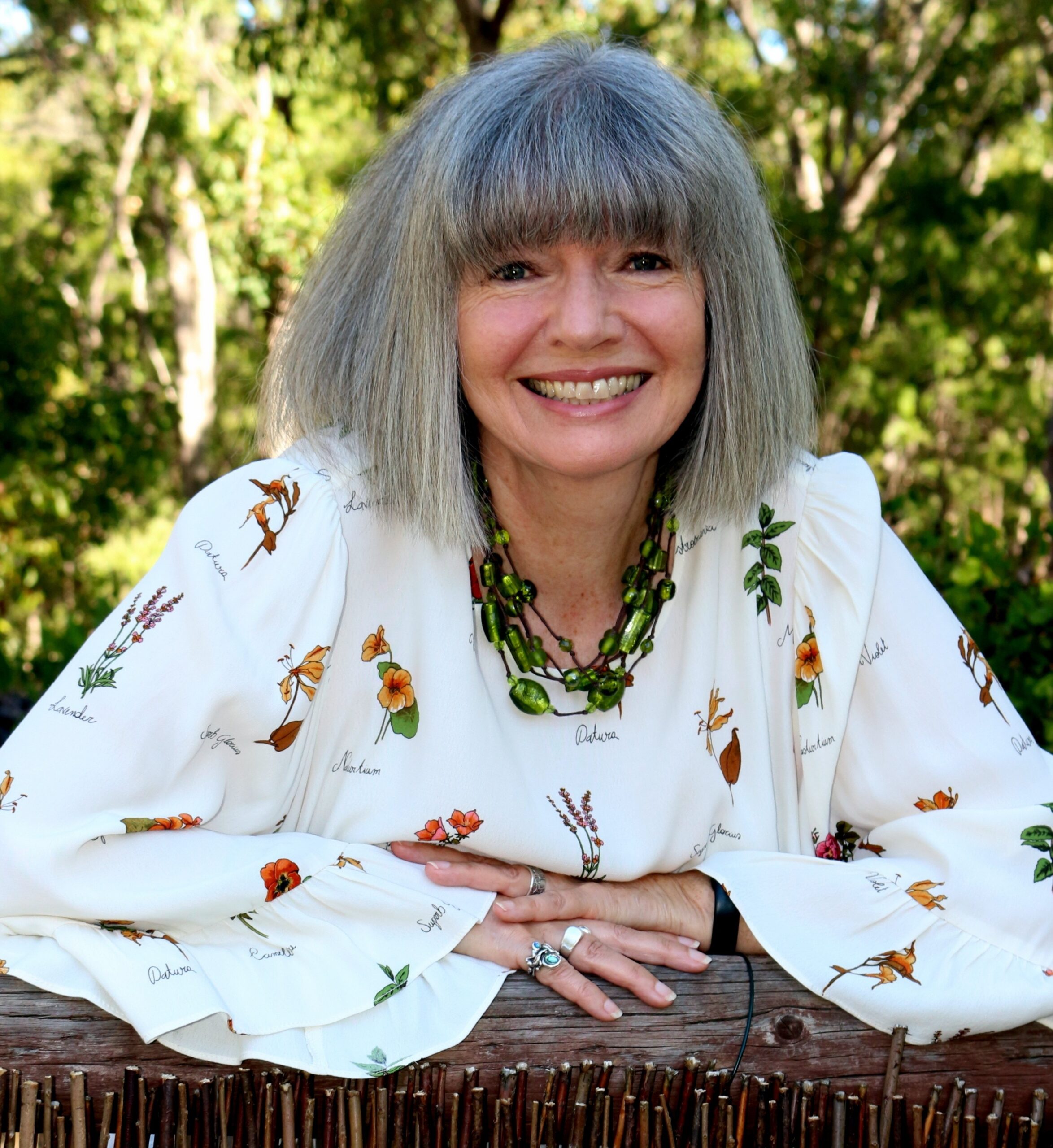
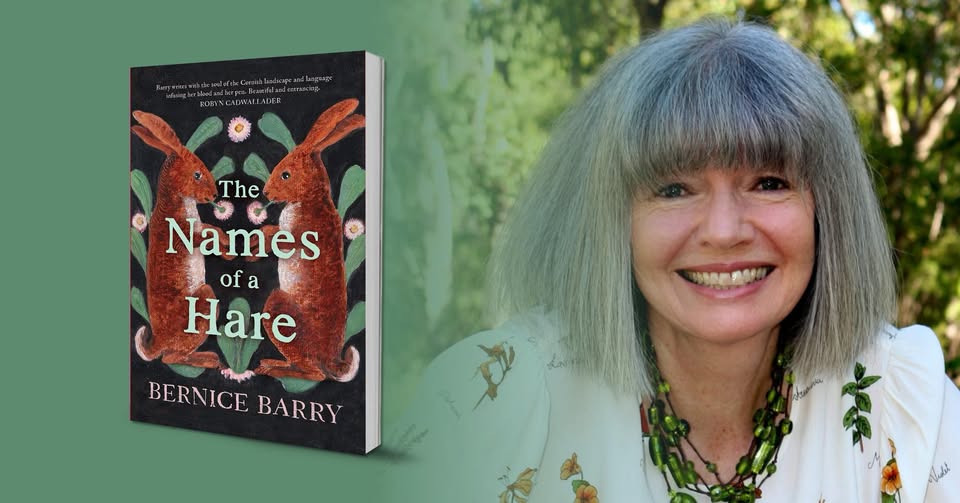
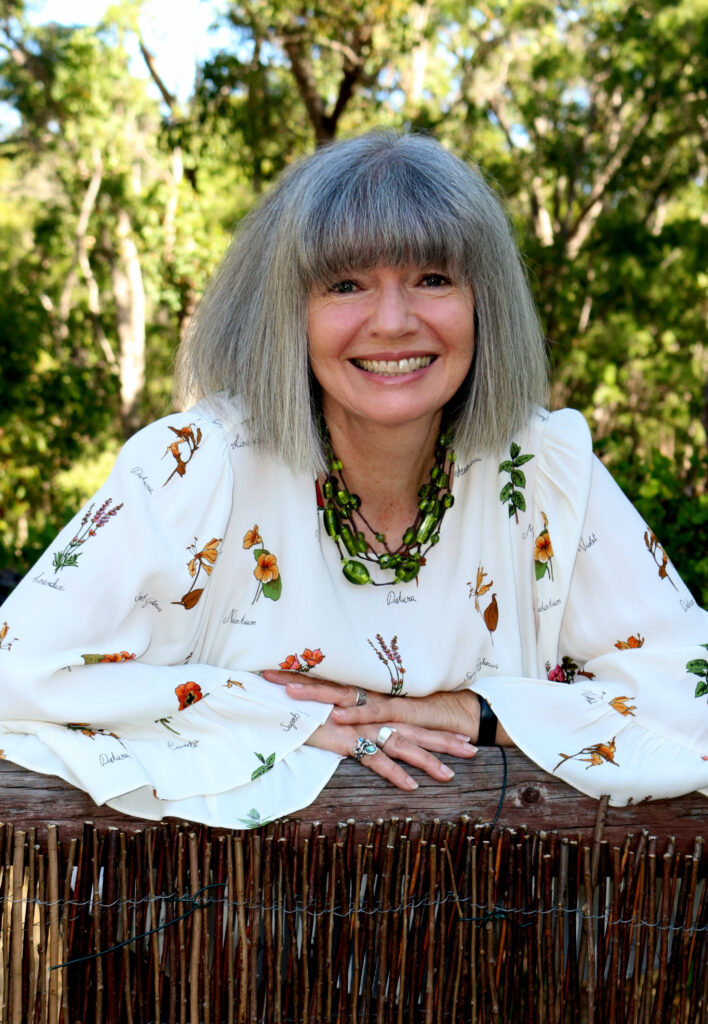 Bernice Barry is a writer and historian with a background in education. Her previous books (The Mind That Shines, 2016, A Lady’s Pen, 2023, Sarah Evans, 2024,) include historical fiction and non-fiction, reflecting her passion for discovering and telling women’s stories where truth has been dimmed or obscured by time.
Originally from Cornwall in the UK, Bernice has lived for twenty-five years on Wadandi country near Wooditjup/Margaret River, researching local history, nurturing a native garden in the bush and spending as much time as possible at the place where land meets ocean. She is a regular presenter and speaker on a wide range of topics from wildflowers and botany, writing and publishing, to history and heritage.
(4/5)
This is a beautiful story told from the perspective of a young girl to womanhood in Cornwall, 1628, with language of that era, not too dense with old-world terms, of her life journey with folkloric tales and herbalist remedies on the edge of society and understanding into witchcraft whispers.
A truly enjoyable and emotional read, written in a historical setting with extensive research about characters and ancient herbal and botanical potions, is relatable and easy to digest.
(4/5)
This book, The Names of the Hare, is set in Cornwall in the year 1628, when a young girl guards a secret. She can fly. It is a time when it is outlawed by the king that anyone using magic, spells, or healing will be tried as a witch.
The main character, whom we will name Girl, because through her journey she will use many names to hide her identity. She has to leave home because the community finds out her secret, and she had a fight with one of the children who died, and she is blamed, so her father has sent her on this journey, and tells her not to use her name.
This story leads her on a wonderful journey of enlightenment, and along the way she finds many friends and learns many things about herself and healing.
In parts, I felt this book was long-winded; however, it is a good one to read. I enjoyed it and the different characters she comes in contact with, and how she grows through her life.
(5/5)
My opinion of the book is very strong in the affirmative, and I would like to describe some of the passages and actions, as well as the conduct of some of the characters, and parts of the book that could be improved. Please note that the improvement is only in my own mind and not necessarily correct, but it would improve my interest to continue reading with a new energy.
This book describes the life of a young girl with a very disturbed childhood, having to live with the fact that her mother died when she was born, and that her birthday was going to be celebrated on every anniversary of her mother’s death, a fact always pointed out by her father. In addition, her father, who was a minister of religion preaching at the local church, was a bit of an authoritarian nature and continuously reminded the girl of what happened to her mother. As the story occurred during the 1600’s, there were no photos or any other memorabilia to associate her mother with the girl. So basically, this story paints the picture of a very mentally disturbed young girl affected by the actions of others.
There were many unusual episodes in the way she used to escape home, just to get away from everything. The story follows her life until she was an octogenarian.
This novel shows that life is a mixture of good luck and bad luck. It demonstrates that you will be making your life what it is by your own choices, yet it sometimes also depends on other people’s actions.
She was living a life that she never wanted or believed in, and to make it worse for her, she had an obsession with numbers and control, which was an impossibility in that era. She was always hoping to reach new levels!
One of the things that caught my attention was the long life she achieved by being an octogenarian in a time when not many people reached that age.
The author should be congratulated on her efforts for doing research based on Witchcraft stories and herbal medicines, as well as the information about the many cultures associated with the mystery and magic of the hares.
One point noted is that there are not many dialogues between the characters. We must remember the old saying, “Don’t tell me, show me.” However, let me state that the facts and events in the book were presented with very detailed and clear explanations.
Another comment I wish to add is how I needed to have with me a dictionary, as there were many lines with a very great number of words not commonly used.
This is where my critique ends, as it was genuinely such an excellent book.
Before I started to read this book, I noticed the back cover stating that a young girl was leaving her body and flying. As a similar event happened in my life, this intrigued me to pick up this book. At the hospital where I was taken care after suffering a very strong and severe heart attack, I was lying on the bed and saw myself elevating and still able to see my body still lying on the bed with my eyes closed. It was for only a few seconds before I was back to my prior position on the bed.
And this brought to my mind a similar event that happened to me about 20 years before, and still so fresh in my memories, when I was in battle, taken as a prisoner of war, and tortured almost every day; enduring the pain inflicted, wanting my spirit to fly away and leave my body behind. Sometimes I wonder if this was the reason for continuing to be an aircraft engineer and pilot for the rest of my life.
(5/5)
This book was such a joy to read. The pictures Bernice Barry paints with words about the wild and lonely moors and the beaches and villages of Cornwall and Devon left a lasting impression.
The story is told through the eyes of a woman healer in 17th Century England – a time when such women were being accused of witchcraft and sorcery. It brings to life the hardships endured by women in times of war, plague, and superstition.
This wonderful story, with its beautiful use of words and
descriptions of the animals, trees, and flowers of south-east England, is truly a delight to read. As our storyteller says, “words are the most potent things we have”.
(4/5)
The novel opens with a young girl on the beach enjoying her time there. It moves then to the narrator telling us that this is the last day of her life due to various signs that she has observed.
During her life, the protagonist has a series of different names, most in an effort to relaunch her identity, in an effort of self-protection.
Similarly to hares who are never addressed directly as a hare but by any other name, such as “the dew licker,” “the long ears,” “the kale-heart.” Unlike the hare, our narrator is not really as revered for who she is and her capabilities.
From a lonely childhood with a widowed clerical father, this girl suffers because of her “differences” and abilities. These differences are observed by their wise housekeeper, who discreetly passes on her knowledge of healing with various plants.
As an older girl, she is blamed for an accident to another girl, and for her own safety, she runs away until some distance is put between them.
Eventually, with a new name of “May”, she spends several years with Annis, a similarly talented lady who teaches her more about healing with plants. They both assist those around them.
This book incorporates much information about the witch trials that occurred in Britain and across Europe in the 17th century. The main witch finder crosses her path and seeks to have her put on trial. This event changes the course of history.
This book is well written and would appeal to anyone who enjoys the historical period of 17th-century Britain.
(4/5)
This novel was one I found myself returning to slowly, not because it lacked momentum, but because its richness demanded time. Bernice Barry paints each scene with such vivid detail that you can almost feel the foliage of the countryside between your fingertips.
What stayed with me most, though, was the emotional core. The story highlights the enduring power of love and the potency of words – how they can wound, heal and reshape lives. By the final pages, it felt less like I had simply read a book and more like I had lived alongside its characters.
A thoughtful, beautifully crafted read that rewards patience and reflection.
(4/5)
The Names of a Hare is a thought-provoking novel set in Cornwell, England in the 17th Century. It follows the journey of a young girl who lives anything but an ordinary life. We follow her as she changes locations, acquaintances, mentors, and ultimately herself. What is in a name, after all?
Bernice Barry’s writing is such that it truly transports you to a different place and a different time. She delves into the dangerous tradition of herbal lore; the fear-provoking practice of using herbs to heal, and the mania that swept England at the thought and mention of witches.
The storyline touches on many real-life events of the time – Kings, plagues, wars, and weather. It made me want to learn more about this tumultuous period of English History.
I felt like a silent spectator, truly experiencing the story unfurling around me. I could feel the wind, see the landscapes, and smell the concoctions being made by the amazing healing woman central to the story.
If you enjoy a novel about self-discovery and overcoming challenges, then this book is for you.
(4/5)
Beautifully written, The Names of a Hare by Bernice Barry is historical fiction at its finest.
Immersing the reader in 17th-century rural Cornwall, we are taken on a remarkable journey through the life of a woman striving to live on her own terms. This often proves to be a perilous choice for our unnamed protagonist at a time when any hint of difference, real or imagined, could lead to accusations of witchcraft, often from those who were considered friends or allies.
With extensive research into the healing powers of the natural world, an empathetic portrayal of neurodivergence, and a love for Cornwall that boldly jumps off the page, Bernice Barry has created a story that will stay with you long after the last paragraph. The Names of a Hare is a worthy addition to any historical fiction lover’s bookshelf.
(4/5)
Travel back to the 1600’s, where witches are hunted, the church rules, and the Black Plague is to come. Take a brave young lady with a hidden identity who can create such pharmaceutical and tincture products to heal what many cannot. This type of apothecary, at the time, was seen as sorcery and risked being burned at the stake.
Marketed to be linked as a prequel to Lorna Doone, this delved into history that most might not be aware of. If you enjoyed reading In the Margins, you will enjoy this book, too.
(4/5)
As a woman of a certain age, I found The Names of a Hare engaging and unexpectedly moving. At just 227 pages, it is an accessible read, yet it offers a richness that lingers. The story traces the life of its central character, whose shifting names mark the many versions of herself she must become to survive. From her early childhood in the early 1600’s – where she is shaped by observation, intuition, and a quiet resilience – through to her adulthood, she grows into a woman both shaped by her time and quietly rebellious against it. The book gently immerses the reader in the rhythms, challenges, and beliefs of the era without ever feeling weighed down by historical detail.
Her relationships with men are particularly revealing – not romanticised, but woven through the story as forces that challenge, redirect, or occasionally support her. These interactions expose the limitations placed on her, yet also highlight her resilience. At times, the men in her life underestimate her; at others, they inadvertently become catalysts for her growth.
A compelling element is the focus on herbal concoctions. Through these potions, the author introduces a vivid array of plants – seeds, leaves, flowers – and uses them to reflect both craft and character. A favourite line captures the book’s heart: “What happens is an accidental confection of good luck mixed with bad… with the strongest ingredient of all: the choices we make.”
A memorable, quietly powerful read.
(3.5/5)
It’s England in the 1600s. A young girl born into a world that fears what it can’t explain and therefore becomes a fugitive in plain sight. This is due to accusations that she is a witch because of her healer abilities – being able to provide cures and pain relief with the use of natural products that she grows in her garden or finds within the natural environment.
Matthew Hopkins is on a mission to hunt her down after their initial meeting, where she managed to escape his clutches.
This novel is wonderfully written and delves into a period of time in our history where women were considered witches for their abilities that couldn’t be explained, therefore were feared rather than accepted by others.
I did enjoy this book to a certain degree, but also found I did struggle to get through it as I just found it a bit slow-moving. In saying this, I would recommend The Names of a Hare.
(3/5)
The Names of a Hare was very different from the usual type of book I read. It was obviously very well researched and therefore contained much interesting information.
Perhaps because it was so different from what I would usually read, it took me a while to get used to the style and be drawn into the story; however, as I progressed, I became much more immersed in the story of this strong, independent woman’s life in 1600’s England. The language used was very descriptive.
This book made me VERY pleased (to say the least!) that I do not live during that time in English history. The hardships endured, especially by women, were not easy to read about.
(4/5)
There is magic in this book, not just in theme, but in the way Barry transports the reader to 17th Century Cornwall and binds the story of our unnamed protagonist to the wilds of the surrounding nature. I do not know much of the issues raised, but it was intriguing, and I liked the way facts were blended into the story. I would heartily recommend, especially for fans of Hannah Kent’s The Good People.
(5/5)
This book is truly an extraordinary read. On completion, I wanted to turn the pages and start afresh.
It is certainly a book to hold close and be treasured. The author’s research on folklore and forbidden spells is amazing. The dustjacket is to be admired. The muted colours and mystery of the
Hares hinting at what lies within.
The setting is in Cornwall in the 1600s. The author paints a rich and colourful landscape full of descriptive passages that evoke the senses. Sprinkled liberally throughout are Cornish words, e.g., zawker, tottle, and wize, and quirky sayings, e.g., p126 “Love thy neighbour but do not pull the hedge down.”
The young lass, the narrator tells of her own life, from childhood to womanhood and beyond. The isolation, the loneliness, and the abuse. She learns to heal, using herbs and various ingredients, and does well.
However, she is painted as a witch and hounded by a man who is intent on killing her for money. This he has done to hundreds of innocent women proclaimed to be witches. To be tortured, incarcerated, and hanged.
Entwined throughout her story is her love of hares. She encounters them at the beach and clifftops. They are not afraid of her.
We learn about the Plague and its effect on the population, the Great Frost and its effect on humans and livestock.
A grand and historical novel.
The book winds to a close with 1 final surprise. The closing lines are so memorable and vivid, of the Hare. A powerful ending.
“Comero weeth”
(3/5)
As someone who loves history and family history, and has Cornish ancestors, I found this book an interesting read. The descriptions of herbal remedies, the plague, the wars, and the witch hunting, from the point of view of someone living through them, were thorough. They have enhanced my understanding of that time in history. I hadn’t realised witch hunting had been so widespread in England. What a harrowing time to live through. I also like that there is a list of references included.
I would like to add that the beginning of the book was slow and harder to read than the rest. It took me a while to get used to the first-person approach and the, at times, very descriptive style of writing. It wasn’t until I was several chapters in that I became invested in the main character. After that, I couldn’t put it down.
This book would appeal to readers with an interest in history and the way of life in the country and coastal areas of south west England in the 1600’s.
(4/5)
The Names of a Hare has beautiful, poetically descriptive writing. It speaks of a quiet acceptance of yourself, knowing you don’t fit in quite the same, but continue to be true to you.
Any woman who knows her power will love this book. A story of hope, betrayal, and hope again because of the quiet knowing of the power you hold.
I wish it were longer!
(4/5)
Perfect for readers who enjoy all things witchy. Slow-burning, lyrical writing, focusing on the beauty of nature, and the power of botanicals used in natural cures by wise women, as we read the story of the narrator with many names. Nice historical references to events like the plague and the all-too-real character of Matthew Hopkins, Witchfinder.
(3/5)
Whilst I found it a slow start, and I had to keep stopping to look up what the Cornish words meant, I did find myself drawn into the story and ultimately enjoyed it. This may be a time in history we are not very familiar with. A time when witchfinders roamed, bringing fear and terror, and having people turn on each other as a result. I found it quite a moving story, very sad but with moments of joy – like real life, I suppose.
(4/5)
The Names of a Hare is a gripping historical fiction novel that follows a young girl navigating fear, suspicion, and the harsh realities of being accused of witchcraft. If you love stories with mystery and emotional depth, this book is absolutely for you.
Bernice’s writing is both captivating and beautifully crafted, drawing you straight into the world she’s created. Because the novel is set in a specific historical period, she incorporates era‑appropriate terms but includes a key page to guide readers, which I found incredibly helpful. Overall, I thought this book was great and would definitely recommend it, especially if you love historical fiction!