



OUR BOOK REVIEW
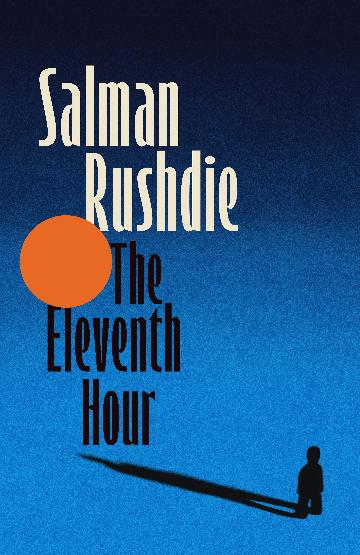
This is a collection of five stories – three longish ones bookended by two shorter ones. The first, ‘In the South’, is strong, and within its narrative is the title, referring to the last stages of life. Two older men share the same long, complicated surname, reduced to its initial, ‘V’. Since they were born within weeks of each other, the elder is called Senior, and the younger, Junior. This is where their similarities end. They bicker with each other constantly. When one is badly injured, however, the other finds himself inconsolable.
In ‘The Musician of Kahani’, a musical prodigy is born to mathematician parents. Although the father is older, this story is more cautionary fairytale than riffing on old age. The characters (befitting fairytale tropes) are overblown, with the narrator interjecting as if telling this story in real time. This is agelessness, versus old age. The third story, ‘Late’, takes us past midnight, with a writer, SM Arthur, waking to find himself dead. His ghost haunts his college, appearing only to a female student, Rosa. Together they work to resolve his limbo state. In ‘Oklahoma’, a homage to Kafka and his interest in disappearances, a young writer meets his idol. The older writer is given a ‘K’ surname in a (too obvious) allusion to Kafka. The final, futuristic story, ‘The Old Man in the Piazza’, is a commentary on the divisive nature of today’s societal interactions.
Admittedly, The Eleventh Hour isn’t Rushdie’s best writing, but it’s worth remembering that even his mediocre writing surpasses that of many of his contemporaries.
Reviewed by Bob Moore
ABOUT THE AUTHOR

Salman Rushdie’s Midnight’s Children was awarded the Booker Prize in 1981. In addition, Midnight’s Children was named the Best of the Booker – the best winner in the award’s 40-year history – by a public vote. He has adapted the book for the stage which was performed in London and New York by the Royal Shakespeare Company. The film was directed by Deepa Mehta and released in 2012.
The Ground Beneath Her Feet, in which the Orpheus myth winds through a story set in the world of rock music, was turned into a song by U2 with lyrics by Salman Rushdie.
A Fellow of the British Royal Society of Literature, Rushdie is the recipient of an impressive list of honours. These include the Whitbread Prize for Best Novel (twice), the Writers’ Guild Award, the James Tait Black Prize, the European Union’s Aristeion Prize for Literature, Author of the Year Prizes in both Britain and Germany, the French Prix du Meilleur Livre Étranger, the Budapest Grand Prize for Literature, the Premio Grinzane Cavour in Italy, the Crossword Book Award in India, the Austrian State Prize for European Literature, the London International Writers’ Award, the James Joyce award of University College Dublin, the St Louis Literary Prize, the Carl Sandburg Prize of the Chicago Public Library, and a U.S. National Arts Award.






0 Comments