


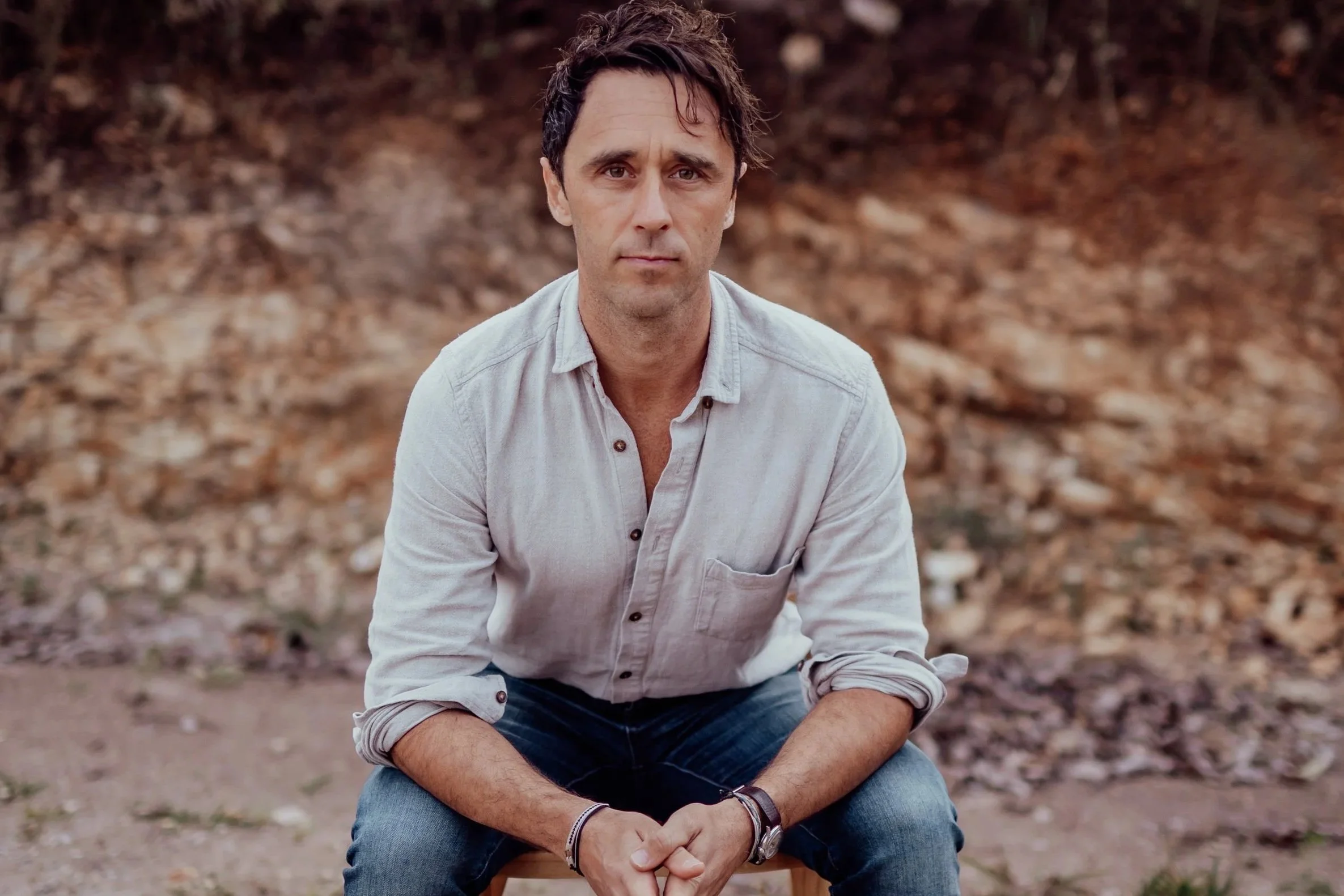
Far Horizons, from Aaron Tait, is a globe-spanning coming-of-age memoir of a soldier turned peace-seeker, grappling with the timeless question: What does it mean to be a ‘good’ man?
Read on for an extract.
ABOUT THE BOOK
In the hours after September 11, 2001, Aaron Tait deployed to war as a seventeen-year-old military officer.
This is the story of what happened next.
Far Horizons is a globe-spanning coming-of-age memoir of a fighter turned peace-seeker on a vibrant journey of transformation, adventure and love, set against backdrops of the Iraq War, Africa and the world beyond. Fresh and introspective, it will lead you to exploring not only the far corners of the world but also the uncharted aspects of yourself.
**********
Chapter One
Midnight.
The bottom of the Pacific Ocean. My knees sunk into the murky silt of its floor.
Absolute darkness. I held my hand in front of my mask but couldn’t see a thing.
‘Your fingers are your eyes now,’ Chief Timms barked at us on the first night of the diving course when a fellow recruit asked for a torch. Then he’d issued the punishment: his slow, torturous version of one hundred push-ups, his tattooed biceps rippling as he glared at us with contempt, moving through his with ease. The first push-up took ten minutes.
And the recruit was now long gone, a marked man from that first hint of weakness. We’d all learned not to ask questions because questions equalled punishments, and we didn’t need any more of those.
I was bone tired. Bitterly cold. My fingers were always the first part of my body to go numb. They barely felt like they were part of me during these long, cold weeks. I kneaded them together in a futile attempt at warmth; the thick calluses on my palms (from the countless push-ups and chin-ups) scraped roughly against each other.
An icy stab of ocean crept in through the thin, rubber neck seal of my black wetsuit, chilling my spine. My mind drifted, and I tried my latest distraction technique of tricking myself into believing that I wasn’t ten metres underwater in the dark of night: that, instead, I was curled up in a warm bed in the family home I’d left the year before. But that night it didn’t work. The water was too cold. I shivered uncontrollably, and my teeth made a rubbery squeak on the scuba mouthpiece that would bring me a short injection of air and an unwelcome chaser of salt water with each breath. My heavy diving cylinder dug into my ribs; after adjusting it, I reached into my wetsuit sleeve, pulled out a dull yellow glowstick and, using the tiny cloud of light it emitted, checked my air gauge. I had another forty minutes left on this dive, a search with our hands along the piers of an old timber wharf to clear it of explosives. Forty freezing minutes. The only good news was that tonight the bombs weren’t real, just training devices. So rather than being blown up, the only threat was that if we couldn’t find them all on this sweep, we’d be punished by being kept in the water for another few hours and made to repeat the test.
It was the final night of my navy diving course.
My fingers were always the first part of my body to go numb.
I’d been selected from the seventy officers on basic training as a possible candidate for Special Forces, and this was the first step. One of my best mates, Luke, or “Apples”, so nicknamed because he came from the apple-growing state of Tasmania, had also been shortlisted, but he’d been deployed up close to Indonesia to help stem the illegal immigrants arriving by boat. The course started three weeks ago, with sixteen candidates, including my other mate, Kel, a six-foot lifeguard, surfer and all-round waterman who grew up on the East Coast beaches.
My nickname was ‘Spud’, a play on my surname, Tait, which sounds like the second syllable in potato. The three of us had bonded quickly in basic training and had been inseparable ever since. We were the fittest in our class, fiercely competitive and always determined to be the best: to show we had the right stuff. And the best way to do that was to become clearance divers, who then went operational in a real war. Most nights, on officers’ course, we would sneak out of our rooms after lights out and creep down to the ocean through the bush like special operatives, for hours of push-ups, running, swimming and breath holds where we would run along the ocean floor in the pitch black with heavy boulders cradled in our arms to hold us down. Apples was resentful that he’d been deployed north and that Kel and I would be taking the first diver selection step before him. But we all knew, like only young men can, that we’d be friends for life.
The three-week course was simple. Learn how to scuba dive, prove you were tough enough to go to the next stage and don’t get injured. Of the original sixteen, eight were now gone. A mix of blown eardrums, strained backs, destroyed knees and, for some guys, it was all just too hard. Too cold. Too painful. Some had been bullied off course as the instructors successfully manipulated us to do their dirty work for them and we turned, like a mob, on the weakest.
When one recruit had lagged on a run, they made us carry him five humiliating miles back to base. He quit within the hour. At the end of the day, it hadn’t mattered what excuse any of the quitters had. The word next to their name was the same: FAIL. According to Chief Timms, no matter how hurt you were or how hard things got, it was always your choice. You could grit your teeth, put up with everything they threw at you and take another step towards becoming a qualified Special Forces operative. Or you could fail.
So, we were down to eight men.
Well, seven men and one boy.
I was only seventeen.
 A sharp tug on the rope around my waist shook me back to my senses, secured with the bowline knot that we could tie, by then, with one hand behind our backs, underwater and in the dark. We spoke through the rope, using a series of tugs and pulls to communicate, and it was our only connection to anyone beyond our cold, lonely part of the ocean. This message was a signal to stop, that a diver had found a mine and that we’d be here for a few minutes while we waited for orders from the surface. I peered into the black, looking for the dark smudge of another diver, but nothing was clear, so I wrapped my arms around my chest for warmth, closed my eyes and waited for a message.
I thought about the friends I’d said goodbye to at high-school graduation the year before. None of them had joined the military with me, so their mothers had likely cooked them dinner tonight. They probably all enjoyed long, hot showers. In fact, very little about their day would have been anywhere near as challenging as what I’d willingly volunteered for, signing up to fight for my country. Lucky bastards. I knew it was probably best not to think about their lives, their easy university schedules and cruisy part-time jobs. My reality was that this was the seventh long dive of the day. I’d been in the ocean for ten hours already.
My eyes stung with the salt water that had been leaking into the faulty mask that I had drawn the short straw on at five o’clock that morning. My knee was stiff and dull with the ache of a strain I picked up on the second week but kept running through; an injury that would remain with me for the rest of my life. My head was pounding with the agony of a wisdom tooth that had earlier decided to burst its way sideways through my gum.
But it was my ears that were the worst. They’d never really been great, beaten up by years of surfing and scuba diving as a teenager, but this was a new level of bad. When I descended underwater, my eardrums ached with a sharp stab I’d been grimacing through ever since black blood and mucus started leaking out of my nose a week earlier. I’d had to make a habit of apologising to the guys when I surfaced slower than them, and Kel had been surfacing alongside me so it didn’t look as bad, and I wouldn’t get failed. If Chief Timms found out how bad my ears were, he would have told me that I was “fucking weak” and sent me to the on-duty nurse. I’d be off diving course in a heartbeat. She would recommend that I get warm. Wrap a blanket around me, make me a cup of tea and recommend some bedrest. Every instinct screamed that this was a great idea.
However, there was a major downside. If I quit now, I’d be a laughing-stock. Both among the seventy classmates I’d just spent basic training with, convincing how tough I was, and worse, among the qualified divers who would laugh at me for a very short moment and then simply forget me. Since the British Navy of the 1800s, those holding the rank of midshipman have been labelled “snotties”, as they were said to be so sickly and scared at sea that they wiped their tears and snotty noses on their coat sleeves. Not me, though. I was determined to not be seen as a snotty. And I was not going to fail. I might have been the lightest recruit by 20 pounds, but I could run and swim faster than most of them. I would pass this course and hurdle over this first step on my way to being one of the toughest fighting men in the world. A Clearance Diver in the Royal Australian Navy. A member of a formidable fighting unit that can hold its own with the US Navy SEALs and the British SAS.
**********
ABOUT THE AUTHOR
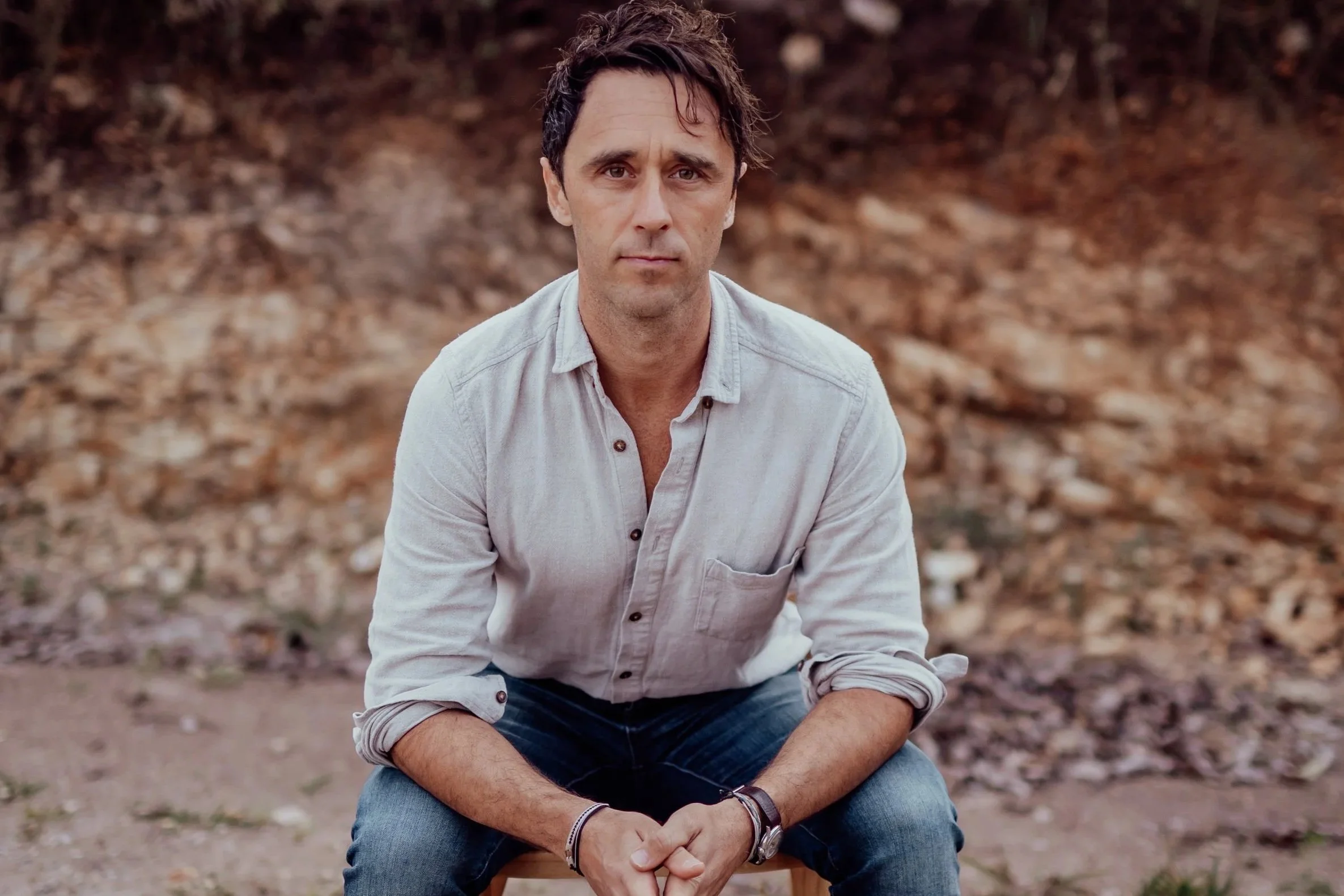 From war zones to slums, Aaron Tait has travelled to and worked in more than 70 countries across the globe as a military officer, humanitarian and social entrepreneur, and now writes to help people live deliberate lives filled with purpose.
Aaron was thrust into the frontline of international crisis at a young age, deploying to Iraq immediately after 9/11 as a 17-year-old military officer. A move to East Africa at 25, saw him leading aid projects in crisis zones and urban slums.
As a co-founder of the impact organisations ygap and Education Changemakers, Aaron has helped to improve the lives of more than a million people living in poverty. He is a geography graduate of the University of Cambridge and holds three master’s degrees in international affairs. As an entrepreneur, sold his business EC to the technology unicorn Go1 in 2023.
Aaron lives with his wife, Kaitlin, and his two sons, Atlas and Finn, and moves between his home in Byron Bay and global travels.


0 Comments