


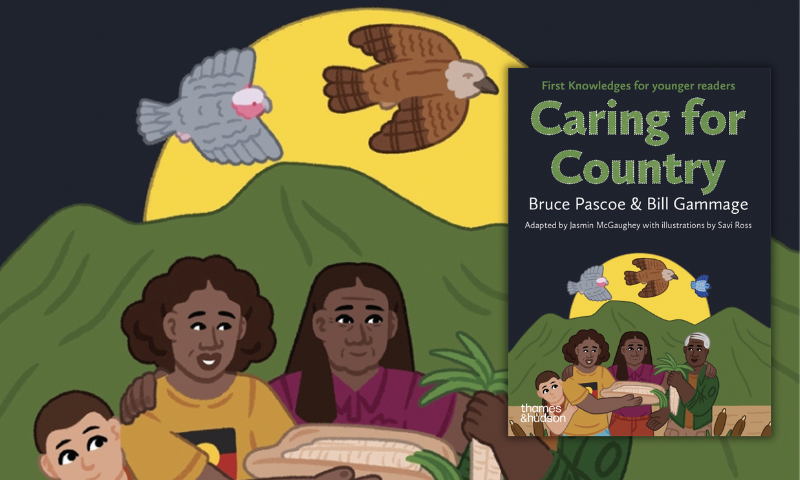
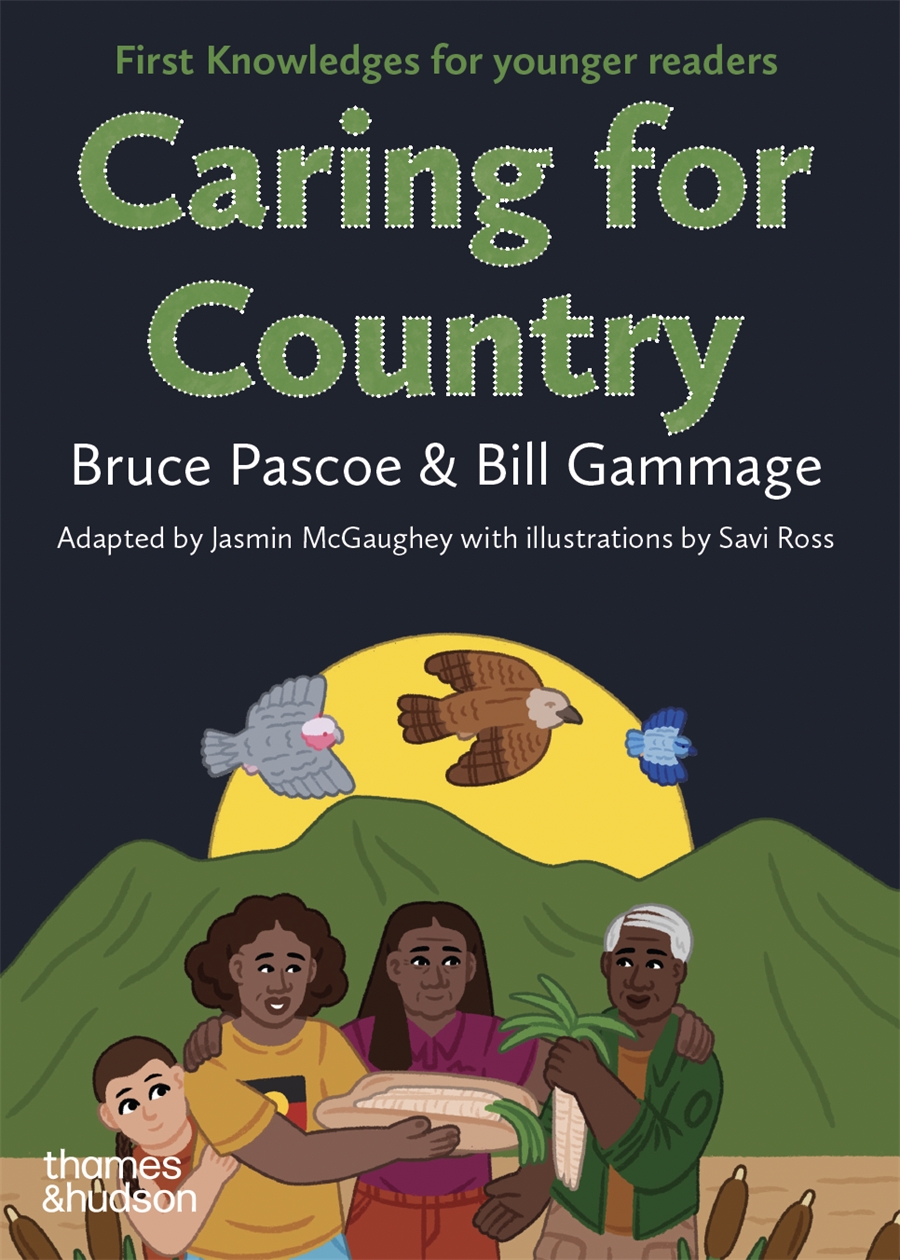
Caring for Country by BILL GAMMAGE and BRUCE PASCOE is an important book from two history-changing writers about how to take better care of our environment today by using methods practised by Aboriginal and Torres Strait Islander Peoples for tens of thousands of years. Read on for a Q&A with the authors.
What inspired you to adapt Caring for Country for younger readers?
BP: It was the publisher’s idea but I’d already done Young Dark Emu so it made sense. When I was at school it was like Aboriginal Australia didn’t exist. The only thing I can remember doing was colouring in a boomerang. When older Aboriginal people helped me search for my own family they were cross with me for my ignorance of the real history of Australia and I made a promise to myself, and to them, that I would try to write books which told a different story.
BG: Yes, it was a suggestion by the publisher. Jasmin McGaughey did a great job adapting it so I interfered very little with her text. There are lots of things we could learn from how Aboriginal people cared for Country, and still do. Learning from the past can help us make sure the future of our land, seas and animals is safe and healthy.
How did your different backgrounds inform the way you approached this book together?
BG: Fire and farming were two important ways in which Aboriginal people cared for their Country and all the plants and animals on it. They are the key focuses in the adult book First Knowledges: Country and aspects that we thought children might respond and contribute to as well. Either of us could have written a text on the other half of that book.
BP: Bill and I know each other well so we just trusted each other to do the job.
Why is it important for younger generations to understand how First Nations people have cared for the land for tens of thousands of years?
BP: We need young people to know the Country was managed by Aboriginal people. It has environmental impacts but also sovereignty implications.
BG: Young people having this knowledge will help the land and its plants and animals be better protected, Aboriginal knowledge be better respected and implemented, and see Australia adopting a more sustainable future.
How did you decide which practices (fire use, hunting and farming) to include in Caring for Country?
BP: I included the things I love doing every day. I included what we have been doing for ten years on my farm, Yumburra. It’s a slow process and won’t be achieved overnight, but we are trying to reverse the poor land management decisions of the past 230 years.
Is there a piece of knowledge in the book that you feel especially proud or honoured to share with young readers?
BP: I just want all kids to know and love their country, Mother Earth.
BG: I hope young readers learn that fire is a friend if treated with respect and that native plants have great potential.
What are some small ways children can begin to care for Country in their everyday lives?
BG: Children should start by taking notice and being aware of their surroundings. Be careful with fire. Grow one or two native plants useful as food or medicine.
BP: Yes, start growing plants. Speak to Mother Earth about what she needs. Ask her and listen. At the end of each chapter in Caring for Country there is a ‘Your Turn’ section with activities and ideas to encourage children to care for Country themselves.
How do you hope this book reshapes the way children think about land and sustainability?
BP: It’s all about making care a natural Australian commitment. It’s not smart to use up all the resources on Earth. Shouldn’t we make sure there are beautiful animals, plants and holiday spots for the future?
BG: I want children to become involved in the landscape rather than accepting it as dull and commonplace. I want them to take a look and ask themselves, ‘Why is it so?’. In 1788 people didn’t waste resources; instead they worked hard to make sure their Country was productive and beautiful for their children, for the generations to come, and for all creation. They made sure the continent was balanced and left the world as they found it. They thought of future generations. Shouldn’t we also?
What role do you hope this book will play in schools and homes across Australia?
BG: I hope the book will lead to practical interaction with the land via excursions, experiments, trial plantings and fire safety.
BP: I hope it will become a starting point for conversations and help to grow knowledge. I believe that there are so many things in our world to love and we have a responsibility to protect them.
ABOUT THE AUTHORS
Bruce Pascoe is a Bunurong, Yuin and Tasmanian Aboriginal writer of literary fiction, non-fiction, poetry, essays and children’s literature. He is the enterprise professor in Indigenous Agriculture at the University of Melbourne. He is best known for his work Dark Emu: Aboriginal Australia and the Birth of Agriculture (Magabala Books 2014)
Bill Gammage is a historian at the Humanities Research Centre, Australian National University. His books include The Broken Years: Australian Soldiers in the Great War and three prize-winning titles – Narrandera Shire, The Sky Travellers: Journeys in New Guinea 1938-1939 and The Biggest Estate on Earth: How Aborigines Made Australia.
Visit their publisher’s website
0 Comments