


The indomitable Miss Cocks and Ethel Bromley return for Book Two in the bestselling and charmingly cosy Petticoat Police Mystery Series, inspired by one of Australia’s first policewomen.
Adelaide, September 1917. Six months after solving the Dora Black case, Kate Cocks and Ethel Bromley are back walking the beat. The city is unsettled. Winter won’t leave. Soldiers are returning from the Front with broken bodies and troubled souls. And now a powerful board governor has been found dead in the Art Gallery – dumped beneath a scandalous nude painting that has attracted both pious outrage and record crowds.
When Ethel receives an anonymous tip, she’s elated at being seconded to the Detective Branch. The murder goes to the heart of Adelaide’s elite, where this society girl is in her element. Miss Cocks is left grappling with six o’clock swills, shadows in alleyways and a brutal assault on a schoolgirl. She needs Ethel to catch her killer, and quickly.
Alas, murder in Adelaide is never a simple affair . . .
READ AN EXTRACT
Watching for signs of life inside the house, the policewoman suddenly regretted not bringing along her second-in-command, Ethel Bromley, both to corroborate any evidence and to involve her in something a little different. As evidenced by the constant stream of letters received from South Australian schoolgirls, it was largely assumed the work of the Women’s Police Branch was exhilarating and ever-changing.
But the truth was, most days the two women were literally putting one tired foot in front of the other. Multiple times daily they walked the one-and- a-half-mile round trip from Victoria Square to the Adelaide Railway Station to meet and escort any young women arriving unaccompanied and vulnerable from major regional centres or cities interstate. They walked the city parklands or beaches every night to shoo away loitering couples and save immodest girls and young women from themselves, whether they liked it or not. And they walked the suburbs to follow up on mostly petty arguments between housewives, or to calm the fears of mothers as their daughters began to attract (and invite) the attentions of the opposite sex.
Miss Cocks knew Ethel was underutilised – her efforts in solving the Dora Black case six months earlier had proven that. She also knew that Ethel was desperate to do the work of her male counterparts. (‘We’re paid the same,’ Ethel was increasingly fond of saying, ‘and we’ve got the same powers of arrest – so please can’t I arrest someone?’) But as woman police constables, their role was not to investigate crimes and apprehend perpetrators. Their role was one of prevention – to curb immorality and protect women and children from harm.
The hallway light went on in the suspect’s house, and the door opened to reveal a man in his dressing gown, silhouetted against the rectangle of light. Miss Cocks straightened herself as she watched Mr Brookman pull the front door closed behind him and step out into the drizzle to the rear of the truck. He wiped his eyes with his sleeve and fumbled with a wet chain and padlock, which jangled as it came away.
Then he raised the flap of the tarpaulin. In the dawn light, Miss Cocks saw a short, stout woman crouching within the truck. She wore a thick dressing gown and clutched a pillow and woollen blanket. Beside her was a thin, rolled-up mattress. The woman smiled at her husband, and he took the blanket and pillow and helped her down from the back of the truck.
It was then that the policewoman approached.
**********
ABOUT THE AUTHOR
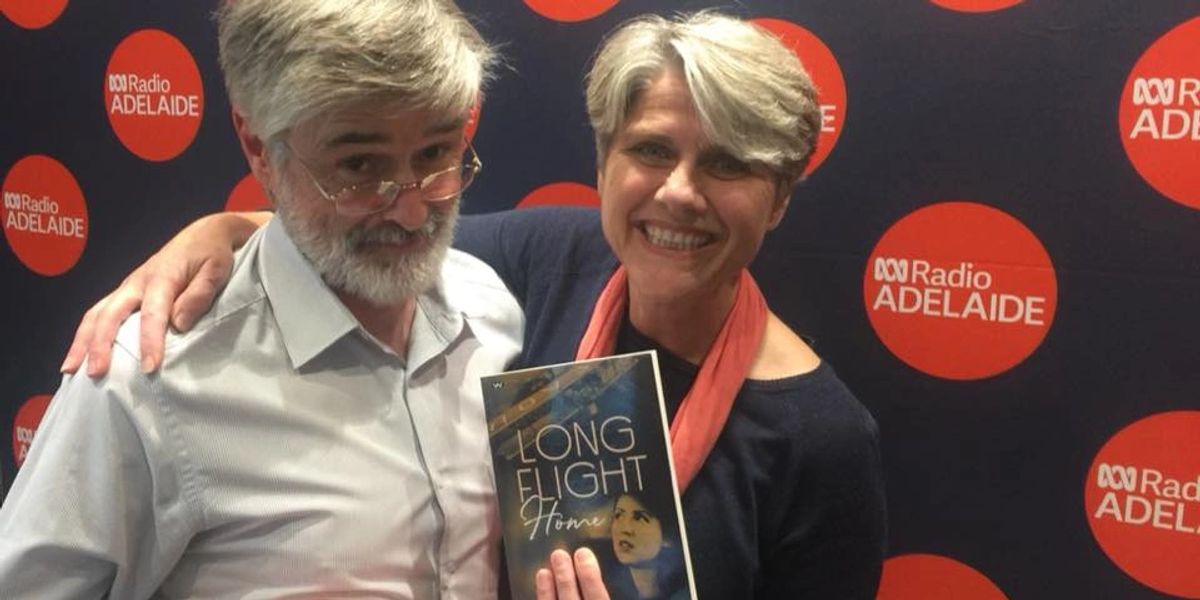 Lainie Anderson is a writer whose 35-year career in journalism and public relations includes 17 years as a columnist with Adelaide’s Sunday Mail, as well as stints at Melbourne’s Herald Sun, London’s The Times and the South Australian Tourism Commission.
After being awarded a Churchill Fellowship, Lainie published her debut novel Long Flight Home in 2019. In 2024, Lainie completed a PhD with the University of South Australia, researching the life of Kate Cocks, the inspiration behind The Death of Dora Black and Murder on North Terrace.
Lainie sits on the executive committee of the History Council of South Australia and the selection committee of the Winston Churchill Memorial Trust, and is an ambassador with the Hutt Street Centre – helping people out of homelessness. She is a History Guardian for the History Trust of South Australia and was announced as the 2023 Emerging Historian of the Year by the History Council of South Australia.
She lives in the Adelaide Hills with her husband Max. Murder on North Terrace is the second novel in the Petticoat Police Mystery series, following The Death of Dora Black, which was longlisted in the 2025 Indie Book Awards for Debut Fiction, as well as the 2025 Margaret and Colin Roderick Award.
Visit Lainie Anderson’s website



(4/5)
I thoroughly enjoyed this follow up to The Death of Dora Black, which picks up 6 months after the first in the Petticoat Police series.
No nonsense Kate Cocks continues leading the Women’s Police Branch in Adelaide, where the tiny team consisting of Kate and Ethel are dealing with the everyday frustration of being overworked and understaffed.
Vivacious Ethel Bromley gets the chance to be involved in a murder investigation with the big boys club. I loved watching her hold her own and use her smarts and connections to help solve the case.
I devoured this story from start to finish and found it to be a great insight into wartime life in Adelaide. Reading about the many ways women were treated as secondary to men really helped me appreciate how far we have come!
I’m hoping there will be more in this series, with the next instalment featuring the newest member of the Women’s Police Branch! I thoroughly recommend Murder on North Terrace.
(4/5)
I found Murder on North Terrace to be an entertaining and engaging mystery from start to finish. Like me, if you haven’t read the first book, The Death of Dora Black, don’t worry—Lainie Anderson introduces the main characters so naturally you never feel lost. It works perfectly as a standalone.
1917 wartime Adelaide setting feels fresh and adds a nice touch of atmosphere. The lead female characters are sharp and likeable, and I enjoyed their witty conversations as much as the mystery itself.
The mystery plot kicks off from the very first page, which kept me hooked straight away, kept me guessing, and I thought the ending tied together well.
If you enjoy cosy mysteries with strong female heroines, with bit of Australian historical flair, this is definitely worth a read.
(4/5)
A body in the Gallery beneath a scandalous nude painting. It is 1917 and the indomitable Kate Cocks of the Women’s Police Branch of the South Australian Police and her trusted and capable colleague Ethel Bromley are on the case again. After their success in the first book in the Petticoat Police Mystery series The Death of Dora Black, they are viewed with more respect in the hallowed halls of the Adelaide police.
The world is still in turmoil from WW1 and Adelaide is the scene of returning wounded and damaged soldiers. While Murder on North Terrace is on one level a police procedural with many twists, turns and revelations, it is also a further exposition of the many talents and life dedications of Kate Cocks.
A complex character, Kate patrols Adelaide’s streets at night wielding her trusty ‘sword’ in the interests of her version of morality. As the story progresses there is no doubting her care for vulnerable women and children, but her moral code brooks no opposition.
Lainie Anderson lightens this crusading ‘Boadicea’ with her fondness for poetic verse, humorous moments and the tantalising offer of a possible romance.
(4/5)
Drawing on true historical events, Murder on North Terrace presents a witty and captivating narrative. I found the depiction of the female police officers in Adelaide during World War I both engaging and insightful, offering a unique perspective on their roles and experiences during that time. Definitely worth the read!
(4/5)
Ethel Bromley loves her job, and is flattered and excited when Police Commissioner Edwards asks for her assistance in solving the murder of Philip Lyons, member of the Board of Governors of the Public Library, Museum and Art Gallery. Maybe this temporary promotion was acknowledging the good work she accomplished during the Dora Black case of the previous book.
Ethel is most anxious to help solve the murder. Through the arrival of anonymous letters on her doorstep, she becomes intricately involved in the case. With the secondment of her only assistant, Kate Cocks, she must continue alone with all the busy routine of the Women’s Police Branch.
How refreshing it is to know that many of the stories in this book are true accounts of Kate Cocks’ exploits, as Officer in charge of the Women’s Police Branch in post
WW1-era Adelaide. She was a woman of whom we can be truly proud.
Thank you Lainie Anderson, for this well-researched and unique book – anyone who loves a murder mystery will thoroughly enjoy reading this one!
(5/5)
Murder on North Terrace by Lainie Anderson is a fabulous follow up to Lainie’s first novel in The Petticoat Police Mystery series.
This story is once again thoroughly researched and based in the history of South Australia, featuring many iconic landmarks from and during 1917. As a fellow South Australian, it is great to see. We are following Kate Cocks and Ethel Bromley as they investigate the murder in the Art Gallery.
I love the way that the mystery looks at South Australian societal values of both the Establishment, the working class and everyday Australians. I love how it shows the workings of South Australia Police and the early crimes of the period, with many twists and turns. This mystery also continued the fine form of Lainie’s thoroughly researched historical fiction writing.
Murder on North Terrace continues the fine form of The Death of Dora Black, and eagerly await the instalment of next chapter of Kate Cocks and Ethel Bromley.
(4/5)
Thoroughly enjoyed Murder on North Terrace, it was an insightful look into life as a policewoman in the 1900’s. Kate Cocks’ beat certainly took in some miles!
As a South Australian, it was intriguing identifying the various locations around Adelaide. Plus, it was great exploring more of Kate and Ethel’s characters all while trying to solve the crime. A fabulous read.
(5/5)
Murder on North Terrace is a well-paced, engaging read that I found very hard to put down. 1917 Adelaide is vividly brought to life in its pages; fact and fiction weaved seamlessly together in this murder mystery that kept me guessing until the very end. This book follows on from Lainie Anderson’s debut novel The Death of Dora Black, and while I loved ‘Dora’ I love this second book even more!
The action drops in the opening sentence – a body lying at the foot of a painting in the South Australian Art Gallery. Immediately I was immersed in the action, a cast of
well-fleshed out characters to suspect, sympathise, despise or dismiss alongside the protagonists – Women’s Police Officers Kate Cocks and Ethel Bromley. Delightfully progressive and relatable, Ethel comes into her own in this second novel as she’s called on to head up the case and I rode the waves of discovery and setbacks with her.
This book appeals to readers of mystery, cosy crime and 20th century history and beautifully showcases South Australia’s distinct heritage, flavour and quirks, as well as its unique place in policing in Australia during those turbulent war years.
(5/5)
Murder on North Terrace is an engaging sequel to Lainie Anderson’s first novel in The Petticoat Police Mystery series, The Death of Dora Black. It is ideal for fans of historical fiction or crime. Set in early 1900s Adelaide, it follows a shocking murder amid societal challenges, in particular war involvement and social issues, especially the discrimination and treatment of women at the time.
The vivid setting and exploration of policewomen Kate Cocks and her assistant, alias Ethel Bromley, provide valuable insight into the early development of women in the police force, as well as an alarming look into the challenges and controversies faced by notable figures of the era. It offers more than a glimpse into the high society residents of the city of Adelaide in the early 1900s.
This is a clever mix of real-life happenings and fictional affairs that delivers an entertaining and highly enjoyable read. Skilfully researched and cleverly written, it blends suspense, humour, and emotion so well that I didn’t want to put it down.
(5/5)
We are back for the second instalment of Miss Kate Cocks and Ethel Bromley, the female police duo, and it’s a big fat tick for me.
Murder on North Terrace starts with a murder in the Adelaide Art Gallery under a controversial artwork, so straight away we are dealing with rich white philanthropists, more semi corrupt bureaucrats trying to get away with murder. Ethel’s family is part of the high-brow association of Adelaide, so is seconded to assist with the murder.
I love that we get to see more development of Ethels character, which is exciting as she navigates her newfound power, and of course, her love life. And Miss Kate Cocks is there, watching Ethel grow whilst trying to avoid fights with misogynist drunk men attempting to ruin the lives of young women.
Recommend getting involved in this series if you haven’t already. If you like
The Thursday Murder Club (who doesn’t?!) then you like this
(5/5)
Murder on North Terrace grabs from first page. It’s funny, serious, informative and educational. I found myself looking up further information about things mentioned in the text, like the Female Relation Badge. The description of characters and Adelaide had me feeling like I was actually there.
l couldn’t put it down. A really great read.
(4/5)
I took a little time to get into Murder on North Terrace in the beginning, the reason could be because I hadn’t read the previous book. However, as I progressed and got to know the characters and it became clear of their roles in the story, from then on, the book was an enjoyable read.
I enjoyed the historical elements at it was set in Adelaide during the First World War, and based on true facts, this made both the plot and characters plausible and enjoyable.
Also, this has encouraged me to purchase the authors previous book The Death of Dora Black.
(5/5)
The only thing better than cozy crime is historical cozy crime – and Murder on North Terrace is a standout. As the follow-up to The Death of Dora Black, this second instalment had a lot to live up to, and it more than delivers.
Lainie Anderson blends meticulous historical detail with a compelling mystery that keeps the pages turning. Her heroine, Woman Detective Kate Cox – based on a real-life trailblazer – is brought to life with warmth, wit, and tenacity. The pacing is brisk, the setting richly drawn, and the twists satisfyingly clever.
Anderson’s depiction of Adelaide during World War 1 is both atmospheric and vivid, making the novel as much a historical portrait as a whodunnit. If you’re a fan of The Number One Ladies’ Detective Agency or The Thursday Murder Club, this one’s for you.
(4/5)
I was pleasantly surprised by this true murder mystery, draped in Australian ambiance. Constable Kate Cock’s fierce forthcomings when making her enquiries are both amusing and admired, especially given the time period. I liked how the book had underlying tones of societal issues intertwined within it, from alcohol, the war and its after effects, to domestic violence, women’s issues and empowerment.
All in all I found it to be an interesting retelling of a historic story, as lived by Australia’s pioneering policewoman. I would recommend it to others. I haven’t read the previous debut (Dora Black) but I’m keen to settle in with it now that I have read Murder on North Terrace. I’m sure there’s an interesting tale behind Ethel’s scar!
(5/5)
The death of a prominent Art Gallery board governor found under a controversial nude painting sees Ethel Bromley seconded to work as a detective to help solve the Murder on North Terrace.
Book 2 of the Petticoat Police mystery series continues to highlight the incredible battle for the recognition of women and their intelligence in the early 1900s in Australia. Staunch Methodist Kate Cocks battles to keep law and order as she strives for the protection of women as a priority, while her off-sider Ethel Bromley relishes in her opportunity for promotion, even if only temporary.
Although perhaps younger readers may not be familiar with some references about life in old-fashioned Adelaide, they will be fascinated by them and inspired by a story that highlights Lainie’s exceptional history research and immaculate attention to detail.
In comparison to some other crime mystery writers, Lainie’s style could be classed as unique. The story is very slow moving with a gradual build up that doesn’t give anything away. It’s a clever way of writing, almost without intensity, but the reader knows the conclusion will come even though they will be unsure of the outcome until the very end.
(5/5)
The author Lainie Anderson and I both live and work on Peramangk and Kauna lands. I like to support local business and creative talent so while historical fiction is one of my favourite genres, it was the local connection that drew me to the first of the Petticoat Police mysteries. However, it was a combination of the well-researched history of Adelaide and protagonist Miss Kate Cocks and the mystery itself which made me eagerly await Murder on North Terrace.
Having finished the second in the series, I’m now impatiently awaiting the third. The history is fascinating seen through a female perspective in WWI – the suffering, volunteering, and fundraising of women in support of the serving men and their country (and King!) as well as the social, class, and cultural norms of the time, where women were definitely second class citizens.
While I could take an early guess at the perpetrator/s, guessing the motive is far more difficult, so an interesting twist at the end, and at times amusing. I would thoroughly recommend for those who enjoy Australian history and mysteries. It was a quick, easy and enjoyable read with fabulous characters.
(4/5)
Murder on North Terrace is based in Adelaide, Australia during the period of WW1 and focuses on the work of the first female police woman, Kate Cocks, to be employed in the SA Police Force. Her duties were mainly to support the wellbeing of women and children. From the outset of the novel it was obvious that Lainie had done significant research into the period of time this was written and the characters portrayed.
In this novel the Kate and her new recruit Ethel, get involved in solving a murder in the art gallery. Obviously this was outside their role description and they had to tread carefully not to upset the establishment.
I found the start of the novel to be a bit slow but as the characters developed and the story unfolded I was keen to find out “ who done it.” Towards the end, the story really took off with a race to catch the murderer before he/she disappeared. Cobbling a range of clues together the two policewomen cleverly solved the crime.
This is a novel free of strong language and gratuitous violence, so a nice, comfortable, fireside read. Recommended for readers who like crime dramas without the gore.
(4/5)
I just loved Murder on North Terrace.
Set in 1917, the author has captured the architecture the mood, and the old-school snobbery of the time. Kate Cocks was really the first policewoman in South Australia, but the story he story woven around her is fictional, as is her partner Ethel.
Miss Kate Cocks, Policewoman, has her duties cut out for her. This particular evening on her way home, she discovers a young woman called Nellie with a bloodied face.
Meanwhile her assistant Ethel has been seconded to work on a case with the male detective side of the force, as she has been having anonymous notes shoved under her door. These notes are clues to the murder of Phillip Lyons the curator of the Art Gallery. His body was found by the cleaner in the early hours lying under the controversial painting “Sewing new seed” with his throat slashed!
The pace quickens towards the end of the book when the two main leads compare evidence. The happenings and people in Kate and Ethel’s private lives are so entertaining and I think this book would make a great movie.