


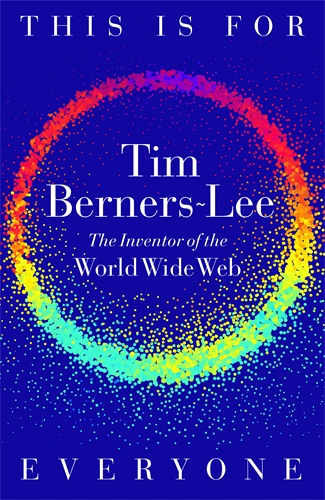
It’s a bit of a misnomer to claim Tim Berners Lee invented the internet (it’s the confluence of several systems and technologies working in concert), but he programmed the protocols that led to HTML – the computer language that builds and displays web pages – back in 1989, so he did more than anyone to popularise the internet we use today.
The prose of this autobiography isn’t particularly engaging or lively, but it’s interesting in as much as he recounts a bit about his childhood, his work at physics research institute CERN and how forming and leading the World Wide Web Consortium (which governs Internet protocols) has been his career since.
There are some interesting tidbits in This is For Everyone (he’s not fond of venture capitalist and creator of the first mass market web browser Marc Andressen), but more interesting is Berners-Lee’s lament of what his creation has turned into.
While he points out all the positives, powerful companies knowing so much about us and social media platforms amplifying harmful and divisive content are decidedly not the digital utopia he envisioned.
The last few years have seen him work on a system to let us take back control of our autonomy so the apps and services work for us instead of the other way around, which he talks about at length, but time will tell if very powerful Silicon Valley tech companies will give up so much control.
Beyond that, if you’re interested in the behind-the-scenes machinations of how the internet came to be what it is today, he had a front row and a driver’s seat as it happened and the book is an authoritative view.
Reviewed by Drew Turney

ABOUT THE AUTHOR
Sir Tim Berners-Lee, the inventor of the World Wide Web and one of Time magazine’s “100 Most Important People of the 20th Century,” is a scientist and academic whose groundbreaking vision has reshaped modern life.
He created the Web in 1989 while working at CERN and championed its release as a free and open resource for everyone. Today, Berners-Lee remains committed to safeguarding and advancing the web’s future.



0 Comments