


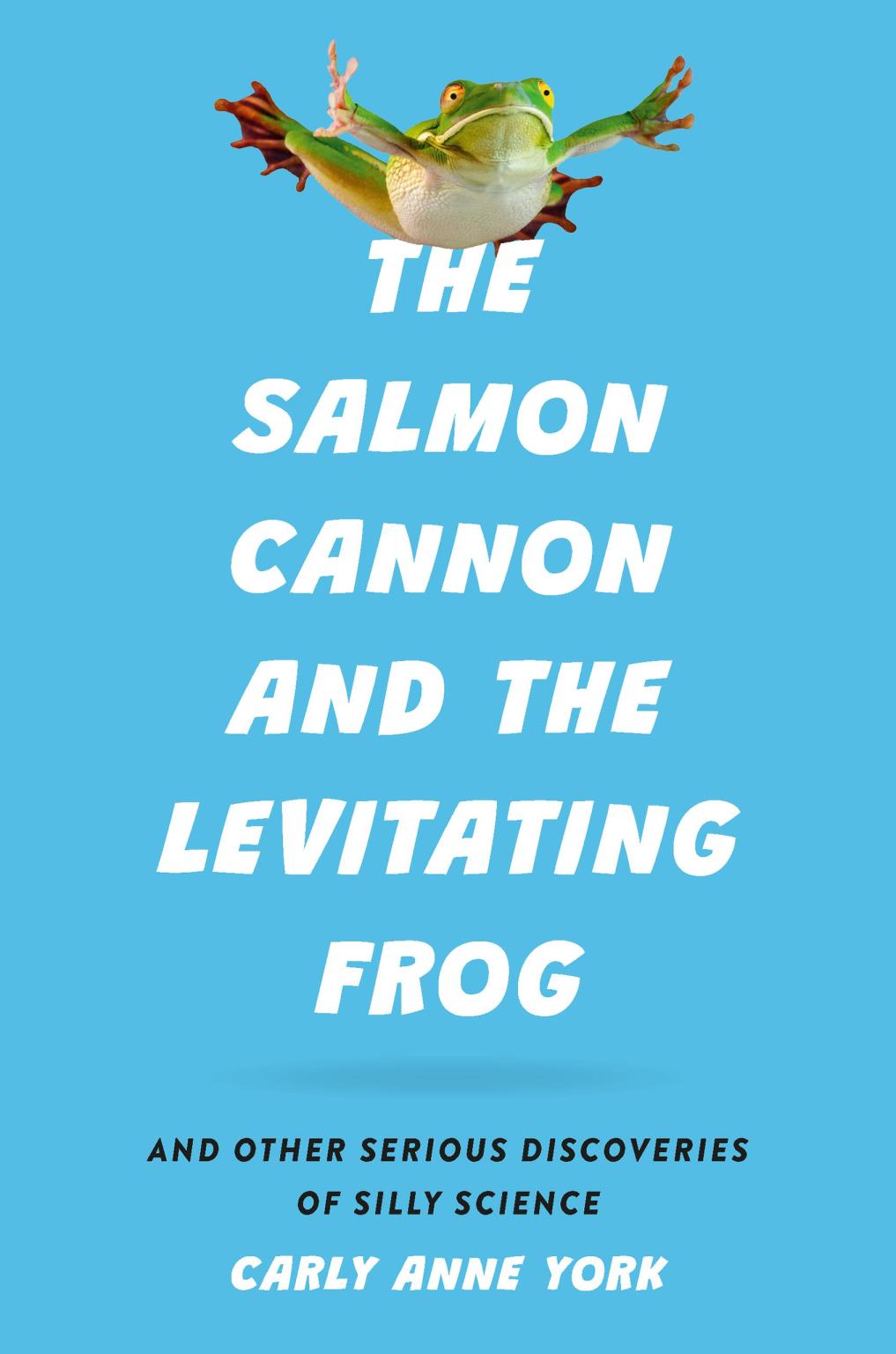
When the public thinks of ‘science’ it’s usually along the lines of something neat, tidy, step-by-step and controlled. (This predictable ‘recipe book’ approach is often how science is taught in schools.) Even the term ‘science’ has come to be a stand-in for an authoritative, fixed source of truth that shouldn’t be questioned.
However, in the real world, science is often a non-linear process of inquiry, investigation, discovery, luck, serendipity and revision that’s driven by creativity and curiosity.
York is an animal physiologist working in ‘basic research’, a branch of science driven by observing nature. The Salmon Cannon and the Levitating Frog explains, with dozens of intriguing examples, the value of ‘basic research’, which is currently underappreciated, unfairly criticised and underfunded (meaning fewer scientific discoveries and fewer real-world problems solved).
Observing geckos, with their unique anatomy, climb vertical walls, eventually led to the invention of a strong, reusable, glue-free adhesive. The scientists initially investigated the millions of tiny hairs on geckos’ toes; the process wasn’t driven by the need to create the sticky technology (this is ‘applied research’). There are lots of unexpected stories of scientific discoveries involving algae, rabbits, rats, ducks, cows, worms, insects, whales, salmon, frogs and more. (In case you’re wondering, the ethical and humane use of animals in research is explored.)
York’s writing style is energetic, conversational and engaging for readers. Sensible, orderly science can sometimes be random, haphazard and entertaining!
Reviewed by Mark Parry
ABOUT THE AUTHOR
 Carly Anne York is currently an associate professor at Lenoir-Rhyne University. She received her PhD in ecological studies from Old Dominion University.
She is also the author of two nonfiction science books for children, A Day in the Life: Horses and Queens of the Jungle. She lives in North Carolina.


0 Comments