


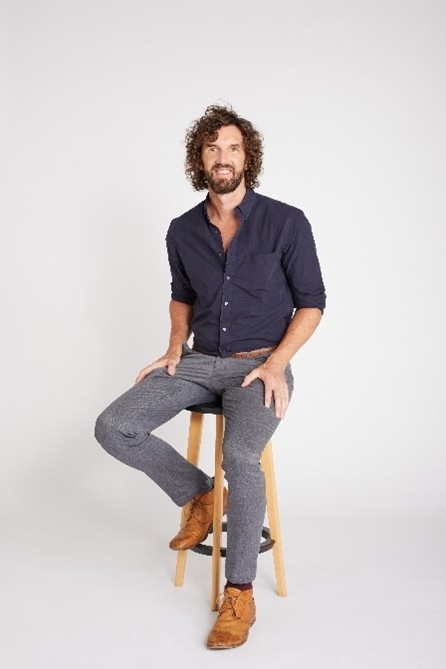
As school refusal, mental health struggles and social challenges in the playground continue to rise, trailblazing teacher GAVIN McCORMACK is redefining what it means to receive a `good education’.
They say it takes a village to raise a child. Gavin’s transformative methods can be used by parents, carers and educators alike. He highlights the power of modelling positive behaviour and prioritising essential life skills over academic scores, helping children build resilience, develop emotional intelligence, and thrive beyond traditional measures of success.
Good Reading talked to the author about his new book, Raising Resilient Children and what he thinks are the biggest challenges children face today.
**********
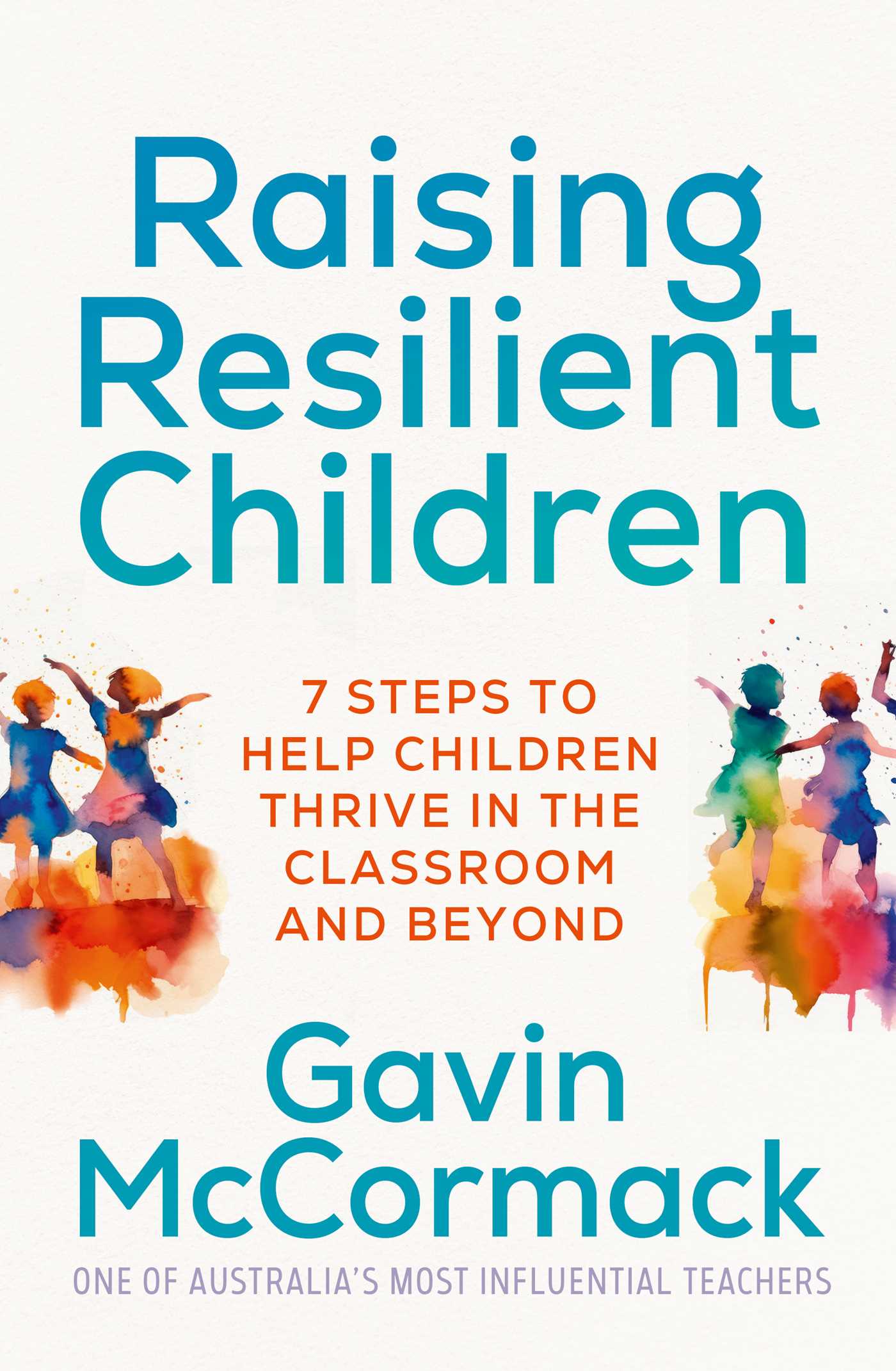 What inspired you to write Raising Resilient Children?
Back in 2018, I was travelling the world visiting schools whilst also working in Montessori schools myself and witnessing children doing the most extraordinary things—things that didn’t seem to fit the traditional mould of what education was supposed to look like. I saw character, compassion, problem-solving, and resilience blooming in classrooms where scores and grades weren’t the focus.
So, I started writing a daily blog. Each day, I’d post one short piece about what the future of education could look like if we focused on developing ethics, morals, and life skills in children, rather than just academic performance. I hoped that one day, someone might stumble upon the blog and say, “This should be a book.”
And that’s exactly what happened. In 2024, 6 years after I began, I received a message from Daniel Pilkington, a literary agent, who said, “I’ve found your blog—let’s go for a coffee.”
So really, Raising Resilient Children began as a way to celebrate the amazing things I’d seen children achieve, and to use those real stories as a catalyst to challenge the status quo. I wanted to show what’s truly possible when we stop underestimating the capabilities of the young people in our care.
What are some key tools your book offers to help build resilience in children?
The book is full of real-world stories – little snapshots of children who’ve done remarkable things when they were given the right conditions. Each anecdote is paired with a practical takeaway so parents, teachers, and even whole communities can put the ideas straight into practice.
At its heart, the book reframes what “educational success” looks like. Instead of chasing marks, we focus on the daily habits that foster resilience:
- Safe havens for mistakes. Classrooms and homes become places where getting it wrong is simply part of getting it right. When children trip up, dust themselves off, and try again, the neural wiring for resilience strengthens.
- Adult modelling. Children copy what they see. The book shows parents and teachers how to model calm problem-solving, self-talk, and empathy—because resilient adults raise resilient children.
- Freedom, choice, and agency. From deciding how to present a history project to choosing how to spend free time, genuine decision-making power helps children trust their own judgement and bounce back when plans go awry.
- Guided struggle. We don’t remove every obstacle; we scaffold just enough so children learn to navigate challenges independently.
- Community collaboration. Resilience isn’t built in isolation. The book outlines ways schools and families can work together—shared language, reflective circles, and real-world projects—to give children a network of support.
In what ways has your experience as a Montessori-trained educator informed your practical strategies?
When I first discovered Montessori education, it completely reshaped the way I saw teaching. I realised that a good teacher knows when to teach—but a great teacher knows when not to.
Montessori showed me that when children are given real freedom—freedom to choose, to explore, and to take on some of the world’s biggest challenges—they often rise far beyond our expectations. And even if they don’t quite succeed in the traditional sense, the skills they build along the way—resilience, empathy, creative thinking—are the ones that can’t be taught from a textbook. They’re earned through experience.
Montessori also reminded me that the role of the teacher isn’t to fill up an empty vessel. It’s to model what being human looks like. Our job is to guide gently, to prepare an environment that invites curiosity, and to offer safe hands as children navigate learning through exploration, discovery, and experimentation. That’s where the magic of real education lives.
 What outcomes or experiences define success for you in an educational setting?
Schools will always teach reading, writing, and arithmetic—that’s a given. But genuine success rests on three pillars working in harmony: parents, teachers, and children. Everyone deserves a seat at the table and a meaningful voice in shaping what learning looks like day-to-day.
For me, a successful school is one where:
- Children feel safe to experiment. They’re encouraged to try, stumble, and try again, knowing that mistakes are simply stepping-stones to mastery—and to resilience.
- Parents aren’t token guests. Their expertise, passions, and cultural stories are woven into the fabric of classroom life, not wheeled out once a year at a display evening.
- Teachers are trusted professionals. They’re given the autonomy to craft rich learning experiences and the support to keep refining their craft.
When those three groups collaborate, the school culture shifts—from one driven by grades to one driven by growth, curiosity, and character. Ultimately, the real measure of success is the kind of human beings who step out into the world 25 years from now: compassionate, determined, creative, and resilient citizens. Whenever a school asks me what success looks like, I simply reply, “Picture the adults you hope to meet on the street in a generation’s time—then let’s design learning that helps children become those people.”
What do you think are some of the biggest challenges children face today?
Childhood’s always been a bit of a maze! You’re trying to work out who you are, how the world works, how to read faces and emotions—all while trying to become the person you’re meant to be, without even knowing what the options are.
But today, I think one of the biggest challenges our children face is developing the ability to think critically. With social media and the way the news is so polarised, they’re often only hearing one side of the story. And that’s not just children—adults too. But the truth is, this world has many faces. If we want our children to grow into thoughtful, compassionate humans, they need to be able to see things from multiple perspectives and make up their own minds about what’s right.
The other big challenge is connection. We’re the species that’s meant to be connected—it’s in our DNA. But somehow, we’re more divided than ever. As my mate Matt Pittman says, “We used to be together-together, now we’re together alone.” And I think that really sums it up.
So for me, one of the most important things we can do—at home, in schools, and in our communities—is to rebuild that sense of connection. To make sure children feel seen, heard, and part of something bigger than themselves. Because when they do, they not only grow stronger, but they also start to believe in what’s possible. And that’s where resilience, hope, and real change begin.
Who is your book for?
This book is really for anyone who’s playing a role in raising or educating a child. It’s for parents who want to understand what true educational success looks like—not just from an academic lens, but through the lens of character, compassion, and resilience.
It’s for teachers who are looking for practical, inspiring ways to bring more independence, agency, and purpose into their classrooms without turning everything upside down.
And it’s for school leaders who want to shake things up in their community—who know there’s a better way to do things but don’t want to reinvent the wheel or throw out the curriculum.
It’s a guide, a bit of a mirror, and hopefully a spark for anyone who cares for or works alongside children.
Why do you place such emphasis on modelling behaviour?
Maria Montessori said it perfectly: “Model the behaviour you wish to see in your child.” That isn’t just philosophy—it’s neuroscience. Children are wired with mirror neurons, little biological copy-cats that fire whenever they watch someone they trust. If they love us, they’ll imitate us, for better or worse.
I often remind parents and teachers, “It’s never the child’s fault.” Young people don’t arrive with a manual—they look to the adults they admire and simply mirror what they observe. And because only about seven percent of communication is actually verbal, our tone, body language, and daily habits speak louder than any lecture ever could.
So, if we want children to be calm problem-solvers, we must show calm problem-solving. If we want them to be kind, we must practise kindness ourselves—especially when nobody’s watching. Whatever we model, they absorb and replay. In essence, the most powerful lesson plan we’ll ever write is the one we live, day in, day out.
How do you hope your book will support or guide parents and educators?
My real hope is simple: that the book gives teachers and parents a few practical, inspiring ideas they can try straight away—no expensive kit, no wholesale curriculum overhaul, just small shifts that make a big difference.
For teachers, the book offers everyday strategies and real classroom stories that show what happens when children are trusted to take the lead, think critically, and reflect on their learning. Even if a teacher only picks up one suggestion—perhaps letting the children sit where they like, or giving pupils true choice in how they present their work—I believe the ripple effect on those children will be both positive and long-lasting. I’m not here to tell anyone how to teach; I’m simply sharing what I’ve seen work and what the science suggests.
For parents, I want to provide a window into childhood from the child’s perspective, grounded in what we now know about the developing brain. Those early years lay the foundations for everything that follows, so the way we speak, act, and define “success” matters enormously. If the book helps a parent pause, model vulnerability to their children, or loosen an expectation that’s weighing on a child—then we’re already on the right path.
Ultimately, these pages are a collection of ideas, not instructions. Pick the ones that feel right for your classroom or your home, adapt them, and make them your own. If we each do that, perhaps some of the challenges children face today can become stories of resilience tomorrow.

ABOUT THE AUTHOR
Gavin McCormack is the co-founder of Upschool.co, a platform that inspires children to develop real-world skills and take action that creates genuine impact. With more than 25 years of experience in education – including a decade as a trained Montessori teacher – Gavin has taught in classrooms across the globe and championed innovative, purposeful learning. He is the Montessori Australia Ambassador, a TEDx speaker, and the author of numerous children’s books, including a biography of legendary Liverpool manager Sir Kenny Dalglish.
Gavin has built schools, libraries, and teacher training centres in Nepal and was recently awarded the 2024 Outstanding Global Contribution to Education Award at the GESS Awards in Dubai.
For the past five consecutive years, he has been recognised by The Educator magazine as one of Australia’s Most Influential Educators.

0 Comments