


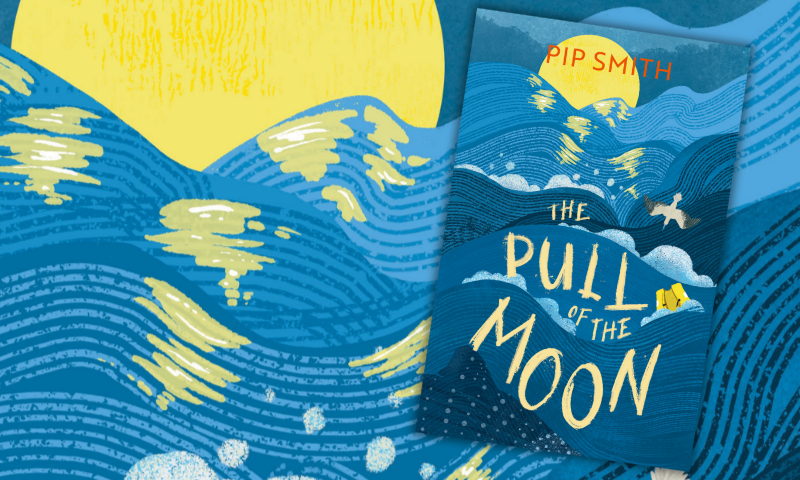
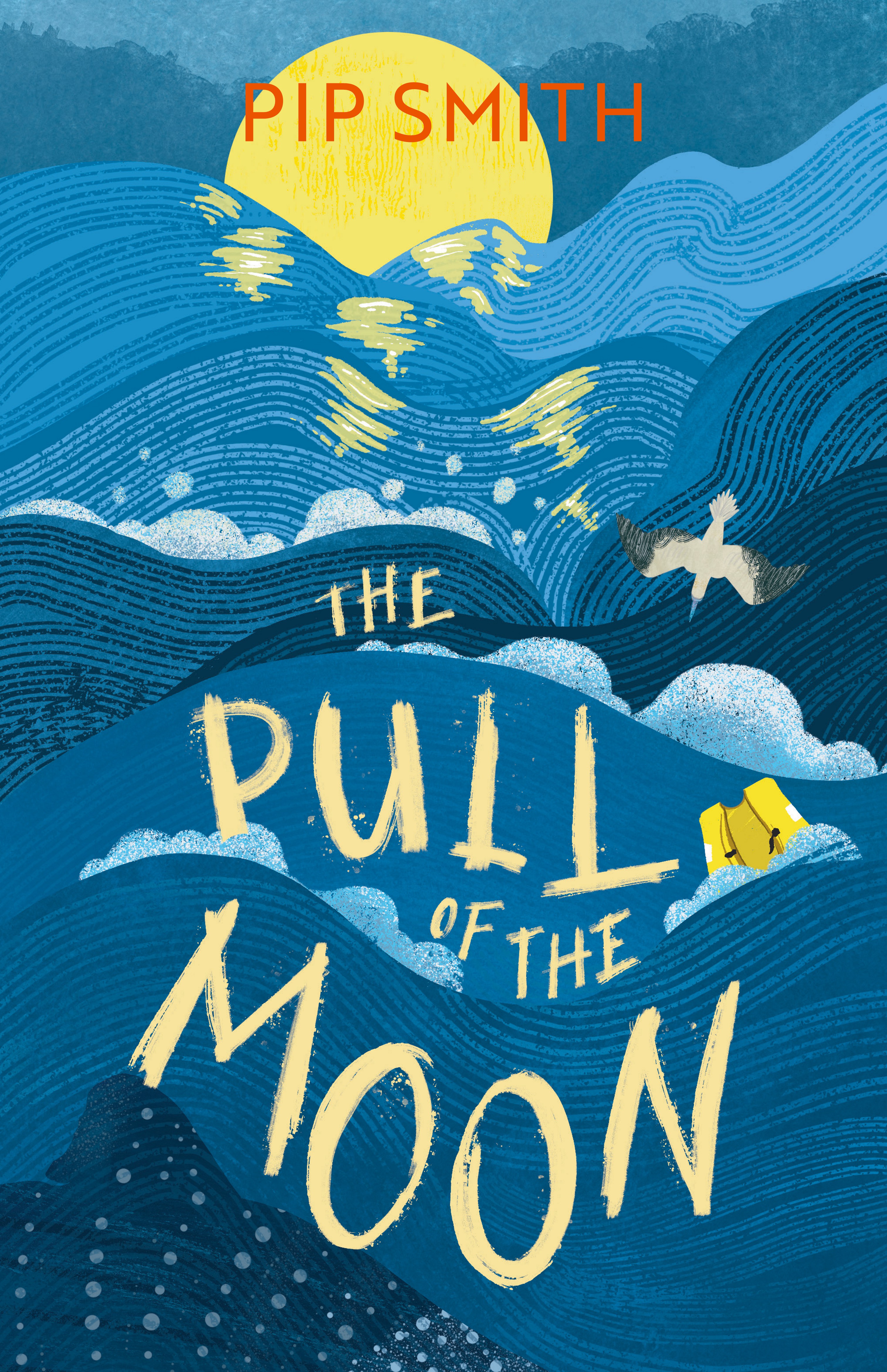
The Pull of the Moon by Pip Smith explores what happens when the urge to help collides with the unfathomable uncertainty of loss. Read on for a Q&A with the author.
What inspired your book The Pull of the Moon?
As with most of my ideas for stories, The Pull of the Moon was inspired by a confluence of experiences and thoughts which finally found shape as a story idea when I was in Fiji researching an entirely different (unwritten) novel. In 2016 I was on a deserted beach on the island of Viti Levu, far from any town, and perhaps that isolation was starting to get to me. I began to see things floating on the water. I wondered, for a moment, if I could see a man draped over a piece of driftwood, which led to the thought: what would I do if I came across an asylum seeker on an abandoned beach in Australia? Knowing what happens to people who come to our shores seeking asylum without ‘prior approval’, I’m not sure I would tell anyone about it. But for how long can you keep someone alive, or a secret, before ‘helping’ someone starts to become a very self-serving activity? Is it a way to feel helpful without actually being helpful? My inner 12-year-old would have wanted to keep such a survivor as their own secret, had they found them in these conditions – those intentions seem pure, though they are not.
This line of thought led me to wonder if there are any communities in Australia in which people do meet with asylum seekers before they’ve been intercepted by authorities. Of course, Christmas Island was the first place that came to mind. I had been there as a volunteer with ALIVE for three weeks in January 2010, teaching English to men in the maximum security detention centre at Northwest Point. Before I travelled there, I had two impressions of Christmas Island: one was as a prison, the other was as the site of Australia’s most recent extinction event: that of the Christmas Island Pipistrelle in 2009. But when I arrived there, the island burst into life. I had not considered what life would be like for the community of ~1000 local Australians living there. The island boasts a high school, two diving centres, hotels, even an abandoned casino! I was also blown away by the wildlife. So many seabirds which call a large chunk of East Asia home always return to Christmas Island to roost. Many green sea turtles will also traverse half the globe (sometimes from the very countries that asylum seekers are leaving) just to lay their eggs on Christmas Island’s beaches. The island is a nexus in a global network that is articulated by the journeys of these animals, and the detention centre, with its high walls and electric fence, seems especially absurd against this backdrop.
Once I had committed to writing a book about this incredible place, I made two more trips to the island and interviewed as many locals as I could. What became very clear to me was that the boat disaster of 2010, in which a boat carrying ~89 asylum seekers crashed into the cliffs of Christmas Island, left scars on the community that are still very raw. On the morning of 15 December, 2010, 50 adults and children died, and 42 were rescued. Approximately 20 bodies were never recovered. It was the locals who were on the frontline of that disaster, throwing whatever floatation devices they could to the drowning people as the Janga was repeatedly hurled into the cliffs. The Navy did eventually come, but after most of the damage had been done. It became clear to me that I couldn’t write about Christmas Island as a meeting point between asylum seekers and Australians, and as a nexus point for all animal and human migration, without writing about this harrowing event.
Your novel is about refugees seeking asylum – what do you hope younger readers take away from your book?
I’ll be the first to admit that there are depictions of confronting events in this novel, but that is entirely the point. Increasingly, young people, and the rest of us Australians, are shielded from the difficult aftershocks of our country’s border protection policies. Howard’s government made a very firm decision to institute a culture of silence. After his time in office, it became very difficult for Australians to meet asylum seekers and hear their stories. The current government’s silence in the face of genocide in Palestine is, I think, a continuation of this line of policy. The older I get, the easier it becomes for me to turn a blind eye, to be swamped by the interminable admin of life and turn away from events on the world stage that are painful to contemplate. But kids are often so fierce with their empathy and their sense of justice. They are often outraged by how blasé adults can be in the face of horrific events. I actually think that it’s kids who know, better than adults, how to feel in response to events that just seem wrong to them on some fundamental human level. I hope young adults read this book and continue to ask the tricky questions of the adults in their lives. I hope they don’t put up with institutionalised silence. Because they can be the ones to dream up big ways we might change things. They aren’t, yet, too jaded to try.
Why did you decide to write your book from the perspective of Coralie?
Initially, I set out to write the novel exclusively from Coralie’s point of view. At first, this was because the story came to me that way – for some reason those big feelings of wanting to help reminded me of being a tween and railing against the political decisions of the adult world around me. But as I wrote the novel, it became clear to me that I didn’t know enough about those who were on the Janga, and why they were seeking asylum in the first place. I had to make a big decision then, to spend a year researching the Green Movement in Iran in 2009, learning Farsi, meeting and re-connecting with Iranian-Australians I knew to learn as much as possible. I quickly knew I wanted to write some chapters from Ali, an 11-year-old Iranian boy’s point of view, because the book seemed to whitewash history without hearing from him, but I also knew that this might make the book incredibly difficult to publish. Later, I was reading Blueback, by Tim Winton, which became something of a guide novel for me in writing The Pull of the Moon. I loved the way Winton suddenly switched to the POV of Abel’s mother towards the end of the book – and this was in a novel written for children! It was liberating to read that, and made me realise that you don’t always have to follow the rules. I do a similar thing in The Pull of the Moon, and it feels right for the novel, despite being a bit grown up for the readership. So, I sat down to write a novel entirely from one person’s point of view, and ended up including the points of view of three children, one adult, two birds, a grouper, and a green sea turtle! I guess that’s true to the crucible that is Christmas Island. It really is a melting pot, a meeting of cultures, species, experiences and minds.
Did you draw from real people or stories to craft Ali’s character?
Through conversations with a trauma counsellor who worked in the detention centre on Christmas Island, and through researching the disaster, I knew that there were a few orphans on the Janga, and that they were not told about the death of their parents for five days after the crash. I knew that the aunt of one of the orphans, a naturalised Australian, came to stay with him at the detention centre while his application was processed. But that is as far as any similarity goes. I learned a lot from reading Confessions of a People Smuggler by Dawood Amiri, and through meeting a few members of the People’s Mujahedeen at their annual gathering at a former ALP senator’s house in Vaucluse! I put a lot of feelers out, and resolved to listen to as many different stories as possible, but Ali came to me as a unique individual in a fit of writing one morning, once I felt I knew enough to make a start on exploring how a boy in his position might be.
What was the most challenging part of writing this novel?
Writing this novel was one of the hardest things I’ve ever done (second to raising 3 kids!)! It took me a year to write the first draft of the novel, but it was quite patchy and under-cooked. It took me a further four to five years to pull it apart and re-arrange it, to re write it in first person, then switch it back to third, to completely change the ending, then change it back again. I have over 24 versions of this novel on my computer! I had a restless relationship with the book, but felt very strongly about it and absolutely could not give it up. So I told myself I would submit it one last time, to UWAP, and after that I would move on to something else entirely. It was a liberating thing to do! It wasn’t until I was finally getting stuck into the new novel that I received an email from Kate at UWAP saying she was interested in publishing The Pull of the Moon. It made my year! I was sobbing in the foetal position in the corner! So much work had gone into the book, so many people had generously given their time to it, I was so pleased that it would finally see the light of day. I’d say the most challenging thing about writing the novel has been restructuring it so many times and still trying to keep the original spirit of the book alive. I do think the novel is in the best shape it ever has been in, thanks to input from countless editors, readers, publishers and friends. But I also know that I’m addicted to exploring the possibilities in a story, and for my own sanity and others, I need to learn when to stop!
This story is based on real-world issues – what kind of research did you do for this story?
I’ve already described some of the research that went into the novel, but other things I did included travelling to Christmas Island a third time to take part in Bird and Nature Week, which is run by Indian Ocean Experiences in collaboration with some very highly regarded ecologists who are incredibly knowledgeable about the island and its species. Before this trip, I travelled to the island to witness the crab migration at the very beginning of my research into the book. I interviewed a number of locals, ranging from the principal of the school, to the art teacher, to former employees of Serco, diving operators, gift shop operators, dance teachers, park rangers and others. I am eternally grateful to them for sharing their lives and stories with me. Conducting research is one of my favourite aspects of novel-writing, and I’m richer for having spent so long on this project. I hope those who read the book also feel enriched by these stories.
ABOUT THE AUTHOR
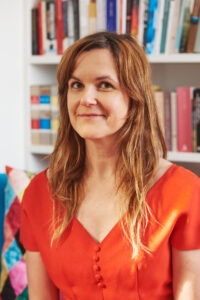
Photo credit: Lucy Parakhina
Pip Smith was named an SMH Best Young Novelist of 2018 for her debut novel, Half Wild, which was shortlisted for the Voss Literary award, the Davitt Award, and longlisted for an ABIA Best Debut Fiction award. She teaches novel-writing for the Faber Writing Academy, where she also works as manager.

0 Comments